Androgenetic Alopecia: Understanding Causes, Symptoms & Treatments

Androgenetic alopecia, commonly known as male-pattern baldness or female-pattern baldness, is the most prevalent form of hair loss, affecting millions worldwide. It is characterized by a gradual thinning of hair on the scalp, often following predictable patterns. This condition is primarily influenced by a combination of genetic predisposition and hormonal factors, specifically androgens.

What is Androgenetic Alopecia?

Androgenetic alopecia is a genetic condition that causes hair follicles to shrink over time, leading to shorter, finer hair strands and eventually ceasing hair production altogether. This process is known as follicular miniaturization. While often associated with aging, it can begin as early as adolescence. The term "androgenetic" highlights its dual origin: "andro" referring to androgens (male hormones) and "genetic" referring to inherited genes.

The Underlying Mechanisms: Genetics and Hormones

The primary drivers of androgenetic alopecia are genetics and the hormone dihydrotestosterone (DHT), a potent androgen. Understanding their interplay is crucial for comprehending the condition.

The Role of DHT

Testosterone, a male hormone present in both men and women, can be converted into dihydrotestosterone (DHT) by the enzyme 5-alpha-reductase. In individuals genetically predisposed to androgenetic alopecia, hair follicles on certain parts of the scalp are hypersensitive to DHT. When DHT binds to receptors in these follicles, it triggers a cascade of events that lead to miniaturization. This sensitivity is not universal across the scalp; typically, follicles on the sides and back of the head are not affected, which is why hair from these areas is used in hair transplantation [1].

Genetic Predisposition

Androgenetic alopecia is polygenic, meaning multiple genes contribute to its inheritance. While it was once thought to be primarily inherited from the mother’s side, current research indicates that genes from both parents play a role. These genes influence various aspects, including the sensitivity of hair follicles to DHT, the activity of the 5-alpha-reductase enzyme, and the duration of the hair growth cycle (anagen phase) [2].

Recognizing the Symptoms and Patterns

The presentation of androgenetic alopecia differs between men and women, though the underlying cause is the same.

Male Pattern Baldness

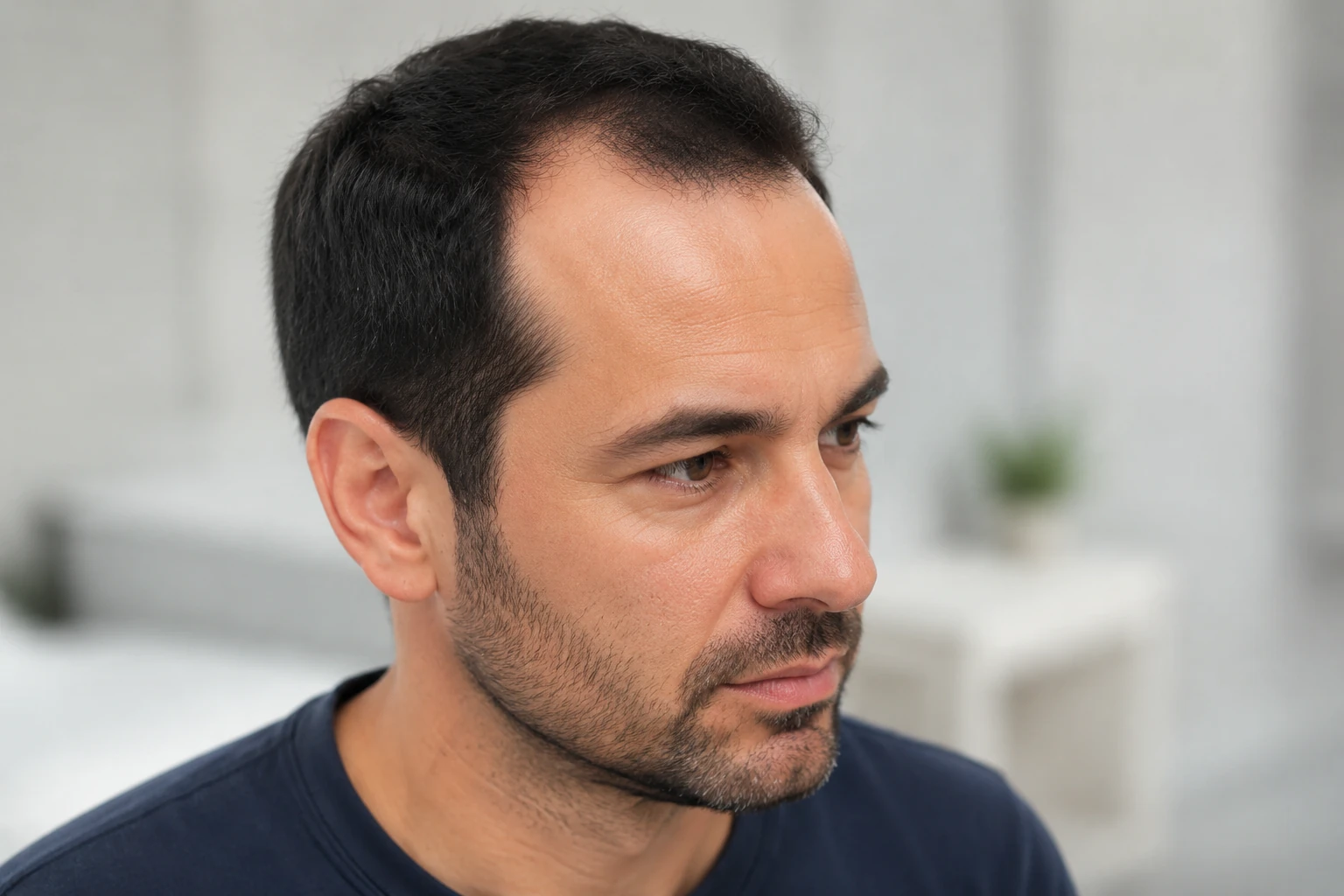
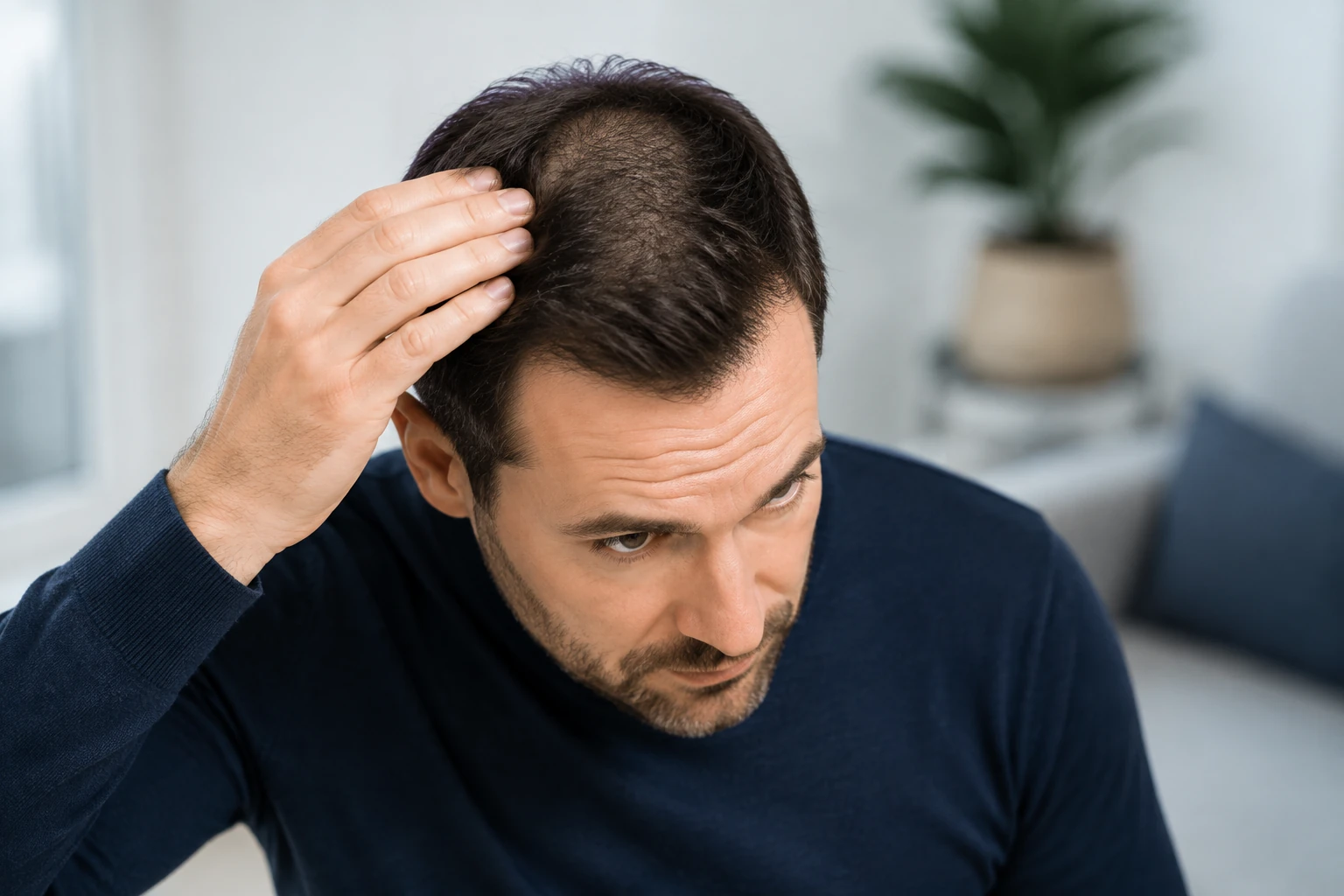
In men, androgenetic alopecia typically begins with a receding hairline, often forming an ‘M’ shape. For more information on this stage, see our guide on Receding Hairline: Causes, Stages, and Effective Solutions. This is usually accompanied by thinning at the crown (vertex) of the scalp. As the condition progresses, the hairline recedes further, and the crown thinning expands, eventually leaving a horseshoe-shaped band of hair around the sides and back of the head. The Hamilton-Norwood scale is commonly used to classify the stages of male pattern baldness.

Female Pattern Baldness

Female pattern baldness (FPHL) usually presents differently. Instead of a receding hairline, women often experience a diffuse thinning over the top and crown of the scalp. The frontal hairline typically remains intact. The part line may widen, and the scalp becomes more visible. While complete baldness is rare in women, the thinning can be significant, sometimes resulting in noticeable Bald Spots: Causes, Diagnosis & Treatment Options. The Ludwig scale is frequently used to classify the stages of female pattern baldness.

Diagnosis of Androgenetic Alopecia

Diagnosing androgenetic alopecia typically involves a thorough clinical examination and a detailed patient history. A trichologist or dermatologist will assess the pattern of hair loss, examine the scalp for signs of miniaturization, and inquire about family history of hair loss. Sometimes, a pull test is performed to assess shedding, or a trichoscopy (dermoscopy of the scalp) is used to magnify hair follicles and observe miniaturization directly [3]. In some cases, blood tests may be ordered to rule out other causes of hair loss, such as nutritional deficiencies or hormonal imbalances, which can mimic or exacerbate androgenetic alopecia. Many patients starting this process often ask, "Why Is My Hair Falling Out? Causes, Diagnosis & Solutions" to better understand their symptoms. For example, conditions like thyroid disorders or iron deficiency can contribute to hair thinning.

Effective Treatment Options for Androgenetic Alopecia

While there is no cure for androgenetic alopecia, several effective treatments can slow its progression, promote regrowth, and improve hair density. A multi-therapeutic approach often yields the best results.

Medical Treatments

  • Minoxidil: Available over-the-counter in topical solution or foam, minoxidil is approved for both men and women. It works by stimulating hair follicles and prolonging the anagen (growth) phase of the hair cycle. Consistency is key for optimal results, as cessation of treatment typically leads to a reversal of benefits.
  • Finasteride: An oral medication approved for men, finasteride works by inhibiting the 5-alpha-reductase enzyme, thereby reducing DHT levels in the scalp. This helps to halt miniaturization and can promote regrowth in some individuals. It is not typically prescribed for women of childbearing potential due to potential risks.
  • Dutasteride: Similar to finasteride but more potent, dutasteride also inhibits 5-alpha-reductase, reducing DHT more comprehensively. It is sometimes used off-label for male pattern baldness, particularly in cases where finasteride has not been sufficiently effective.

A comprehensive guide comparing these medical treatments can be found in our article: Comparing Medical Treatments: Minoxidil, PRP, Finasteride Efficacy.

Advanced Therapies

  • Platelet-Rich Plasma (PRP) Therapy: PRP involves drawing a patient’s blood, processing it to concentrate platelets, and then injecting the platelet-rich plasma into the scalp. Platelets contain growth factors that can stimulate hair follicles, promote healing, and extend the anagen phase.
  • Low-Level Laser Therapy (LLLT): LLLT devices, such as combs, caps, or helmets, emit red light that is believed to stimulate cellular activity in hair follicles, improve blood flow, and reduce inflammation.
  • Microneedling: This procedure involves using a device with tiny needles to create micro-injuries on the scalp. This can stimulate growth factors and improve the absorption of topical treatments like minoxidil.

Hair Transplantation

For individuals with significant hair loss, hair transplantation offers a permanent solution. This surgical procedure involves harvesting hair follicles from a donor area (typically the back or sides of the head, which are resistant to DHT) and transplanting them to thinning or bald areas of the scalp. The two main techniques are Follicular Unit Transplantation (FUT) and Follicular Unit Excision (FUE). Planning for the future is essential, and you can learn more in Hair Transplant & Ongoing Treatments: Your Long-Term Guide.

Natural and Complementary Approaches

While not primary treatments for androgenetic alopecia, certain natural approaches and lifestyle modifications can support hair health and complement medical therapies.

  • Nutritional Support: Ensuring adequate intake of vitamins and minerals crucial for hair health, such as biotin, iron, zinc, and vitamin D, can be beneficial. Our guide on Pumpkin Seed Oil and Hair Regrowth explores emerging evidence for natural options.
  • Scalp Health: Maintaining a healthy scalp environment is essential. Regular, gentle cleansing and addressing conditions like inflammation can support existing hair. Chronic inflammation, as seen in conditions like Chronic Telogen Effluvium, can exacerbate hair loss.
  • Stress Management: High stress levels can contribute to various forms of hair loss, including telogen effluvium, which can coexist with androgenetic alopecia.

Living with Androgenetic Alopecia: Prognosis and Expectations

Androgenetic alopecia is a progressive condition, meaning hair loss will continue if left untreated. Early diagnosis and intervention are key to preserving existing hair and maximizing regrowth potential. It is important for individuals to have realistic expectations regarding treatment outcomes. While significant improvements can be achieved, complete restoration to a pre-hair loss state is often not possible. Long-term commitment to treatment is typically required to maintain results.

When to Consult a Professional

If you are experiencing hair loss or thinning, consulting a qualified trichologist or dermatologist is highly recommended. They can provide an accurate diagnosis, rule out other potential causes, and develop a personalized treatment plan tailored to your specific needs and the severity of your condition. Early intervention can significantly impact the long-term prognosis of androgenetic alopecia.

For those searching for local expertise, resources are available to help you find a specialist. For example, if you are in the New York area, you might search for a Trichologist in New York, NY, or specifically a Trichologist in Brooklyn, NY.

Common Questions About Androgenetic Alopecia (Q&A)

Can androgenetic alopecia be cured?

No, androgenetic alopecia cannot be cured, as it is a genetic condition. However, it can be effectively managed with various treatments that slow its progression, stimulate hair growth, and improve hair density. Consistent treatment is necessary to maintain results.

At what age does androgenetic alopecia usually start?

Androgenetic alopecia can begin at any age after puberty, though it most commonly starts in the 20s and 30s. The progression of hair loss tends to increase with age. Some individuals may notice early signs in their late teens.

Is androgenetic alopecia always hereditary?

Yes, androgenetic alopecia is fundamentally a hereditary condition. While the exact pattern of inheritance can be complex and involve multiple genes from both parents, a genetic predisposition is necessary for the condition to develop.

Can women get androgenetic alopecia?

Yes, women absolutely can and do get androgenetic alopecia, often referred to as female pattern hair loss (FPHL). While the pattern of hair loss differs from men (more diffuse thinning rather than a receding hairline), the underlying genetic and hormonal mechanisms are similar.

What is the best treatment for androgenetic alopecia?

The "best" treatment for androgenetic alopecia varies by individual, depending on the severity of hair loss, personal preferences, and response to treatment. Common and effective treatments include topical minoxidil, oral finasteride (for men), PRP therapy, low-level laser therapy, and hair transplantation. A comprehensive approach often yields the most satisfactory results.