Understanding The Causes And Treatment Of Hair Loss
Learn the causes and treatment of hair loss, including pattern baldness, stress, infections, medications, diagnosis, and care options.
Overview
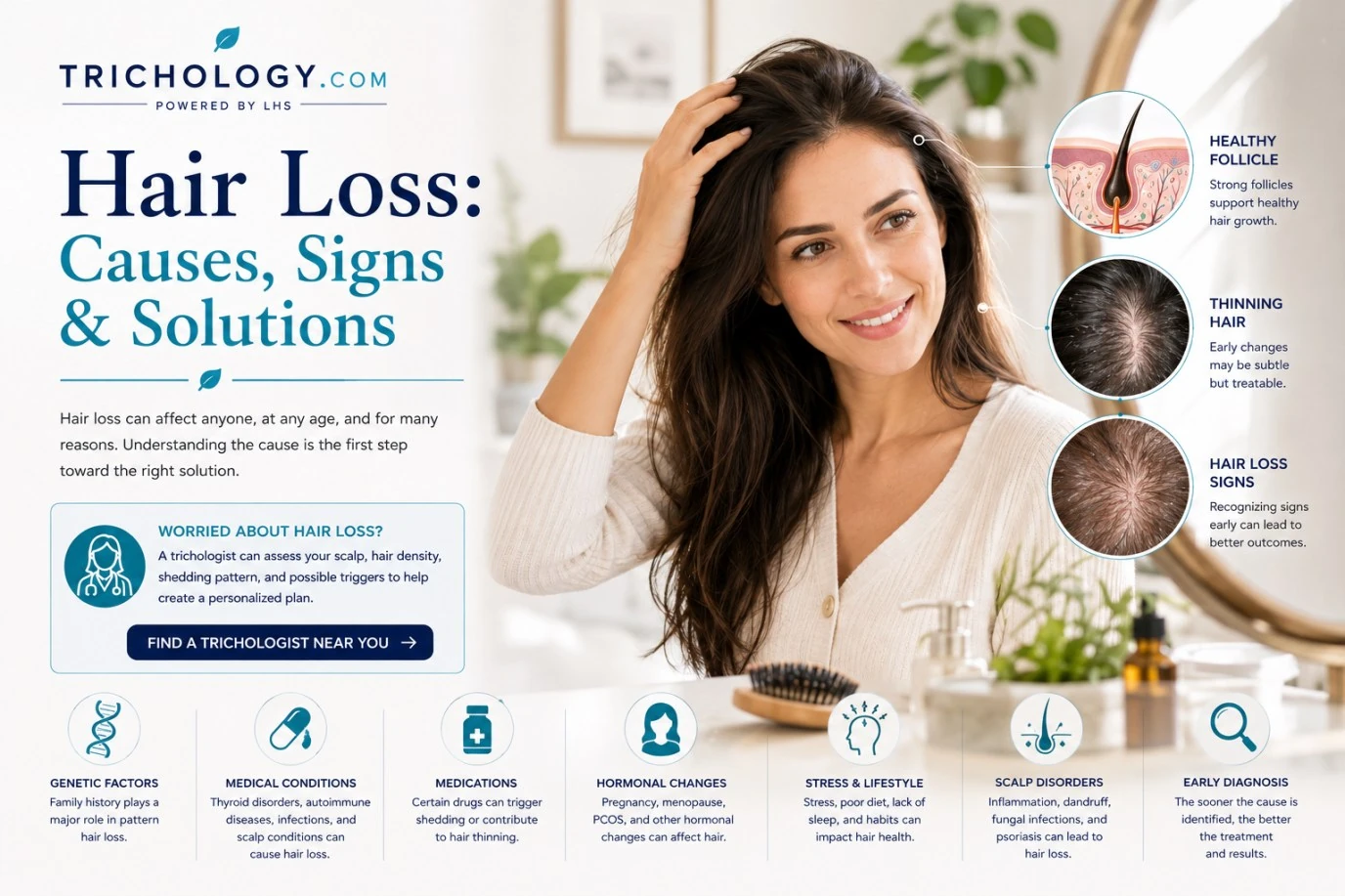
Hair loss can feel frustrating, personal, and difficult to understand. It can show up as thinning, shedding, bald patches, a receding hairline, a widening part, or total loss in certain areas.
By age 50, many men and women experience some degree of pattern hair loss. However, hair loss is not always genetic. It may also be linked to infections, medications, trauma, pregnancy, stress, thyroid disorders, autoimmune conditions, nutritional deficiencies, or scalp inflammation.
This guide explains the major causes of hair loss, how it is diagnosed, treatment options, emotional impact, lifestyle support, and when to seek professional help.
Worried About Hair Loss?
Hair loss can have many causes. A trichologist can help assess your scalp, hair density, shedding pattern, and possible triggers before you waste time guessing.
Key Takeaways
Hair Loss: An Overview
Hair loss, also known as alopecia, can appear as bald patches, diffuse shedding, gradual thinning, or reduced hair density. It can affect the scalp, eyebrows, beard, body hair, or multiple areas.
Some types of hair loss are temporary. Others are progressive or permanent if the follicle is damaged, scarred, or repeatedly inflamed.
Hypotrichosis
Hypotrichosis is a condition marked by reduced hair growth in areas where hair normally grows. People with hypotrichosis may notice thinning hair, sparse growth, or areas where hair is missing from the scalp or body.
Hypotrichosis may be genetic, but it can also be linked to hormonal imbalance, medical conditions, or autoimmune activity affecting healthy follicles.
Treatments may aim to stimulate hair growth or improve appearance. Options may include topical treatments, prescription medication, cosmetic coverage, or hair transplant surgery depending on the cause and follicle activity.
Signs and Symptoms
Hair loss presents in various patterns and affects different parts of the body. Spotting signs early may help improve treatment options.
- Patchy hair loss: Bald spots may appear on the scalp, eyebrows, beard, or other areas. The skin may look smooth in some forms of alopecia areata.
- Dandruff or flaking: Scalp flaking can occur with hair thinning, seborrheic dermatitis, psoriasis, or fungal infection.
- Scalp lesions: Some skin conditions that lead to hair loss also cause redness, sores, scaling, pustules, or scarring.
- Scarring: In conditions like cicatricial alopecia, scar tissue can replace hair follicles and prevent new hairs from growing.
- Unusual shedding: A sudden increase in hair falling out during washing, brushing, or showering may suggest telogen effluvium.
- Receding hairline: This is commonly seen in male pattern baldness as the hairline moves backward.
- Thinning hair: With female pattern baldness, the part may widen and density may gradually decrease.
- Total hair loss: Alopecia areata may progress to total scalp hair loss, called alopecia totalis, or body-wide loss, called alopecia universalis.
Psychological Impact of Hair Loss
Hair loss can affect self-esteem, confidence, social comfort, dating, work life, and emotional wellbeing. For many people, hair is connected to identity, youth, attractiveness, or personal expression.
Women may feel pressure because hair is often tied to cultural ideas of femininity and beauty. Men may feel less confident when dealing with male pattern baldness, especially if thinning begins early.
People undergoing chemotherapy may face additional distress because hair loss can make illness more visible. These emotional effects show why hair loss care should address both physical treatment and psychological support.
The Causes of Hair Loss
Hair loss may be caused by pattern hair loss, infections, medications, trauma, pregnancy, genetics, scalp disease, nutritional deficiency, autoimmune conditions, or hormonal changes. Understanding the cause is essential for choosing the right treatment.
Pattern Hair Loss
Pattern hair loss, also known as androgenetic alopecia, is one of the most common types of hair loss. It affects both men and women and tends to progress gradually.
In men, male-pattern hair loss often starts with a receding hairline, thinning crown, or both. In women, pattern hair loss usually appears as diffuse thinning over the top of the scalp or a wider part.
This type of hair loss involves genetic sensitivity and androgen activity. The growth phase may shorten, and hair strands may become finer over time.
Infections Leading to Hair Loss
Scalp infections can cause shedding, breakage, inflammation, and patchy hair loss. Fungal infections such as tinea capitis may cause scaling, itching, redness, broken hairs, and bald patches.
Folliculitis may cause inflamed follicles, pustules, pain, and shedding. Demodex folliculorum mites may contribute to scalp inflammation in some people, especially when oiliness or irritation is present.
Infections should be treated properly. Delaying care may increase the risk of inflammation, scarring, or persistent hair loss.
The Role of Medications in Hair Loss
Some medications may contribute to temporary or persistent hair loss. These may include medications for blood pressure, diabetes, heart disease, cholesterol, acne, mood disorders, autoimmune disease, infections, and cancer treatment.
Not everyone experiences this side effect. If shedding begins after starting or changing medication, speak with your healthcare provider. Do not stop prescribed medication without medical guidance.
Some medications are also used to treat hair loss. Minoxidil, finasteride, and dutasteride have evidence for certain types of pattern hair loss, but they are not suitable for every person.
Trauma as a Cause of Hair Loss
Physical trauma to the hair or scalp can cause hair loss. This may include burns, surgery, radiation, injury, aggressive styling, repeated pulling, or compulsive hair pulling.
Traction alopecia can develop when hairstyles repeatedly pull on the follicles. Trichotillomania can cause broken hairs and patchy loss due to repeated pulling.
Psychological trauma, illness, and major stress may also trigger telogen effluvium, where more hairs enter the shedding phase.
Hair Loss During Pregnancy
Pregnancy and postpartum hormonal changes may affect the hair cycle. During pregnancy, many people shed less. After childbirth, estrogen levels drop and more hairs may enter the shedding phase.
This postpartum shedding is usually a form of telogen effluvium. It often improves over time, but low iron, thyroid issues, stress, and nutritional depletion may prolong shedding.
Pregnant or breastfeeding women should speak with a healthcare provider before using hair loss medications such as minoxidil or finasteride.
The Genetic Factor in Hair Loss
Genetics can strongly influence hair loss risk. Male pattern hair loss is affected by genetic sensitivity to androgens. Female pattern hair loss may also involve genetic predisposition, although the pattern can look different.
Genetics may also play a role in alopecia areata, hypotrichosis, and other hair disorders. Understanding genetic contribution can help guide realistic expectations and earlier treatment.
Understanding the Pathophysiology of Hair Loss
The pathophysiology of hair loss involves processes that disrupt normal hair growth and follicle cycling. These may include genetics, hormonal imbalance, inflammation, immune activity, scarring, infection, nutritional deficiency, and medication effects.
In androgenetic alopecia, follicles gradually miniaturize. In alopecia areata, immune activity targets follicles. In telogen effluvium, more hairs shift into the resting phase. In scarring alopecia, inflammation destroys the follicle and replaces it with scar tissue.
Because these mechanisms are different, treatment must match the diagnosis.
Diagnosing Hair Loss
Diagnosing hair loss is important because the wrong treatment can waste time and may allow the condition to progress.
A healthcare provider, dermatologist, or trichologist may use several methods to identify the cause:

Do Not Treat All Hair Loss the Same Way
Pattern hair loss, telogen effluvium, alopecia areata, scalp infection, traction alopecia, and scarring alopecia need different plans. Diagnosis comes first.
Treatment Options for Hair Loss
Treatment depends on the type and cause of hair loss. Options may include cosmetic coverage, medications, scalp treatments, lifestyle support, surgery, or treatment of an underlying medical condition.
Concealing Hair Loss
Concealing hair loss can help confidence while treatment is underway or when regrowth is not possible. Options include:
- Specialized wigs: Tailored wigs may help people with chemotherapy-related hair loss, alopecia areata, or extensive thinning.
- Combing and styling: Styling can cover mild thinning, but aggressive combing should be avoided.
- Hats and scarves: These can protect the scalp and provide comfort.
- Hairpieces: Customizable pieces can cover specific areas of hair thinning or baldness.
- Hair fibers and cosmetic powders: These can create the appearance of fuller hair.
- Microblading or eyebrow tattooing: These may help people with eyebrow thinning or loss.
- Scalp micropigmentation: Pigment is applied to the scalp to mimic the appearance of closely shaved follicles.
Medications for Hair Loss Treatment
Hair loss medications vary based on diagnosis, sex, age, pregnancy status, medical history, and risk profile.
- Minoxidil: Applied to the scalp as a foam or solution, minoxidil may help stimulate hair growth in some cases of pattern hair loss. Results usually take several months.
- Finasteride and dutasteride: These oral medications reduce DHT activity and are mostly used for male pattern hair loss. They require medical guidance.
- Corticosteroid injections: These may be used for alopecia areata to reduce immune activity around affected follicles.
- Immunosuppressants: Medications such as methotrexate or cyclosporine may be used in selected autoimmune hair loss cases under specialist care.
- Anthralin: This topical medication may be used for some cases of alopecia areata or scalp psoriasis under medical supervision.
- Selenium sulfide or ketoconazole shampoo: These may help control dandruff, seborrheic dermatitis, or scalp fungal overgrowth.
- Terbinafine or other antifungals: When hair loss is caused by tinea capitis, oral antifungal medication may be needed.
- Oral minoxidil: Low-dose oral minoxidil may be used off-label for certain hair loss cases when prescribed and monitored by a healthcare provider.
Surgical Interventions for Hair Loss
Surgical options may be considered for stable, long-term hair loss, especially androgenetic alopecia. They are not suitable for every type of hair loss.
- Hair transplantation: Healthy hair follicles are moved from donor areas to thinning or bald areas.
- Scalp reduction surgery: Bald scalp is surgically removed and hair-bearing scalp is moved closer together. This is less common today.
- Tissue expansion: A device is placed under the scalp to gradually stretch hair-bearing skin.
- Flap surgery: A section of hair-bearing scalp is moved to another area while keeping its blood supply.
- Robotic hair restoration: Robotic tools may assist with precise follicle harvesting and transplantation.
- Specialist consultation: A qualified hair restoration surgeon should evaluate diagnosis, donor supply, expectations, and long-term maintenance.
Chemotherapy-Induced Hair Loss
Chemotherapy-induced hair loss happens because chemotherapy affects rapidly dividing cells, including hair follicle cells. The amount and timing of hair loss depend on the medication, dosage, treatment schedule, and individual response.
Some people may use scalp cooling, gentle hair care, wigs, scarves, or cosmetic support during treatment. Hair often regrows after chemotherapy, although texture or color may change temporarily.
Anyone undergoing cancer treatment should discuss hair loss prevention and regrowth options with their oncology team.
Embracing Baldness: A Lifestyle Approach
Some people choose to embrace baldness as part of their appearance. This can be empowering, especially when hair loss treatment feels stressful or does not match personal goals.
Healthy lifestyle habits may still support scalp and body health. A nutrient-rich diet, exercise, sleep, stress reduction, and gentle scalp care can all help overall wellbeing.
Exploring Alternative Medicine for Hair Loss
Alternative or complementary approaches may include yoga, qigong, mindfulness, breathing exercises, scalp massage, and stress management practices.
These methods may support relaxation and reduce stress-related shedding triggers, but they should not replace medical evaluation for sudden, patchy, scarring, or progressive hair loss.
Current Research on Hair Loss
Hair loss research is expanding, with studies exploring follicle aging, stem cells, immune signaling, regenerative medicine, growth factors, and molecular pathways involved in hair growth.
Hair Follicle Aging
Hair follicle aging is influenced by stem cell maintenance, DNA damage response, inflammation, collagen changes, and the gradual miniaturization of follicles.
As follicles age, their ability to produce thick, pigmented hair may decline. This can contribute to reduced density, finer strands, and changes in hair texture.
Hedgehog Signaling in Hair Growth
Hedgehog signaling plays a role in hair follicle development and the regulation of hair growth. Researchers are studying this pathway to better understand follicle regeneration and possible future therapies.
This area is still developing. While it may help inform future treatments, most current hair loss care still relies on diagnosis-specific therapies such as minoxidil, finasteride, corticosteroids, antifungals, PRP, laser therapy, and hair transplantation when appropriate.
Find a Trichologist Near You
If you are experiencing shedding, thinning, bald patches, scalp symptoms, or uncertainty about the cause of your hair loss, a trichologist can help assess your hair and scalp and guide you toward next steps.
Start here: Find a Trichologist Near You.
FAQs About Hair Loss Causes and Treatment
- What are common causes of hair loss?
- Common causes of hair loss include androgenetic alopecia, telogen effluvium, alopecia areata, thyroid disease, PCOS, nutritional deficiencies, medications, stress, scalp infections, trauma, and scarring alopecia.
- Can stress lead to hair loss?
- Yes. Stress can trigger telogen effluvium, where more hairs enter the resting phase and shed. Stress may also worsen scalp inflammation or contribute to trichotillomania.
- Can fitness routines cause hair loss?
- General fitness does not usually cause hair loss. However, extreme dieting, rapid weight loss, overtraining, or certain supplements may contribute to shedding or hormonal disruption.
- How do dermatologists treat spot baldness?
- Treatments for spot baldness may include corticosteroid injections, topical agents, immunotherapy, or medications that stimulate hair growth, depending on diagnosis.
- Are surgical treatments an option for permanent hair restoration?
- Yes. Hair transplantation may help stable androgenetic alopecia. It is usually not appropriate for active alopecia areata, untreated scarring alopecia, or scalp infection.
- Can medications cause thinning hair?
- Yes. Some medications can contribute to shedding or thinning. Do not stop medication on your own. Speak with the prescribing clinician about timing, risk, and alternatives.
- How is hair loss diagnosed?
- Diagnosis may involve scalp examination, medical history, blood tests, pull test, trichoscopy, fungal testing, or scalp biopsy depending on symptoms and pattern.
- Can hair loss be reversed?
- Some types can improve, especially telogen effluvium, nutritional deficiency-related shedding, early traction alopecia, and some alopecia areata cases. Genetic and scarring hair loss may need long-term treatment or may not fully reverse.
- When should I seek help for hair loss?
- Seek help if hair loss is sudden, patchy, painful, scaly, inflamed, progressive, associated with illness or medication changes, or causing visible thinning.
- Can lifestyle changes stop hair loss?
- Lifestyle changes may support hair health, especially when stress, nutrition, sleep, or hair-care damage is involved. They may not stop genetic, autoimmune, or scarring hair loss without targeted treatment.
Conclusion
Understanding the causes and treatment of hair loss starts with diagnosis. Genetics, hormones, infections, medications, trauma, pregnancy, autoimmune disease, scalp inflammation, and stress can all contribute.
Treatment options may include cosmetic coverage, minoxidil, finasteride, dutasteride, corticosteroids, antifungals, PRP, low-level laser therapy, scalp micropigmentation, or hair transplant surgery depending on the cause.
Hair loss can also affect emotional wellbeing. Whether you choose treatment, cosmetic support, or embracing baldness, professional guidance can help you make decisions with more confidence.
References
Medical disclaimer: This article is for educational purposes only and does not replace medical advice, diagnosis, or treatment. Hair loss can have many causes. Always consult a qualified healthcare provider, dermatologist, or trichologist before starting medications, supplements, procedures, or treatment plans.
Read next
Explore related guides for your next step.