
A transplant result begins with the donor plan—not the graft count.
Compare FUE and FUT, understand scar patterns and follow the decisions that shape both the immediate result and future options.
Explore the treatment guides Trichology.com Editorial Team · Updated September 2026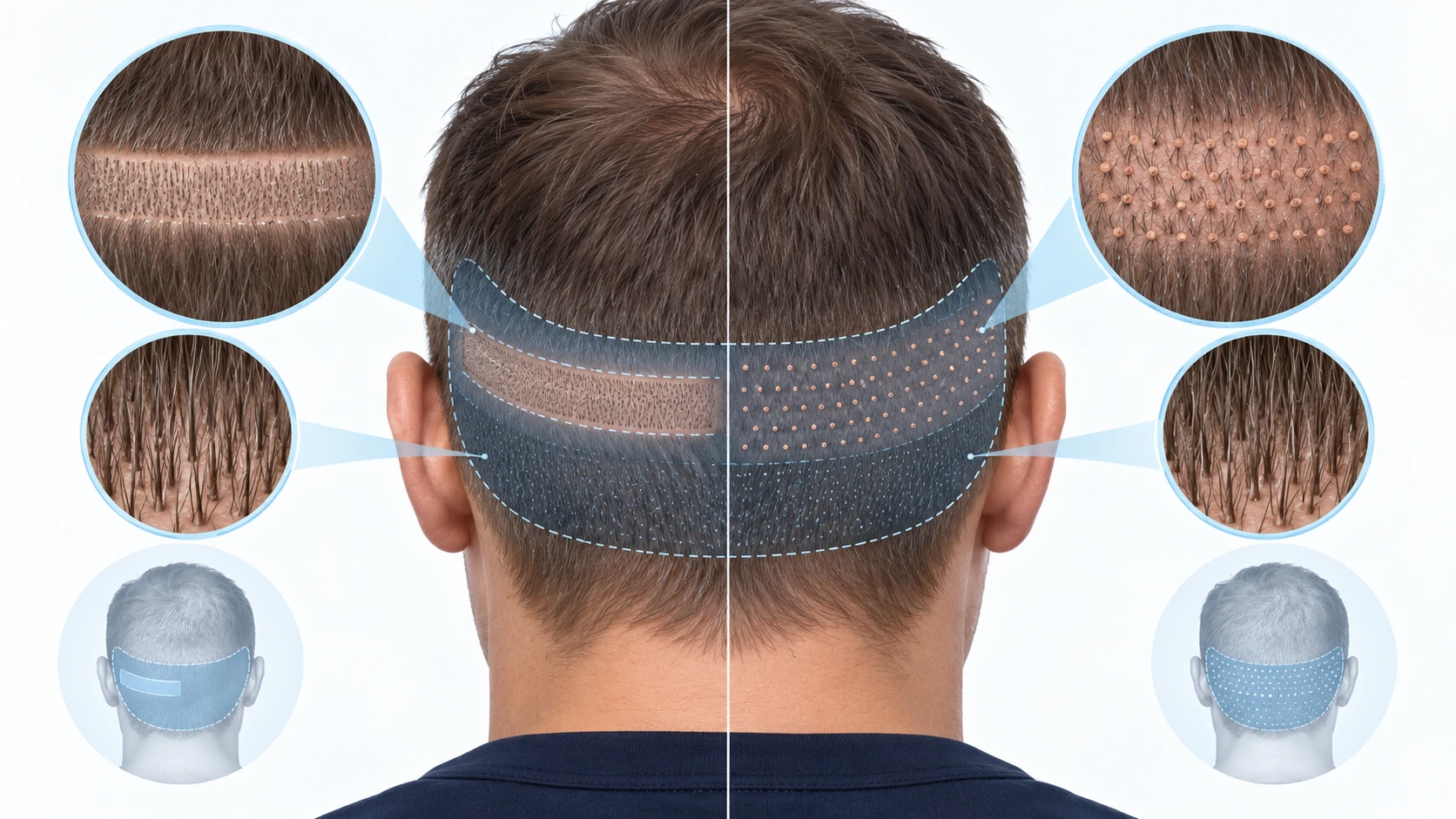
Hair transplantation redistributes follicles from a donor area to thinning regions. It can improve coverage in appropriate candidates, but it does not create unlimited hair or stop the progression of untreated native follicles.
Three decisions shape this pathway.
Diagnose before surgery
Stable pattern loss, realistic expectations and a suitable donor area matter more than choosing a technique from marketing alone.
Protect the finite donor supply
Extraction distribution, strip design, density, caliber and future loss determine how much donor hair can be used responsibly.
Plan recipient placement
Hairline design, angle, direction, density and graft handling shape naturalness and survival.
Move from the category to the specific question.
Each guide has a distinct role. Start with the closest match, then use the connected pathway to compare overlaps and next steps.
FUT vs FUE
Compare harvesting, scar patterns, graft handling, recovery and candidacy.
Read the guideDonor-Area Management
Understand safe-zone selection, overharvesting, shock loss and lifetime planning.
Read the guideGive every intervention a defined purpose.
The order matters because a growth stimulant, corrective nutrient, anti-inflammatory therapy and DHT-focused treatment solve different problems.
- 01
Confirm candidacy
Assess diagnosis, stability, donor density, scalp health, goals and future progression.
- 02
Choose the harvesting strategy
Balance scar preference, hairstyle, donor yield, prior surgery and long-term flexibility.
- 03
Design the recipient plan
Work backward from an age-appropriate hairline and the coverage achievable with finite grafts.
- 04
Protect the long-term result
Monitor healing and manage ongoing native pattern loss with an individualized plan.
Hair transplantation is surgery. Risks can include infection, bleeding, numbness, shock loss, visible scarring, poor growth, unnatural design and donor depletion. Candidacy and technique require evaluation by a qualified hair-restoration physician.