
DHT-focused hair-loss treatment starts with the pattern on top.
Compare natural DHT support, finasteride, dutasteride and spironolactone—then match the option to sex, life stage, diagnosis and risk.
Compare treatment options Trichology.com Editorial Team · Updated September 2026
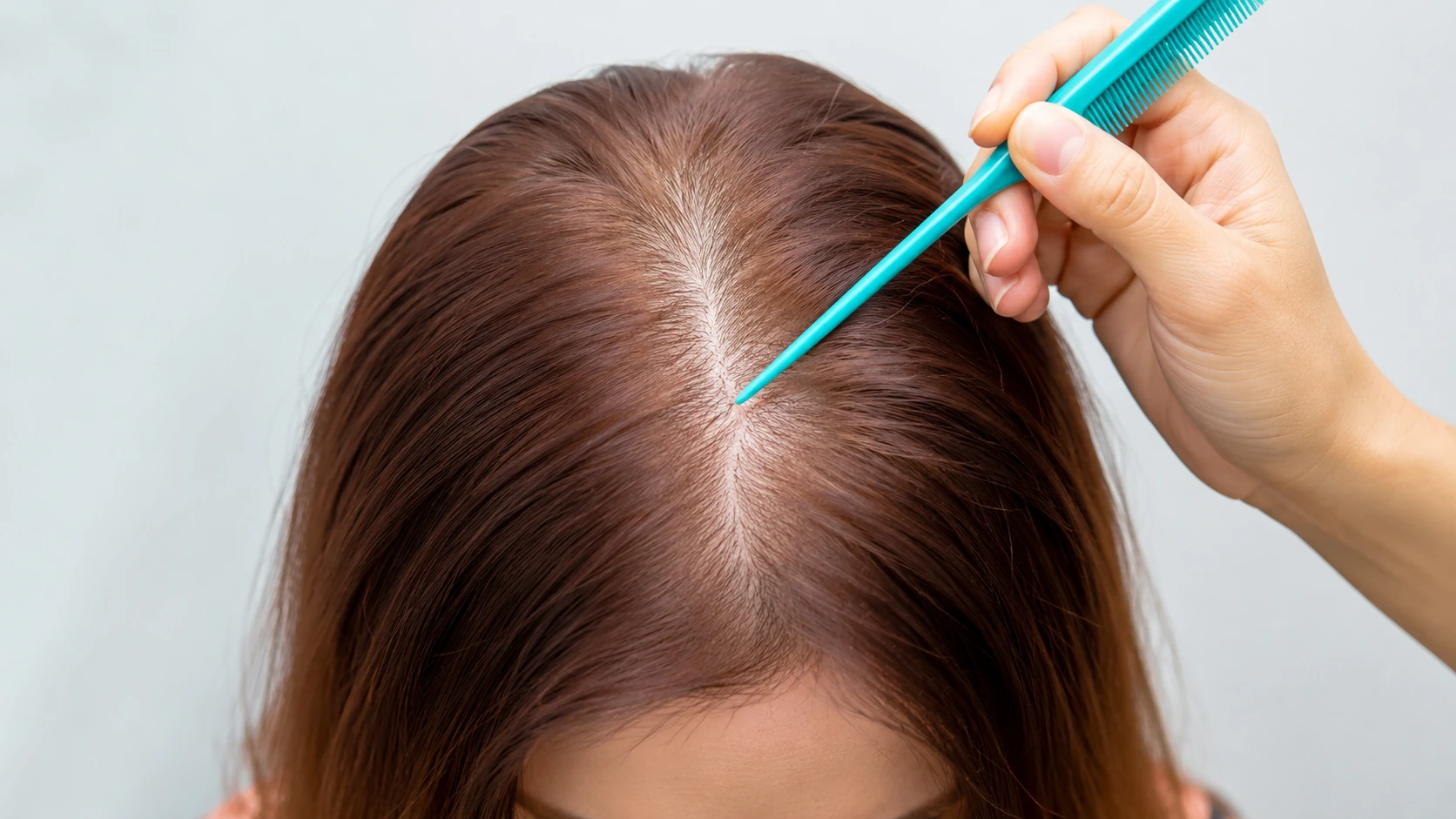
The top is vulnerable. The back and sides are usually preserved.
In androgenetic alopecia, genetically susceptible follicles progressively miniaturize across the frontal hairline, temples, mid-scalp and crown. Men and women often show different distributions, but the active pattern remains concentrated over the top.
Sudden shedding everywhere, completely smooth patches, broken hairs, pain, scale, pustules or loss extending through the back and sides should prompt evaluation for another or overlapping condition.
Understand androgenetic alopeciaNatural support and prescription suppression are not interchangeable.
Both can have a place in a DHT-focused plan. The practical choice is a balance between expected effect, quality of evidence, side-effect tolerance and the level of medical oversight required.
Conservative treatment path
Formulation-dependent support with generally lower systemic treatment intensity.
Medical treatment path
More established or stronger androgen intervention with greater clinical responsibility.
Modest or uncertain and highly dependent on the ingredient, extract, dose and finished formula.
More predictable or stronger, although response still varies by diagnosis and individual.
Limited to emerging. Evidence cannot automatically be transferred from one botanical product to another.
More established for selected uses. Evidence, approval status and appropriate population differ by medicine.
Often lower-intensity, not risk-free. Digestive effects, allergy, bleeding risk, interactions and reproductive precautions may still matter.
Greater potential for clinically important effects. Sexual, mood, fertility, pregnancy, blood-pressure, potassium and other risks depend on the drug.
Product and history review. A verified or clinical trichologist can help assess formulation quality and coordinate referral when needed.
Licensed prescriber required. Candidacy, contraindications, counseling and monitoring belong in medical care.
The central trade-off: a potentially stronger or more predictable intervention usually comes with greater medical responsibility. Lower treatment intensity does not guarantee zero side effects, and stronger suppression does not guarantee the best outcome for every person.
Choose a defined natural approach—not a loose ingredient stack.
These are treatment choices with different evidence and formulation requirements. A typical protocol selects one primary natural DHT strategy, monitors it consistently and adds another option only when there is a clear reason.
Saw palmetto
Extracts of Serenoa repens are used in many natural DHT-support formulas. Results cannot be generalized across products because fatty-acid content, extraction and dose vary.
Natural treatment optionSerevelle™
A standardized saw-palmetto extract studied in adults with self-perceived thinning. The findings apply to the studied extract and do not establish equivalence to prescription DHT suppression.
Natural treatment optionPumpkin seed oil
One small human trial is encouraging, but oral and topical products are not interchangeable and the evidence remains much narrower than for established medical treatment.
Natural treatment optionGreen tea / EGCG
EGCG is biologically plausible and common in topical formulas, but direct clinical evidence for meaningful DHT-driven hair-loss outcomes is limited.
Natural treatment optionMatch the mechanism to the patient—not simply to the strongest drug.
These summaries establish the category without replacing dedicated medicine pages or an individualized prescribing discussion.
Finasteride
A principal prescription option for appropriate men with male pattern hair loss. Use in women is off-label and reproductive safety changes candidacy.
Discuss sexual, mood, breast, fertility, pregnancy-exposure and PSA considerations with the prescriber. Dedicated treatment guide plannedDutasteride
Reduces DHT through type I and type II 5-alpha-reductase inhibition. Hair-loss use is off-label in the United States and is generally reserved for selected patients after medical review.
Greater DHT suppression does not automatically mean a better individual treatment choice. Dedicated treatment guide plannedSpironolactone
Often considered off-label for women with female pattern loss, especially when acne, irregular cycles, hirsutism or PCOS raises concern about androgen activity.
Pregnancy precautions, blood pressure, kidney function, potassium risk and other medicines can affect suitability and monitoring. Dedicated treatment guide plannedThe same diagnosis does not create the same prescription pathway.
Most protocols choose one primary DHT or antiandrogen treatment. The lists below are alternatives to compare—not a recommendation to combine every option. Combination therapy should have a specific clinical rationale.
Male pattern hair loss
Choose one primary path based on evidence, desired intensity and individual risk.
- Natural DHT blockers
Saw palmetto, Serevelle™, pumpkin seed oil or green-tea-derived support may be considered with realistic evidence expectations.
- Finasteride
An established prescription DHT-reduction option for appropriate adult men.
- Dutasteride
A more suppressive, off-label hair-loss option requiring a clinician-led risk and benefit discussion.
Spironolactone is not presented as a routine male pattern-loss treatment on this pathway.
Female pattern hair loss
Choose one primary path based on life stage, androgen context and reproductive safety.
- Natural DHT blockers
Potentially supportive, but pregnancy, breastfeeding, interactions and product standardization still matter.
- Spironolactone
A common off-label antiandrogen option for selected women, including some with PCOS or other signs of androgen excess.
- Finasteride or dutasteride after menopause
May be considered off-label in carefully selected postmenopausal women. These are not routine options during reproductive years.
Protect susceptible follicles while checking for overlapping drivers.
- 01
Confirm the patterned distribution
Document miniaturization over the top and distinguish it from diffuse shedding, patchy loss, breakage or scarring disease.
- 02
Choose a DHT or antiandrogen strategy
Match natural or prescription intensity to the individual’s sex, age, reproductive plans, health history and preferences.
- 03
Rule out nutritional and inflammatory overlap
Correct confirmed deficiencies and treat active scalp or immune disease rather than assuming DHT explains every change.
- 04
Add stimulation when appropriate
Minoxidil, LLLT, PRP or microneedling may support growth but do not replace DHT control when miniaturization is active.
Finasteride, dutasteride and spironolactone require medical oversight. Pregnancy potential, plans to conceive, fertility, sexual or mood effects, breast changes, blood pressure, kidney function, potassium, other medicines and PSA interpretation can change the decision.
DHT treatment, clearly answered.
Does DHT hair loss affect the whole scalp?
The characteristic miniaturization is concentrated across the hairline, temples, mid-scalp and crown. The back and sides are usually relatively preserved. Loss outside that distribution can point to an overlapping or different condition.
Do women experience DHT-related hair loss?
Yes. Women can develop androgen-sensitive pattern loss, usually with widening of the central part and reduced density over the top rather than the classic male pattern.
Are natural DHT blockers as effective as finasteride?
They should not be treated as equivalent. Evidence varies by ingredient and finished formulation, while finasteride has a larger and more established evidence base for male pattern hair loss.
Is spironolactone a DHT blocker?
It is an antiandrogen rather than a direct 5-alpha-reductase inhibitor. It may be considered for selected women when androgen-sensitive hair loss is part of the diagnosis.
Can a DHT treatment be combined with minoxidil or LLLT?
Yes, when each treatment has a defined role and the combined plan fits the diagnosis, medical history, tolerability and monitoring needs.