
Hair-growth stimulation treatments compared.
Minoxidil, low-level light therapy, platelet-rich plasma and microneedling may support viable follicles in different ways. The right choice starts with the diagnosis—and with deciding whether DHT, nutrition or inflammation also requires treatment.
Is the follicle ready to be stimulated?
Hair-growth stimulants aim to support follicles that are still capable of producing hair. They do not all treat the reason those follicles changed. Pattern thinning, diffuse shedding, autoimmune loss and scarring alopecia can initially look similar, while requiring very different plans.
Before committing time and money, establish a likely diagnosis, document a baseline and decide what you can realistically maintain.
Three contributors can act independently—or overlap.
This framework separates the forces that may be changing the follicle from the tools used to stimulate it. A person may have one dominant contributor or several operating at the same time.
Genetics / DHT
Inherited androgen sensitivity may progressively miniaturize susceptible follicles, even when circulating hormone levels appear ordinary.
- Clinical clues
- Patterned recession, crown thinning, widening part
- Primary question
- Is progressive miniaturization active?
Nutrition
Inadequate intake, absorption or utilization of key nutrients may disrupt normal cycling or reduce the material available for hair production.
- Clinical clues
- Diffuse shedding, restrictive diet, systemic symptoms
- Primary question
- Is a documented deficiency or utilization problem present?
Inflammation
Scalp disease, autoimmune activity or other inflammatory processes may interfere with follicular function and can change treatment urgency.
- Clinical clues
- Burning, scale, redness, pustules, patchy or scarring loss
- Primary question
- Must inflammation be controlled before stimulation?
Targets why the follicle may be changing.
Supports follicles that remain capable of responding.
Diagnosis first
Stimulation cannot correct every cause of loss.
Evidence differs
Study quality and protocols vary by option.
Maintenance matters
Benefits usually depend on continued care.
Measure progress
Use consistent photographs and review points.
Different mechanisms. Different commitments.
No single option is “best” for every person. Compare the role each treatment may play before evaluating brands, devices or procedure packages.
Minoxidil
Topical or prescription oral support- How it works
- Supports follicular activity and prolongs the growth phase through pathways that are not fully understood.
- Best studied for
- Androgenetic alopecia
- Commitment
- Consistent daily use with formulation-appropriate monitoring
Low-level light therapy
Noninvasive device support- How it works
- Applies specific red or near-infrared light to influence cellular activity in viable follicles.
- Best studied for
- Early-to-moderate pattern thinning
- Commitment
- Multiple sessions weekly for months, then maintenance
Platelet-rich plasma
Procedure-based stimulation- How it works
- Delivers concentrated platelets and signaling proteins from the patient’s own blood into the scalp.
- Best studied for
- Selected non-scarring pattern hair loss
- Commitment
- An initial series followed by individualized maintenance
Microneedling
Adjunctive procedural support- How it works
- Creates controlled micro-injury intended to trigger wound-response signaling and may increase topical penetration.
- Best studied for
- Androgenetic alopecia, commonly alongside minoxidil
- Commitment
- Clinician-selected depth and interval with recovery time
Suitability changes with diagnosis, medical history, pregnancy status, medications and scalp condition. These approaches are most often discussed for non-scarring pattern hair loss.
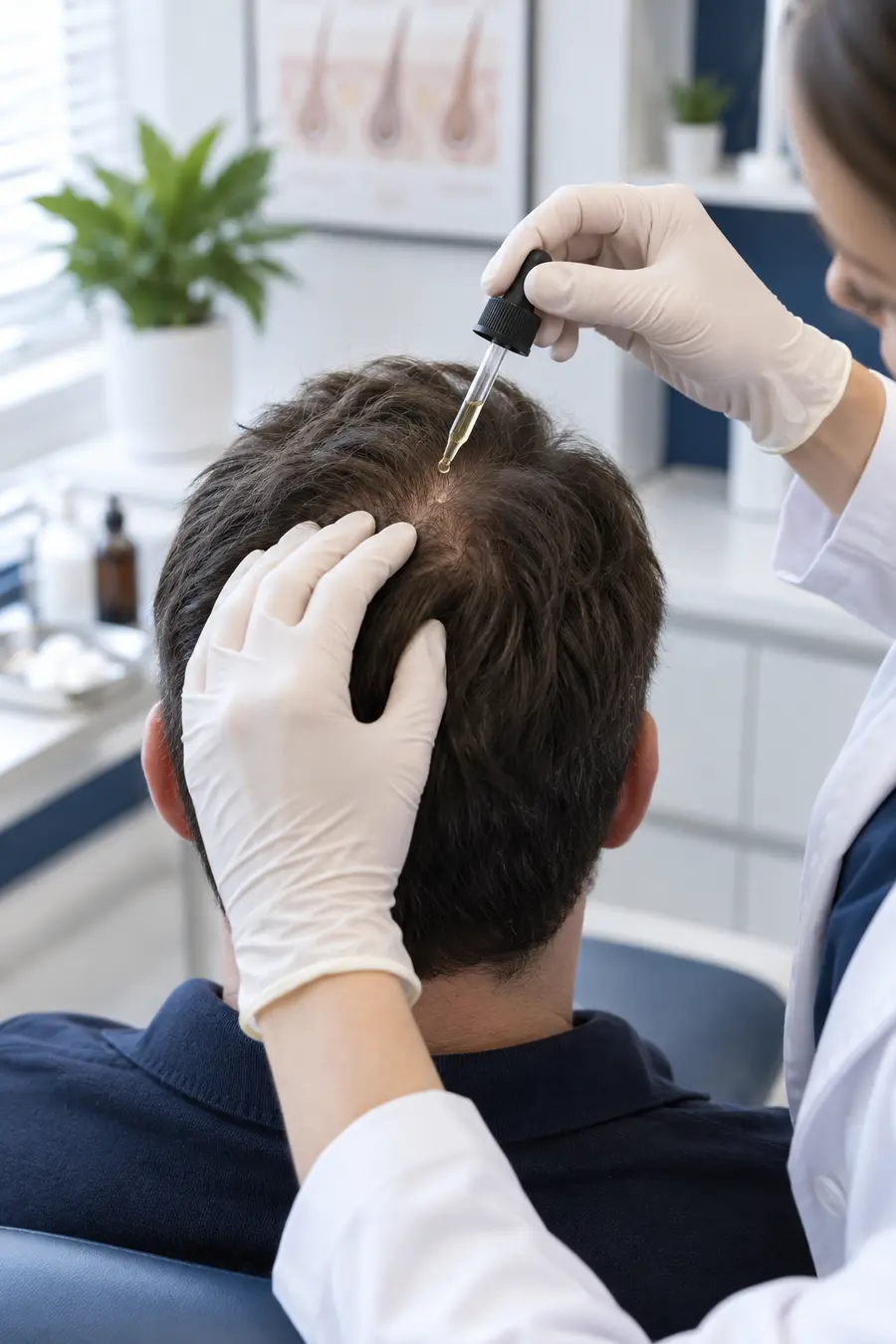
Minoxidil
Minoxidil may be used as an over-the-counter topical treatment or prescribed orally for selected patients. Both approaches aim to support the activity of viable follicles, but they differ in delivery, medical oversight and potential side effects.
Topical minoxidil
Applied directly to the scalp as a liquid or foam. It offers localized, at-home treatment and is available without a prescription in common formulations.
Localized, at-home routeOral minoxidil
Taken by mouth at a clinician-selected dose. Its use for hair loss is prescription-based and off-label, with medical screening and monitoring for systemic effects.
Prescription, medically monitored routeImportant contextTopical and oral minoxidil are not interchangeable. Oral minoxidil for hair loss is an off-label prescription approach and requires medical screening and monitoring for possible systemic effects. The appropriate form should be selected with a qualified medical professional.
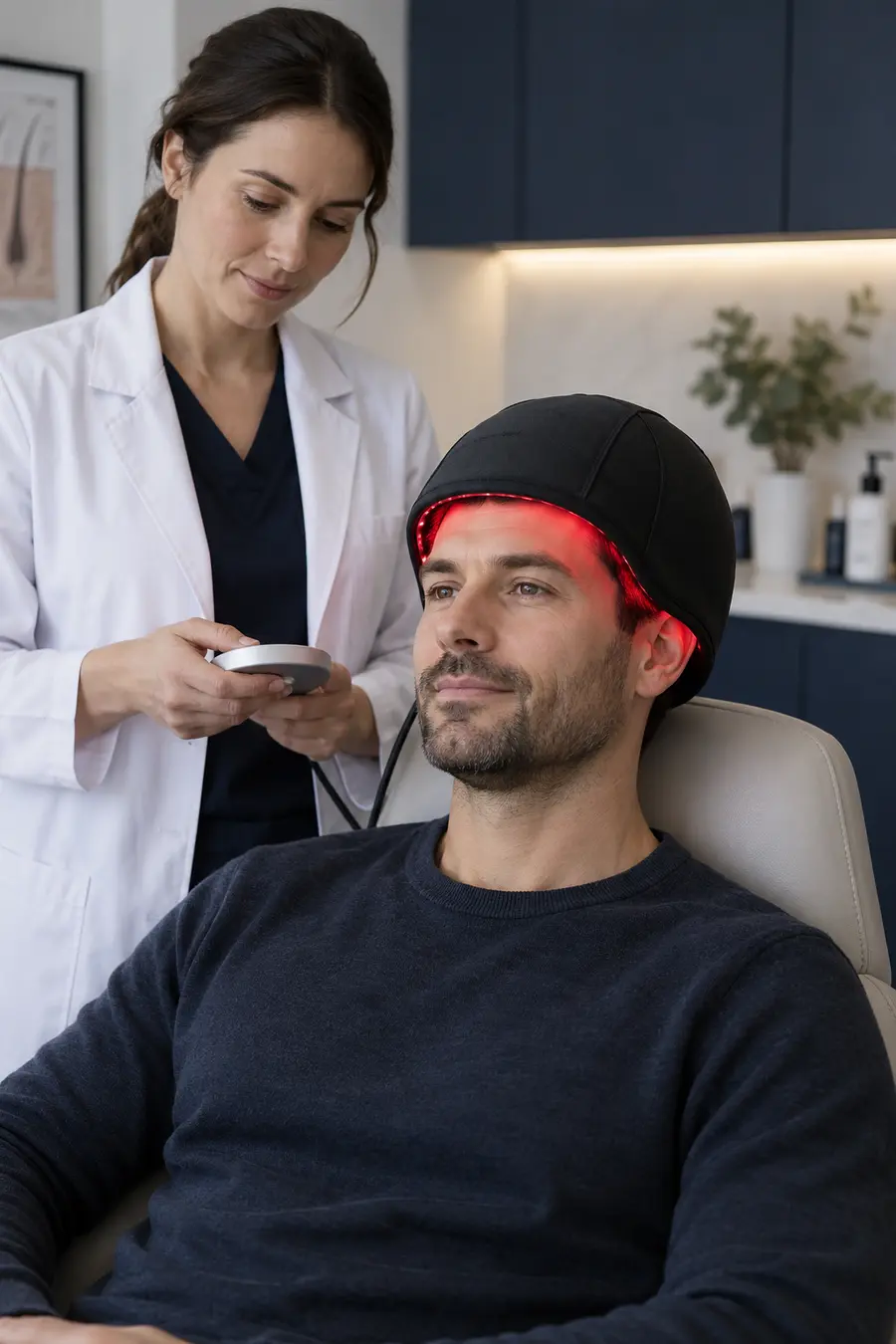
Low-level light therapy
Low-level light therapy uses red or near-infrared light delivered by a cap, helmet, comb or clinical device. Research suggests selected devices can improve hair density in some people with androgenetic alopecia, but the response is variable.
Important context“FDA cleared” describes a device’s regulatory pathway; it does not guarantee that every purchaser will regrow hair. Percentage claims should identify the exact device and study.
Read the JMT review on low-level laser therapy →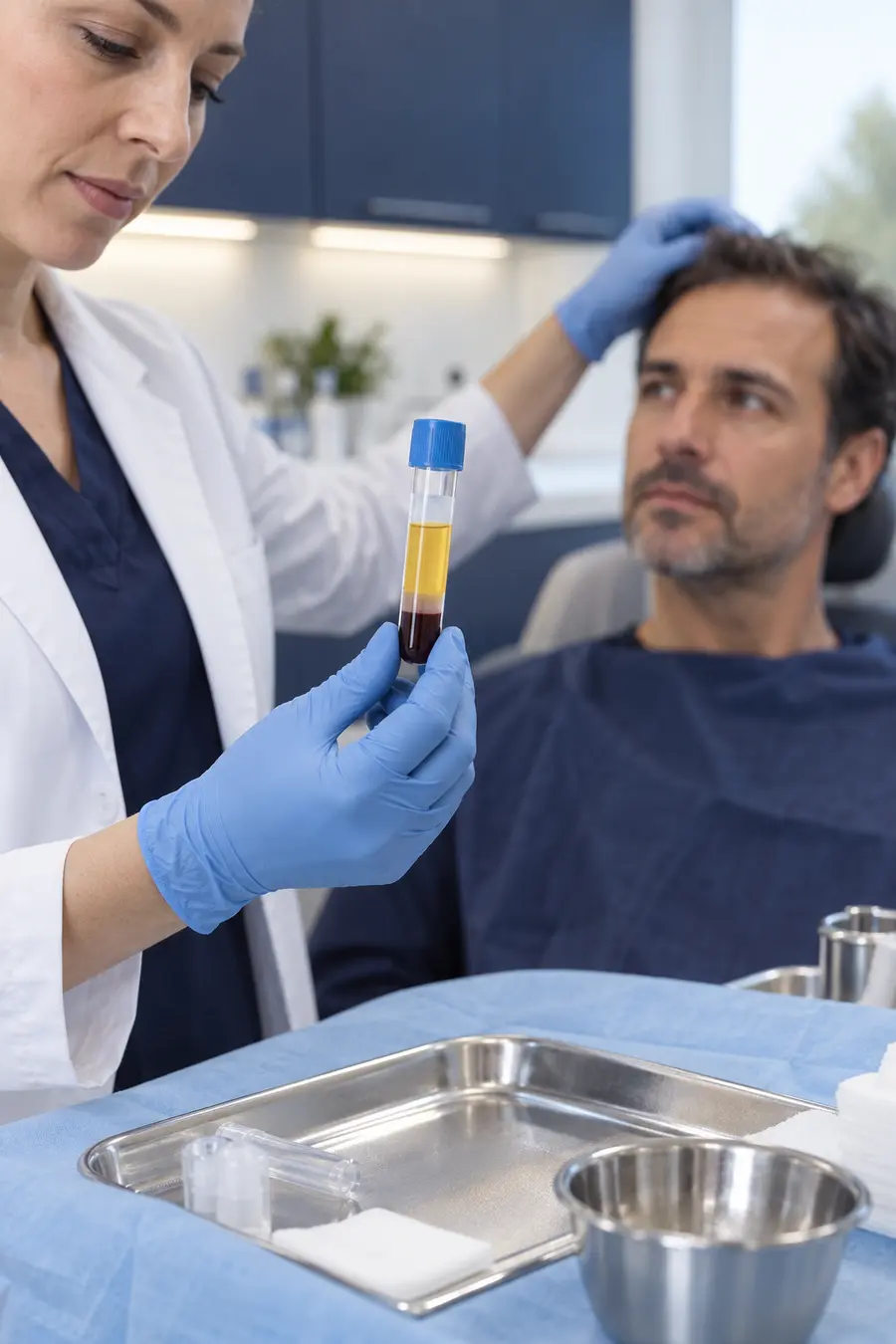
Platelet-rich plasma
PRP is prepared from a person’s own blood and injected into the scalp by an appropriately licensed medical professional. Studies suggest it may improve hair density for some patients with androgenetic alopecia, but preparation and treatment protocols differ widely.
Important contextPRP is not permanent and is not appropriate for every condition. The procedure should be performed in a medical setting after contraindications and the diagnosis are reviewed.
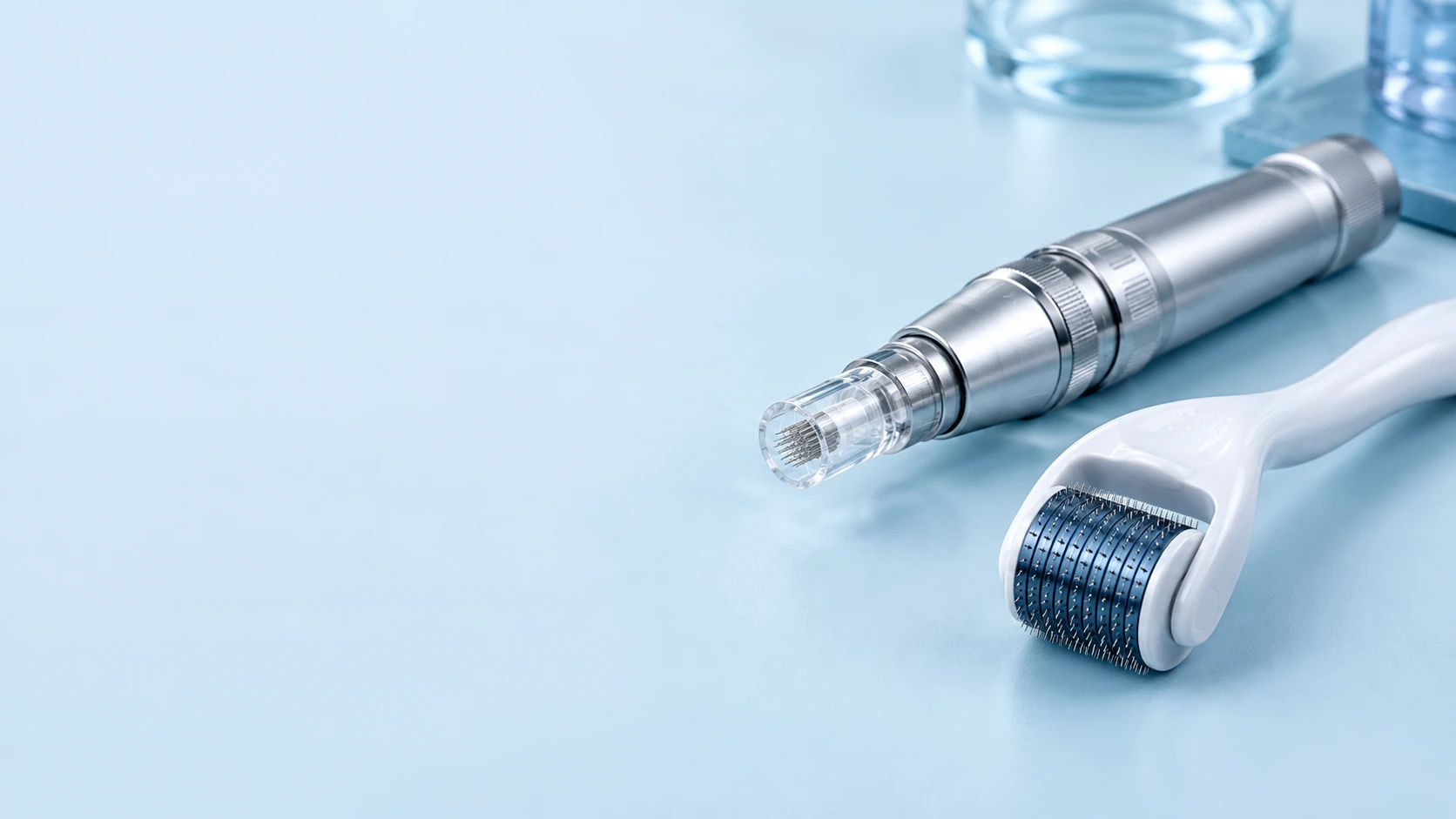
Microneedling
Microneedling creates controlled microchannels in the scalp. It is most reasonably framed as an adjunct to a diagnosis-led regimen, with the strongest clinical rationale in selected androgenetic alopecia protocols combined with topical minoxidil.
Important contextMore aggressive treatment is not necessarily more effective. Avoid use over active infection, significant inflammatory scalp disease or suspected scarring alopecia until appropriately evaluated. Professional protocols should define depth, frequency and when topical products may be resumed.
Read the JMT evidence review on microneedling & dermarolling →Separate the driver from the stimulant.
A stimulant may encourage capable follicles, while a diagnosis-led plan addresses why they are changing. DHT, nutrition and inflammation are evaluated as independent contributors because improving one does not automatically resolve the others.
- 01Classify the hair-loss pattern.
Use history, distribution, scalp examination and medical testing when indicated.
- 02Identify the active contributor or contributors.
Evaluate DHT, nutrition and inflammation without assuming only one is present.
- 03Choose the treatment role.
Select a medication, device, procedure or adjunct based on evidence, safety, cost and what the person can maintain.
- 04Measure the response.
Use standardized photographs, symptom changes and a predefined review interval.
What to know before you begin.
Which hair-growth stimulant works best?+
There is no universal winner. Topical minoxidil has established evidence for pattern hair loss, oral minoxidil may be prescribed off-label for selected patients, selected low-level light devices may improve density with consistent use, and PRP may help some people with androgenetic alopecia. The best fit depends on the diagnosis, safety profile, budget and ability to maintain the plan.
Can I combine minoxidil, LLLT, PRP and microneedling?+
Yes, you certainly can for advanced results. Because these options work differently, combination care may be appropriate, but using all four is not automatically better. Microneedling is commonly considered an adjunct—particularly with topical minoxidil for selected androgenetic alopecia—not a universal standalone treatment. A dermatologist, verified trichologist or other qualified clinician should review the diagnosis, contraindications, procedural risks and practical burden before combining treatments.
Will treatment work if the cause of hair loss is not addressed?+
Stimulation may have limited value when ongoing inflammation, scarring, nutritional deficiency, medication effects or another active cause is left unrecognized. Assessment should come before an expensive or complex treatment plan.
How long before I can judge results?+
Meaningful changes are usually assessed over months, not days. Use the same lighting, angle, hairstyle and camera distance. Your clinician may recommend a six- to twelve-month review window depending on the treatment and diagnosis.
Do results last after treatment stops?+
Maintenance varies. Benefits from minoxidil usually diminish after discontinuation. Light therapy requires continued use, and PRP protocols commonly include maintenance sessions. Ask what ongoing commitment is expected before beginning.
Is microneedling effective by itself?+
Evidence is more persuasive when microneedling is used alongside an established treatment such as topical minoxidil than when it is used alone. Protocols differ, and active infection, significant inflammation or suspected scarring alopecia should be medically evaluated before needling.
When should I seek medical evaluation first?+
Seek prompt medical evaluation for sudden or patchy loss, scalp pain, burning, pustules, heavy scale, eyebrow loss, smooth scar-like areas or rapidly progressing thinning. These signs may point beyond routine pattern hair loss.
Stimulation works best inside a diagnosis-led plan.
Minoxidil, selected low-level light devices, PRP and microneedling can each play a role for appropriate candidates. Microneedling is generally an adjunct rather than a substitute for diagnosis or established treatment. None of these options should postpone evaluation of sudden, patchy, painful or inflamed hair loss.
Find a professional who can assess the pattern.
Reviewed against guidance and evidence summaries from the American Academy of Dermatology and systematic reviews of minoxidil, low-level light therapy, platelet-rich plasma and microneedling. Individual studies, devices and procedural protocols vary in quality.