
Understand the pattern behind your hair loss.
Whether you are seeing gradual thinning, sudden shedding, smooth patches, or changes to your scalp, learning what the pattern may mean can help you take a more informed next step.
What does your hair loss look like?
Each image represents a common presentation, but appearance alone cannot confirm a condition.
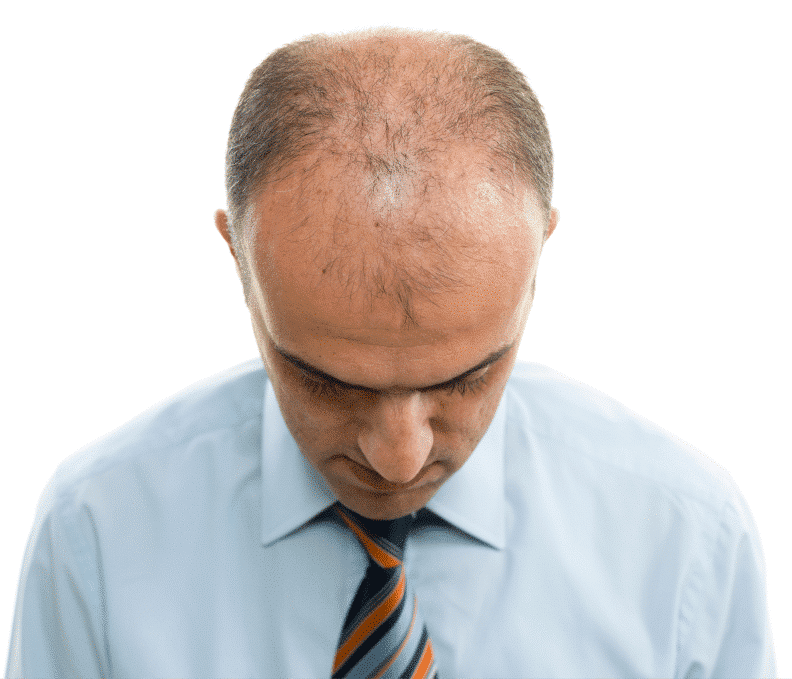 Androgenetic alopecia
Gradual thinning at the hairline, part, crown, or top of the scalp.
Understand this condition → Telogen effluvium
More shedding than usual, often noticed in the shower, brush, or throughout the day.
Understand this condition → Alopecia areata
Sudden smooth patches or, in some people, more widespread diffuse loss.
Understand this condition → Traction alopecia
Thinning or breakage near areas placed under repeated hairstyle tension.
Understand this condition →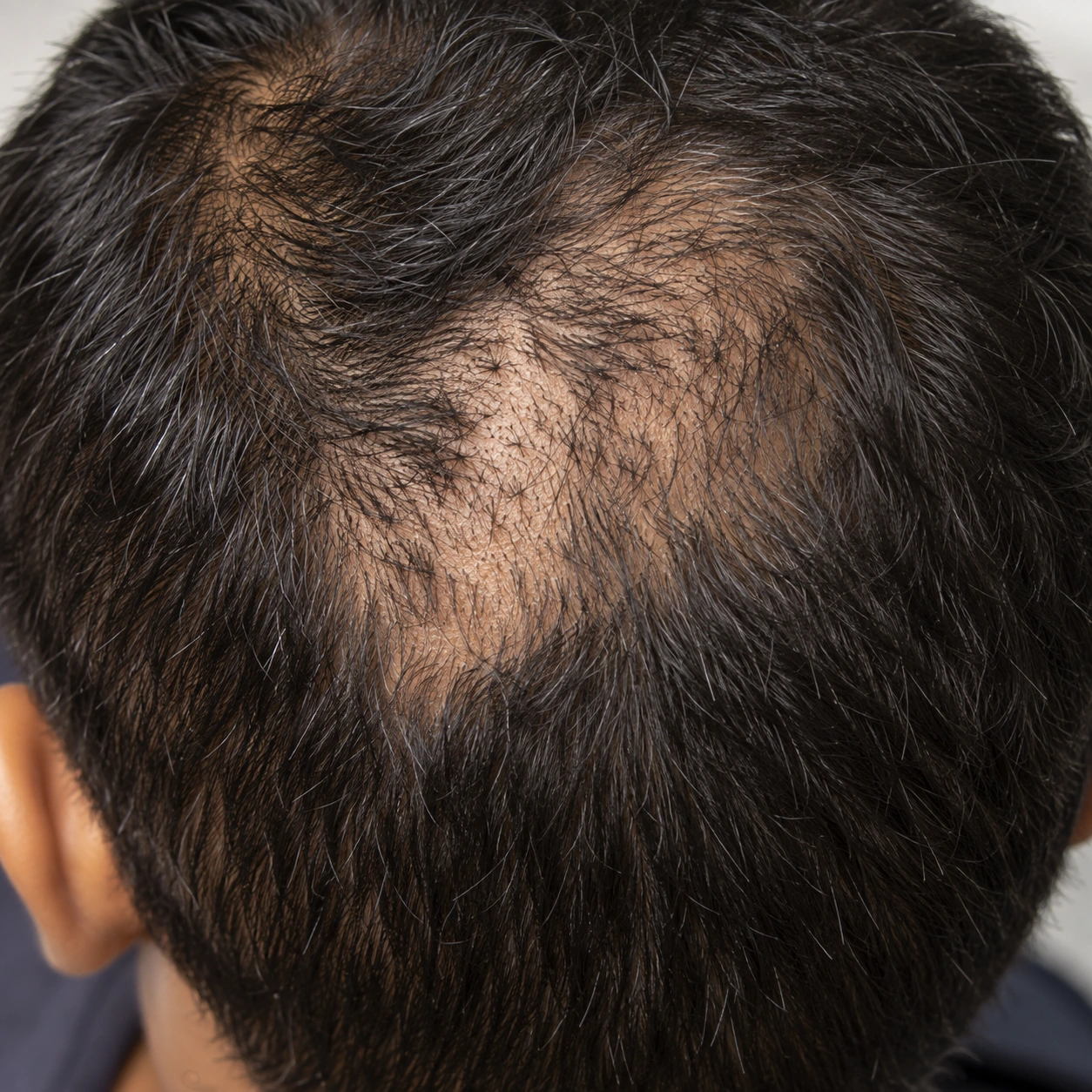 Trichotillomania
Irregular patches with broken hairs of different lengths caused by recurrent hair pulling.
Understand this condition → Anagen effluvium
Rapid, widespread shedding or breakage during the active growth phase, often after a major medical treatment or toxic exposure.
Understand this condition →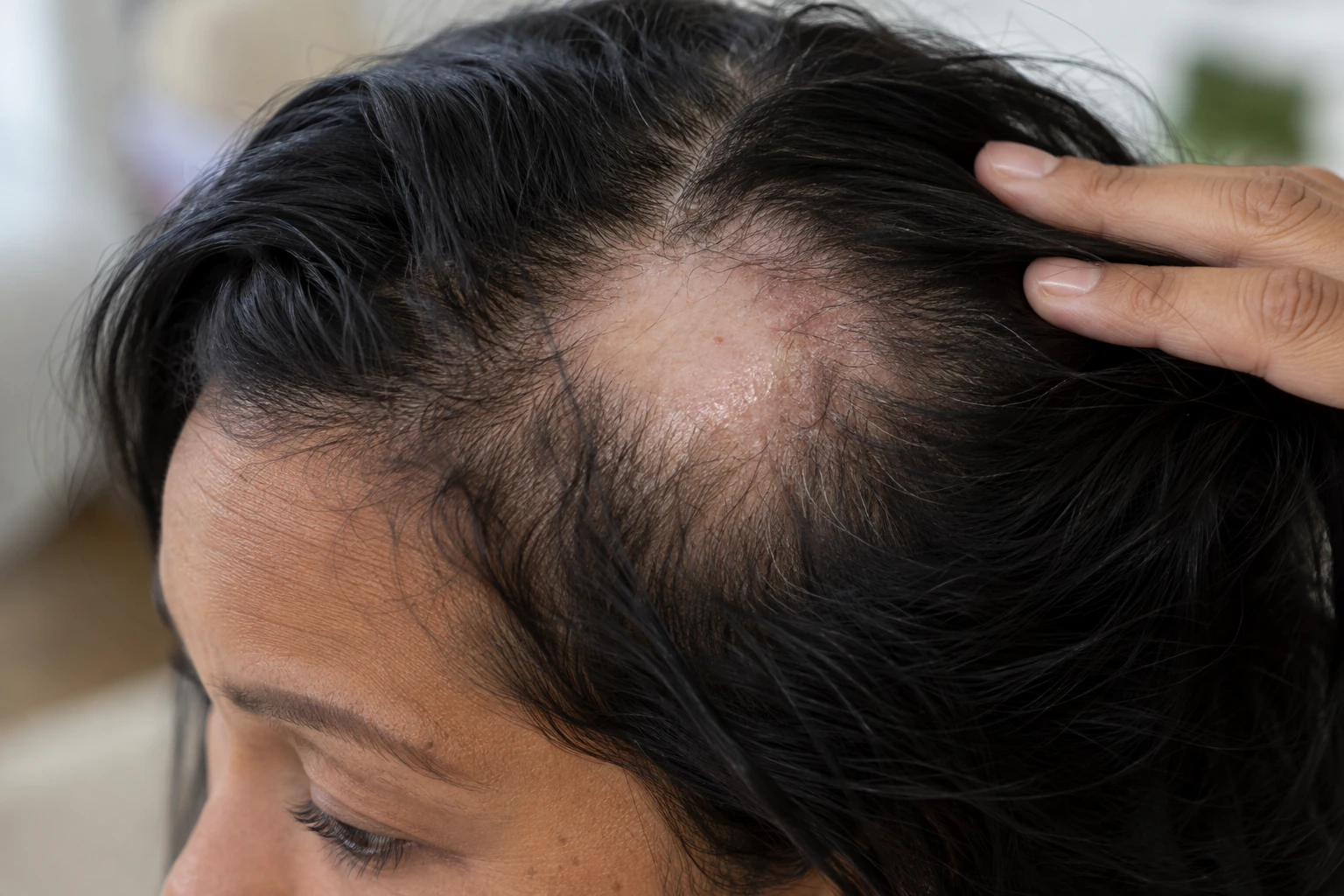 Scarring alopecia
Hair loss with inflammation, discomfort, or areas where follicular openings appear reduced.
Understand this condition → Frontal fibrosing alopecia
A receding frontal or temporal hairline, sometimes with eyebrow loss or skin changes.
Understand this condition →
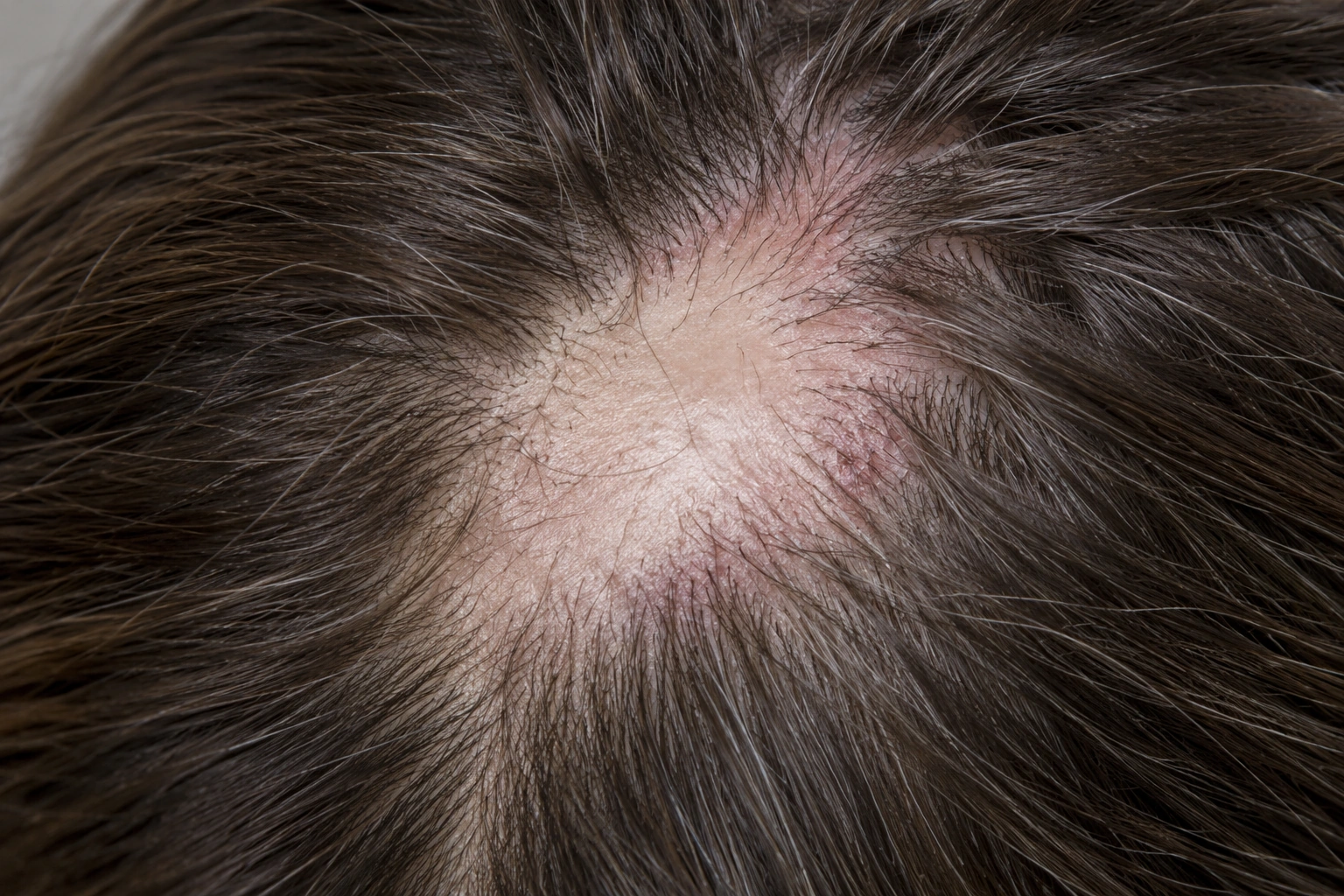
Some hair loss needs prompt medical evaluation.
Seek timely assessment if hair loss is accompanied by pain, burning, marked redness, pustules, crusting, bleeding, rapid progression, eyebrow loss, or smooth scar-like areas.
A verified trichologist can document the visible pattern and help coordinate care. Medical diagnosis, prescription treatment, biopsy, and management of inflammatory or scarring alopecia require an appropriately licensed healthcare professional.
Find a verified trichologist →