
Traction alopecia
Repeated pulling can weaken hairs and injure follicles along the hairline, temples, or wherever a style carries tension. Catching the signs early can make the difference between recovery and permanent loss.
Educational guide · Appearance alone cannot confirm a diagnosis

What is traction alopecia?
Traction alopecia is hair loss caused by repeated or prolonged pulling on the hair and follicle.
- It often affects the frontal hairline, temples, or areas supporting extensions.
- Early changes may be reversible when tension is removed.
- Long-standing traction can scar follicles and cause permanent loss.
Your scalp may warn you before the hair loss becomes permanent.
Look for a change from your usual hairline and for symptoms that appear during or after a tight style.
Pain or tenderness
A style that stings, aches, causes a headache, or feels tight is creating excess tension.
Bumps or redness
Small inflamed bumps, itching, scale, or redness may appear around stressed follicles.
Broken edge hairs
Short hairs of different lengths can collect along the hairline or around braids and extensions.
Receding margins
The temples, frontal edge, nape, or part lines may gradually look thinner.
The fringe sign: some short hairs may remain at the very front while the area immediately behind them thins. This can support—but does not prove—a traction diagnosis.
The opportunity for regrowth changes as follicle damage progresses.
These images are educational examples. Texture, skin tone, hairstyle, and distribution vary.
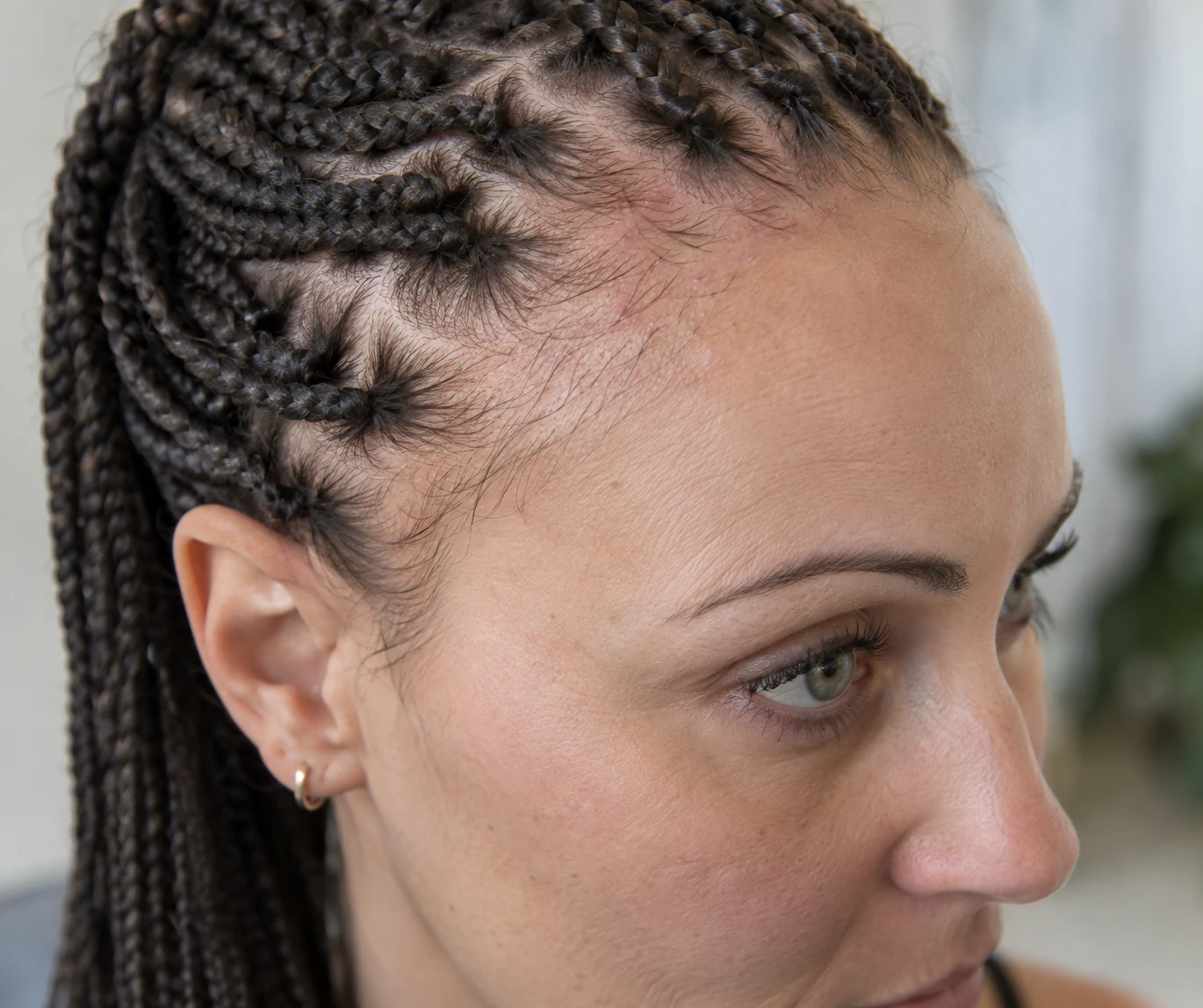 01
Early tension
Tenderness, itching, redness, small bumps, and short broken hairs may appear where the style pulls.
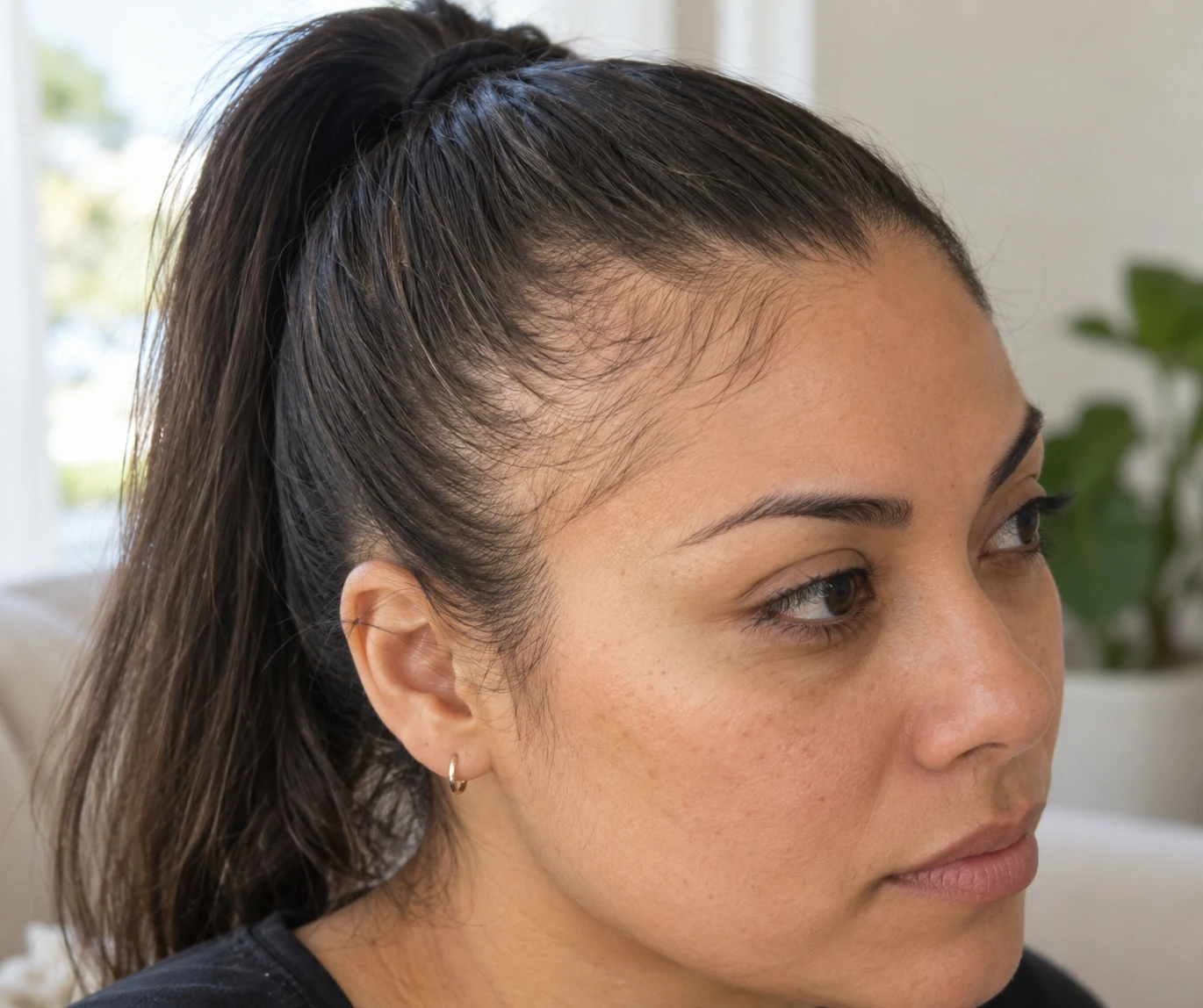 02
Visible thinning
The hairline or temple becomes less dense, but fine hairs and follicular openings remain visible.
 03
Long-standing damage
The area may become smooth and shiny as repeated tension permanently damages follicles.
Traction alopecia does not always advance through neat stages. The practical distinction is whether viable follicles remain and whether ongoing tension or inflammation is still present.
Any repeated pulling force can affect a vulnerable area.
Braids, cornrows & locs
Risk rises when sections are tight, heavy, painful, or repeatedly anchored in the same places.
Extensions & weaves
Added weight and tight attachment points can concentrate force on fewer follicles.
Ponytails, buns & accessories
Repeated tight pulling or pressure in the same location can gradually thin the margin.
Combined stress
Tension plus heat, chemicals, adhesive, or rough removal can increase breakage and irritation.

Small bonds can concentrate force.
Bonded, taped, sewn-in, and clip-in extensions may place added weight on relatively few natural hairs. Tight placement, heavy lengths, repeated attachment in the same area, or rough removal can increase the risk of breakage and traction alopecia.
Educational example · Extensions do not automatically cause hair loss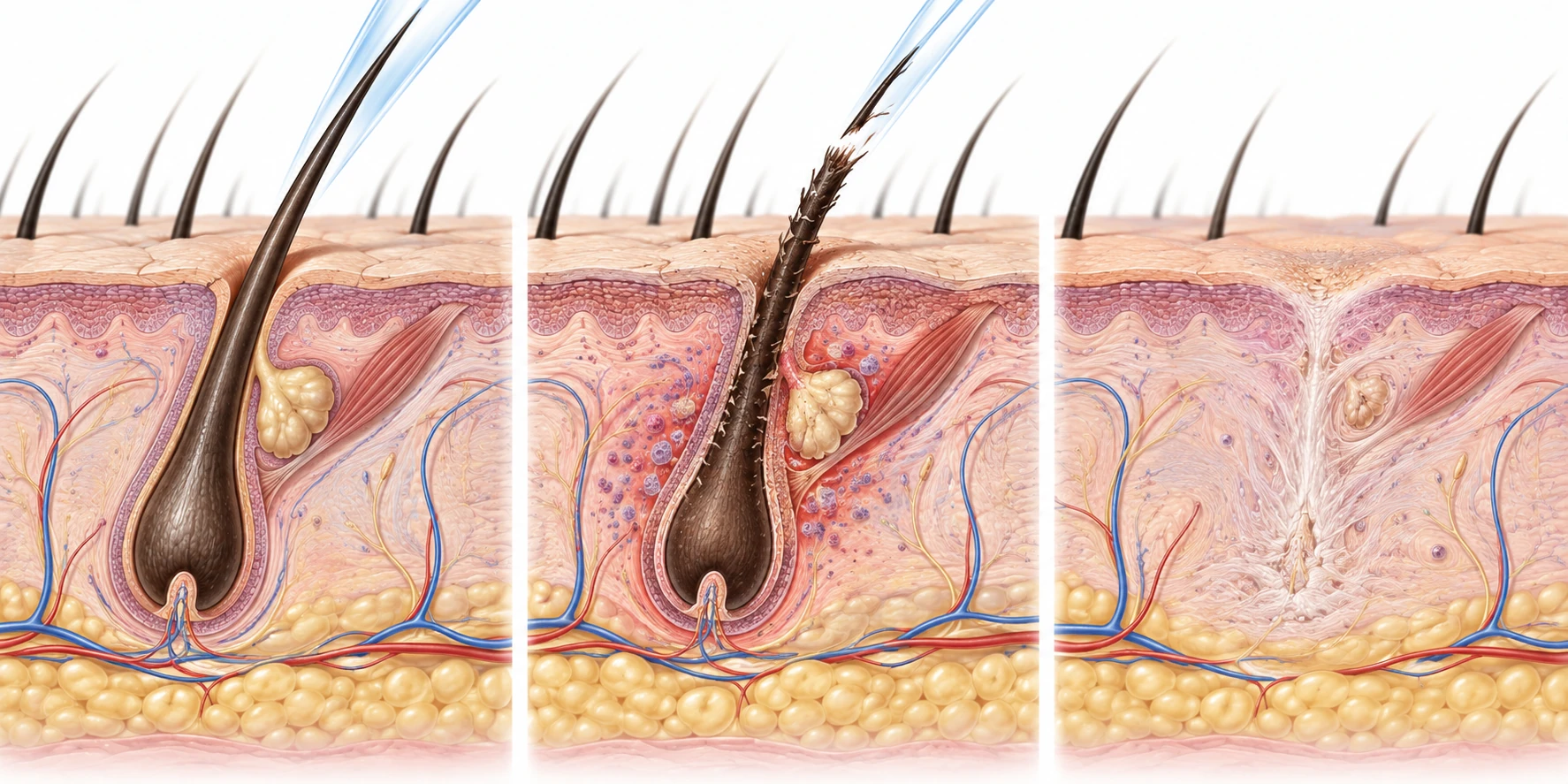 EDUCATIONAL FOLLICLE CROSS-SECTION
Follicle under tension
Repeated force pulls the shaft and stresses the follicle at its attachment point.
Repeated injury
Ongoing tension can lead to breakage and inflammation around the follicle.
Possible permanent damage
If injury continues long enough, follicular structures may be replaced by scar tissue, preventing regrowth.
A style is not protective when it causes pain, bumps, broken hairs, or progressive thinning. Rotate placement, reduce weight, loosen the base, and allow recovery time.
The pattern and styling history usually tell an important part of the story.
Map the tension
Compare the areas of loss with braid rows, attachment points, ponytail direction, accessories, and the nape.
Examine the follicles
Magnification helps distinguish shaft breakage, miniaturization, inflammation, preserved openings, and scarring.
Check for overlap
Pattern loss, alopecia areata, CCCA, frontal fibrosing alopecia, infection, or hair pulling may coexist or resemble traction.
A dermatologist may recommend biopsy when the pattern is unclear, inflammation is present, or scarring alopecia is suspected.
Not every receding edge is caused by styling.
Frontal fibrosing alopecia
A smooth receding band, eyebrow loss, or inflammatory edge may signal a scarring disease.
Female pattern hair loss
A widening part and reduced top density may occur alongside traction at the margins.
Alopecia areata
Sudden smooth patches may involve the temporal or marginal scalp without a tension history.
Remove the pulling force first—then treat what remains.
The right plan depends on inflammation, breakage, follicle viability, duration, and whether another condition overlaps.
Stop or modify tension
Loosen styles, reduce weight, change anchor points, and avoid painful installation and removal.
The essential first stepCalm inflammation
A dermatologist may use appropriate topical, injected, or antimicrobial treatment when inflammation is present.
Requires accurate diagnosisSupport viable follicles
Minoxidil or another clinician-selected approach may be considered when follicles remain capable of growth.
Results and suitability varyConsider restoration
Stable, inactive, permanent loss may be evaluated for camouflage or transplantation in selected candidates.
Only after the cause is controlledNo treatment can restore a follicle that has been fully destroyed. Early action is more useful than waiting for the area to become smooth and shiny.
Pain, inflammation, or a rapidly changing hairline deserves evaluation.
Seek prompt assessment for pustules, drainage, crusting, marked redness, burning, severe tenderness, rapid progression, smooth shiny skin, eyebrow loss, or hair loss that continues after tension is removed.
Find a verified trichologist →Traction alopecia, clearly explained.
Can traction alopecia grow back?+
Early traction alopecia may improve when pulling stops before follicles are permanently damaged. Smooth shiny areas without follicular openings are less likely to regrow.
How can I tell if a style is too tight?+
Pain, headache, stinging, bumps, redness, or a visibly pulled hairline are warning signs. A protective style should not hurt.
Do only braids cause traction alopecia?+
No. Tight ponytails, buns, extensions, weaves, locs, rollers, head coverings secured under tension, and repeated use of tight accessories can all create traction.
Can children develop it?+
Yes. Children can develop traction alopecia from repeated tight styling. Early hairstyle changes are especially important.
Is traction alopecia the same as breakage?+
No. Breakage affects the hair shaft, while traction alopecia injures the follicle. Both may occur together and can look similar without close examination.
Who should evaluate it?+
A qualified trichologist can document the pattern and styling history. A dermatologist should assess inflammation, uncertain diagnosis, prescription treatment, or possible permanent damage.
Medical review notes
This guide preserves the current condition topic while organizing it around early recognition, styling-related risk, reversibility versus permanent damage, professional assessment, and realistic treatment goals.
Medical disclaimer: This content is educational and is not a diagnosis or substitute for care from a qualified health professional.