
Scalp micropigmentation: what it can—and cannot—do
A realistic guide to the visual effect, candidacy, procedure, healing, longevity and risks.
SMP changes the appearance of density. It does not grow hair.
A trained practitioner uses a specialized device to place tiny, superficial pigment deposits that imitate the look and shading of natural follicles. Different tones and dot patterns may be blended to create a closely shaved look, soften a receding hairline, reduce scalp-to-hair contrast or camouflage selected scars.
Because SMP is cosmetic camouflage, the underlying reason for hair loss still matters—especially when loss is active, inflammatory or scarring.
Non-surgical
No hair follicles are transplanted.
Immediate effect
Pigment looks darker before settling.
Long-lasting
Fading and future touch-ups are expected.
Highly visual
Practitioner technique shapes the outcome.
Different goals require different SMP strategies.
Closely shaved effect
Creates the impression of uniform stubble across areas of significant loss.
Density camouflage
Reduces contrast between visible scalp and existing hair in selected thinning patterns.
Hairline definition
Reframes a receding hairline with a conservative design that suits facial structure and age.
Scar camouflage
May reduce the visibility of certain transplant or injury scars when tissue and color are suitable.
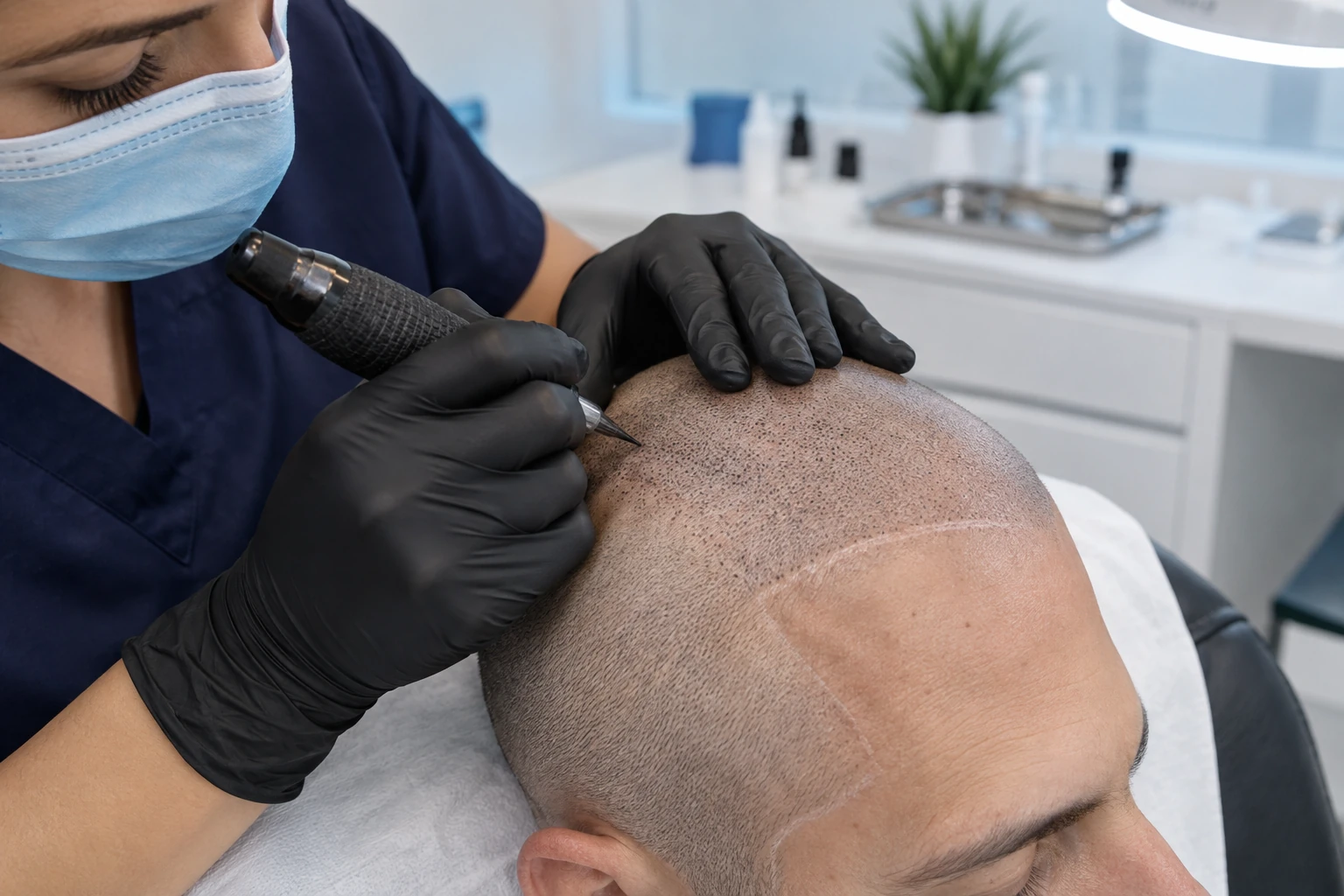
Built in layers, not one heavy pass.
- Consultation and designReview the scalp, hair-loss pattern, color match, hairline and expected result.
- Initial pigment placementSuperficial microdots establish shape and a conservative first layer.
- Density refinementLater sessions adjust tone, spacing and visual depth after the scalp settles.
SMP is related to tattooing in technique, but it uses a distinct scalp-specific approach, depth and visual goal.
What to expect after treatment.
Darker and more defined
Mild redness or sensitivity may occur. Follow the practitioner’s cleaning and moisture instructions.
Color settles
As the surface heals, dots generally soften and the result looks more integrated.
Gradual fading
Sun exposure, skin characteristics, treated area, aftercare and pigment technique influence retention. Touch-ups may be needed after several years.
The practitioner is part of the procedure.
Results depend on sanitation, pigment selection, depth, dot size, hairline design and the ability to plan for future hair loss.
Questions to ask
- What training and scalp-specific experience do you have?
- Can I see healed results—not only same-day photographs?
- How are needles, surfaces and pigments managed?
- What happens if my natural hair loss progresses?
- How do you handle fading, color change or correction?
Possible concerns include infection, allergic reaction, uneven fading, pigment migration, unnatural color or dots, and dissatisfaction with design.
SMP, clearly answered.
What is scalp micropigmentation?
SMP is a non-surgical cosmetic procedure that places tiny deposits of pigment in the upper scalp to imitate the appearance of closely cut follicles or reduce visible contrast in thinning areas.
Does SMP grow hair?
No. It creates a visual effect; it does not create follicles, stop the underlying cause of loss or biologically regrow hair.
Is it permanent?
It is long-lasting but generally considered semi-permanent. Pigment gradually fades and touch-ups may be needed.
Does it hurt?
Experience varies. Many people report mild-to-moderate discomfort; topical numbing may be used according to the practitioner’s protocol.
When are final results visible?
The effect is visible immediately, but early pigment may look darker. The more settled appearance is typically evaluated after healing, often around four to six weeks.
Who may be a candidate?
People seeking a shaved-head effect, visual density in thinning areas or camouflage of selected scars may be candidates after appropriate assessment.
A skilled illusion can look convincing—when expectations are accurate.
SMP may offer meaningful cosmetic improvement for men and women who want a shaved look, reduced scalp contrast or scar camouflage. It remains a cosmetic procedure rather than a treatment for the cause of hair loss.