
The Ultimate Guide: How To Regrow Temple Hair Naturally
Thinning at the temples? Understand possible causes, gentle hair care and medical treatment options. Regrowth depends on the diagnosis and whether follicles have been permanently damaged.
Overview
Temple thinning is a symptom, not a diagnosis. This guide separates supportive hair care from treatments for a diagnosed condition. Natural does not mean effective or safe.
Start with the cause rather than a promise to restore your hairline.
Key Takeaways
- Stop repeated tension from hairstyles.
- Distinguish breakage from follicular hair loss.
- Do not treat kitchen remedies as proven regrowth treatments.
- Get progressing or symptomatic hair loss assessed.
- Choose medical treatment according to the diagnosis.
- Stop styles that pull on thinning areas.
- Use consistent photographs to document change without delaying assessment.
- Ask a clinician whether testing is appropriate.
- Seek medical assessment for pain, inflammation, bald patches or progressive recession.
- The directory is reopening: join the directory waitlist.
Understanding Hair Loss at the Temples
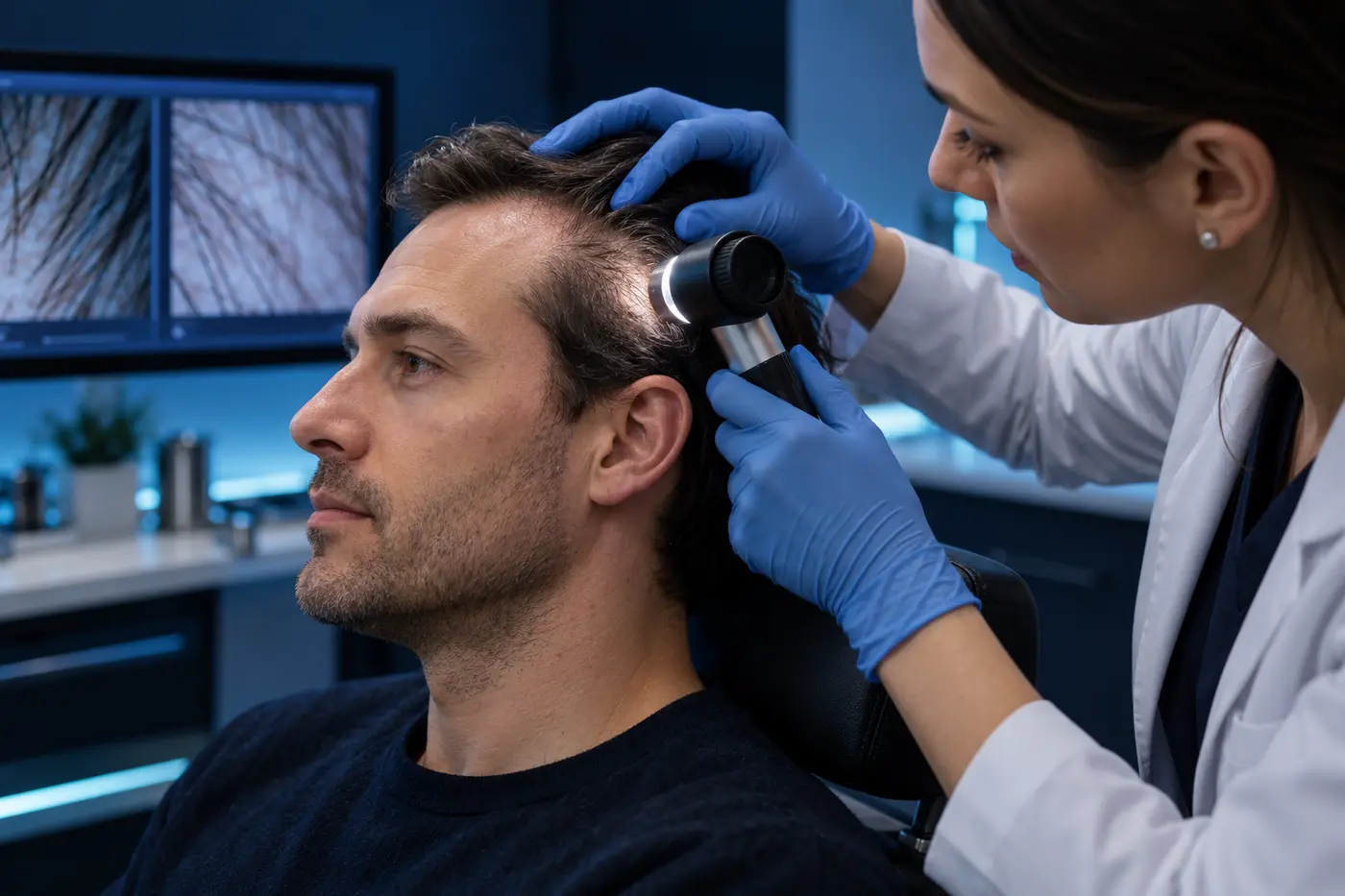
Temple thinning can reflect traction, pattern hair loss, shedding or an inflammatory condition. A dermatologist can distinguish these causes.
The same visible hairline change can require different care.
Causes
Repeated tension from tight hairstyles can cause traction alopecia. Stop styles that pull on thinning areas.
Early traction loss may recover after tension stops. Longstanding follicle damage can be permanent.
Pattern hair loss and hair-shaft breakage are different problems and may coexist.
Damage to the hair shaft is not the same as loss of the follicle.
Pattern hair loss can involve temple recession. Hairline shape alone does not establish the diagnosis.
Family history is useful context for a clinical assessment.
Women can experience several types of temple thinning. Do not assume every receding hairline is female-pattern hair loss.
A clinical examination is more useful than guessing from the location alone.
Nutritional Deficiencies
A nutritional deficiency may contribute to shedding, but temple thinning does not prove a deficiency.
Avoid starting vitamin or mineral supplements simply because hair is thinning.
Discuss dietary restrictions or suspected deficiencies with a healthcare professional.
Testing and supplementation should follow an individual assessment.
Stress
Stress-related shedding is one possible explanation, not a diagnosis of every thinning temple.
Wellbeing support may be helpful alongside assessment of persistent shedding.
Relaxation is not a substitute for treatment of pattern or scarring hair loss.
Medication Side Effects
If thinning began after a medication change, discuss the timing with the prescriber.
Do not stop or change prescribed medication on your own.
Bring your medication and supplement list to the assessment.
Hormonal Changes
Hormonal conditions are among the possibilities a clinician may investigate when symptoms warrant it.
Not everyone with temple thinning needs a hormone panel.
Avoid using a serum or supplement to self-treat a suspected hormonal disorder.
Your history and examination should guide any investigation.
Hairstyles
Choose loose styles that do not pull on the temples.
Pain, soreness or persistent inflammation should not be dismissed as normal styling effects.
Gentle styling is supportive care, not a treatment for every cause of hair loss.
Addressing Hair Loss at the Temples for Women
Women with progressing temple loss need the cause assessed before choosing a treatment.
Prevention Tips
Reduce avoidable pulling and hair-shaft damage:
Discuss treatment choices with a dermatologist. These are not interchangeable natural remedies:
PRP and Mesotherapy Hair Loss Treatment
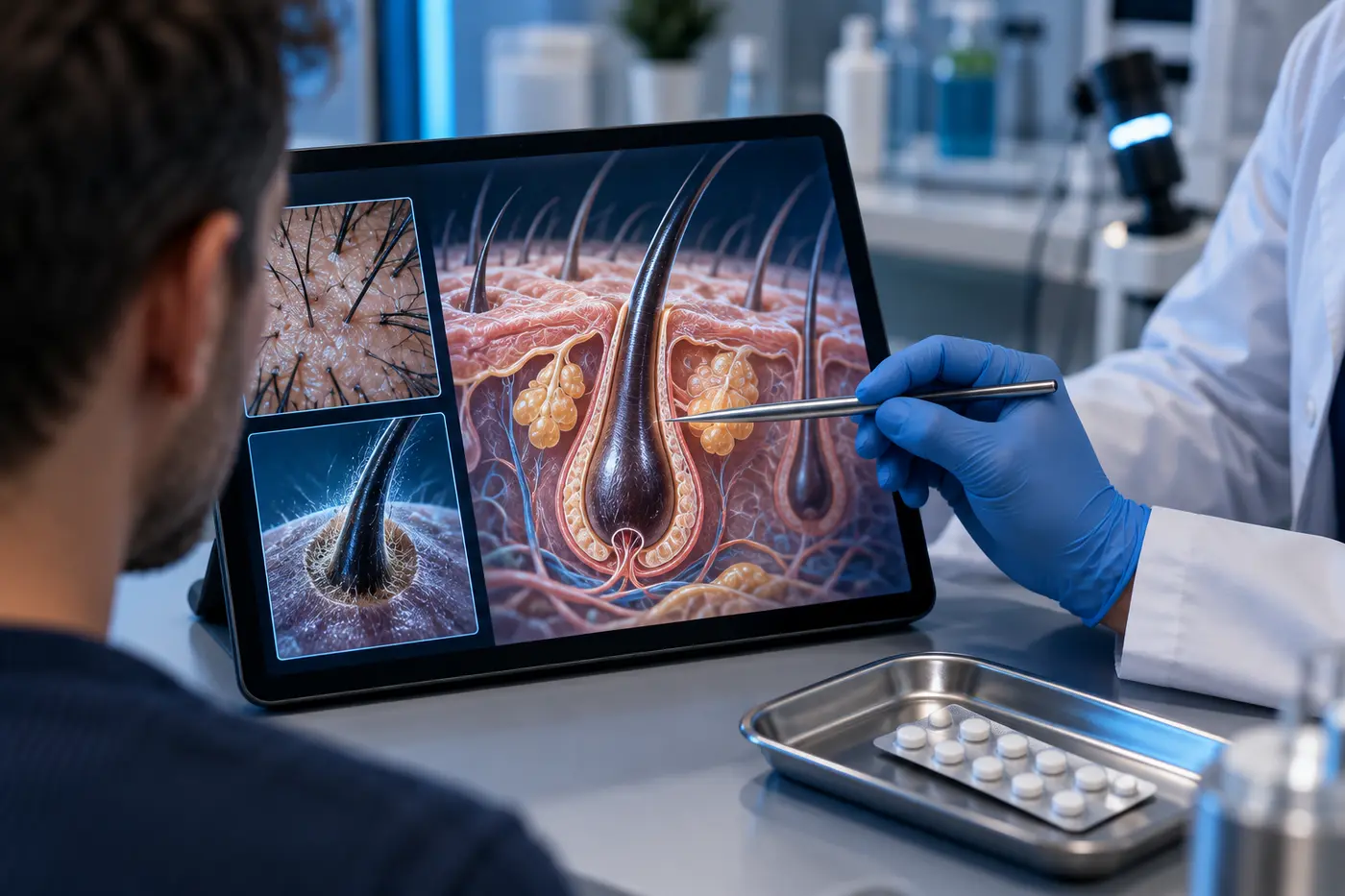
PRP is a clinical procedure using a preparation from your own blood. Discuss suitability, risks and expected outcomes with a qualified clinician.
Mesotherapy varies in the substances injected and the procedure used. It should not be presented here as equivalent to PRP or as an established temple-regrowth remedy.
Neither procedure guarantees restoration of the hairline.
Laser Hair Regrowth
Low-level light devices have some evidence in hereditary hair loss, but response varies. This does not establish that every device treats every cause of temple thinning.
Check the specific device and diagnosis with your clinician.
Animal or laboratory findings alone cannot establish temple regrowth in people.
How to Regrow Temple Hair Naturally
Reducing traction may allow early traction-related loss to recover. That is different from claiming that kitchen remedies reverse pattern or scarring hair loss.
Importance of Nutrition
Adequate nutrition matters, but eating a particular food does not guarantee temple regrowth.
Choose a balanced diet that meets your needs rather than a restrictive hair-growth diet.
For suspected deficiency, seek individual advice rather than adding several supplements.
Natural Remedies
The remedies below are discussed because readers ask about them. This guide does not establish them as treatments for temple hair loss.
Olive Oil
Olive oil should not be presented as a proven temple-regrowth treatment.
If used for cosmetic hair care, follow suitable product directions and avoid irritating the scalp.
A softer-feeling strand is not evidence of new follicular growth.
Do not delay assessment while testing oils.
Aloe Vera
Aloe vera is not established here as a temple-regrowth treatment.
Moisture or cosmetic comfort does not demonstrate reversal of hair loss.
Do not use anecdotes about mixtures as proof of efficacy.
Onions
Onion juice should not be recommended as a general temple-regrowth treatment.
Evidence for a different diagnosis cannot be applied automatically to traction or pattern hair loss.
Avoid applying irritating homemade preparations to an inflamed scalp.
Green Tea
Green tea ingredients or laboratory mechanisms do not establish that a tea rinse regrows temple hair.
Do not describe a rinse as a proven DHT-blocking treatment.
Drinking tea and applying a cosmetic are not equivalent to a tested medical treatment.
Potato Rinse
A potato rinse is not an established treatment for temple hair loss.
There is no reason to follow a homemade application schedule in place of diagnosis.
Applying potato starch is not evidence of new follicular growth.
Coconut Oil
Coconut oil used for hair care should not be confused with a follicular regrowth treatment.
Do not add camphor or other ingredients to pursue an unsupported hair-growth claim.
Honey, Cinnamon, and Olive Oil
A honey, cinnamon and olive-oil mixture should not be described as repairing damaged follicles or regrowing temples.
Ingredient-level claims do not establish the effect of a homemade mixture.
Stop any product that irritates the scalp.
Neem Leaves
Neem preparations are not established here as temple-regrowth treatments.
A botanical ingredient is not proof that a formula stimulates follicles.
Avoid homemade preparations on sore or inflamed skin and seek professional advice for persistent scalp symptoms.
Seek timely medical assessment rather than waiting for a home remedy to work.
Conclusion
The next step is a diagnosis-led plan. Gentle care can reduce avoidable damage, but recovery depends on the cause and the condition of the follicles.
Seek timely medical assessment for progressing loss, bald patches, pain, inflammation or a shiny scar-like hairline.
No remedy or amount of effort guarantees restoration.
FAQs
1. What causes hair loss at the temples?
Possible causes include traction, pattern loss, shedding and inflammatory disease. Assessment distinguishes them.
2. Are there natural treatments for regrowing temple hair?
Stopping traction may help early traction loss recover. Oils and kitchen remedies are not established treatments for every cause of temple thinning.
3. Can stress lead to temporal hair loss?
Stress can be relevant to shedding, but it does not explain every patch or receding hairline.
4. Is it possible for women to experience temple hair thinning?
Yes. Women can experience traction, pattern loss and scarring conditions; the appearance alone is not diagnostic.
5. Do medical conditions affect temple hair growth?
A healthcare professional can assess whether a medical condition or medication is contributing.
6. Can over-styling my hair cause temple balding?
Tension can cause traction alopecia. Frontal fibrosing alopecia is a separate scarring condition, not an area of the scalp.


Sources and evidence limits
American Academy of Dermatology: diagnosis and treatment; AAD: hairstyles and traction; British Association of Dermatologists: traction alopecia.
The treatment information is general education. The sources do not establish the kitchen remedies listed here as treatments for temple regrowth. A diagnosis and individual assessment are needed.