
Psoriasis, Eczema, and Hair Loss
The review compares the inflammatory pathways discussed in psoriasis and eczema.

 William Gaunitz, WTSClinical Trichologist · Expert Reviewer
Inside this review
Use these questions to navigate the complete physician-authored review below.
Explore the Th17/IL-23 pathway discussed in relation to psoriasis and the follicle.
Read this section →The review examines barrier disruption and type 2 inflammation in eczema.
Read this section →Complete production article and literature cited.
Psoriasis, Eczema, and Hair Loss
When Scalp Inflammation Affects Follicles
Key Takeaways:
- Psoriasis and eczema reach the hair follicle through different immune pathways but arrive at the same result. Psoriasis is driven primarily by the Th17/IL-23 axis, while eczema (encompassing atopic and seborrheic dermatitis) is driven by Th2 cytokines, barrier breakdown, and microbial overgrowth. Both converge on a follicle that struggles to sustain a normal anagen phase.
- In psoriasis, IL-17A, IL-22, and TNF-α disrupt keratinocyte behavior around the follicle. Most scalp psoriasis does not progress to visible hair loss, but when it does, telogen effluvium is the most common pattern; scarring alopecia occurs only in a minority of long-standing or severe cases.
- In eczema, IL-4 and IL-13 impair barrier integrity and drive the itch that leads to scratching. This adds a mechanical injury component on top of the cytokine-driven one, since chronic excoriation can traumatize the follicular ostia and hair shafts directly.
- Most psoriasis- and eczema-related hair loss is reversible once the underlying dermatosis is controlled. Follicles affected by active but non-scarring inflammation typically regrow once flares resolve, which makes early recognition and treatment clinically meaningful.
- Biologic therapies aimed at these same cytokine pathways can, in a minority of patients, trigger new or paradoxical alopecia. IL-17 inhibitors and dupilumab have each been associated with case reports of diffuse or patchy hair loss, an outcome trichologists should be able to recognize and differentiate from disease-driven shedding.
Introduction
Hair loss evaluation has traditionally centered on hormones, genetics, and nutrient status. Yet two of the most common inflammatory skin diseases in clinical practice, psoriasis and eczema, regularly involve the scalp, and a growing body of dermatologic and trichologic literature describes how each disrupts the hair follicle through its own immune signature.
Psoriasis and eczema are frequently discussed as separate entities, and clinically they are distinguishable. But at the level of the follicle, both create a chronically inflamed perifollicular microenvironment capable of shortening anagen and pushing hairs prematurely into telogen. Understanding how each pathway reaches the follicle, and where the two overlap, gives trichologists a clearer framework for evaluating patients whose shedding accompanies a scaly, itchy, or visibly inflamed scalp, in keeping with the mechanistic approach applied to other regulatory axes in hair biology.
This article outlines the Th17/IL-23 axis that characterizes psoriasis, the Th2/barrier-disruption axis that characterizes eczema (both atopic and seborrheic dermatitis), the clinical presentations that result, and what this means for assessment and treatment planning.
Psoriasis and the Hair Follicle: The Th17/IL-23 Axis
Psoriasis was once regarded primarily as a disorder of epidermal keratinocytes, but it is now recognized as one of the most common immune-mediated skin diseases, with tumor necrosis factor alpha (TNF-α), dendritic cells, and T cells all contributing substantially to its pathogenesis.¹ Scalp involvement is common, affecting an estimated 45–56% of people with psoriasis and often marking one of the first sites of disease.²
The inflammatory process in scalp psoriasis involves the same Th17/IL-23 axis that drives plaque disease elsewhere on the body. IL-23 activates Th17 cells, which secrete IL-17A, IL-22, and other mediators that contribute to hair follicle disruption; psoriatic lesions are additionally rich in TNF-α, IL-1β, and IFN-γ, cytokines capable of disrupting the anagen phase and inhibiting follicular activity.²

Figure 1. From linear to complex pathological model of psoriasis¹⁰
Despite this inflammatory burden, overt hair loss in scalp psoriasis is uncommon, largely due to growth-promoting factors such as IGF-1, VEGF, and Wnt/β-catenin signaling, which are upregulated in psoriatic skin and help sustain the follicle even under inflammatory strain.² When hair loss does occur, it is attributed in most cases to telogen effluvium secondary to the inflammatory process; in late-stage or long-standing lesions, destruction of the follicle, perifollicular fibrosis, and free bare hair shafts in the dermis can be seen, though hair loss in psoriasis is almost always non-scarring and reversible.
Drug-induced and paradoxical alopecia add a further layer of complexity. TNF-α inhibitors used to treat psoriasis can trigger TNF-α inhibitor-associated psoriatic alopecia (TiAPA).³ IL-17 inhibitors, despite being expected to help alopecia given IL-17’s role in autoimmune hair loss, have been reported to paradoxically cause diffuse alopecia in a small number of patients, potentially through a shift toward a Th1-dominant immune state that recruits cytotoxic CD8+ T cells to the follicle.
Eczema and the Hair Follicle: Barrier Disruption and Type 2 Inflammation
“Eczema” in clinical practice spans several related but distinct conditions, most relevantly atopic dermatitis and seborrheic dermatitis, both of which commonly involve the scalp. Atopic dermatitis is a chronic, pruritic inflammatory disease driven by type 2 (Th2) immune signaling, in which interleukins IL-4 and IL-13 are regarded as the pivotal cytokines.⁵ Keratinocyte-derived alarmins, namely thymic stromal lymphopoietin (TSLP), IL-25, and IL-33, activate Th2 cells, which secrete IL-4, IL-13, and IL-31. These cytokines impair the skin barrier, reduce production of antimicrobial peptides, and directly stimulate the sensory neurons responsible for itch.
This is where eczema diverges from psoriasis in a clinically important way: alongside cytokine-driven follicular disruption, the intense pruritus of atopic dermatitis drives a chronic itch-scratch cycle that can mechanically damage the follicular ostia and hair shaft directly. Notably, IL-4 and IL-13 expression also correlates with sebaceous gland gene signatures, and interrupting this axis pharmacologically (for example, with the IL-4 receptor antagonist dupilumab) has been linked in case reports to sebaceous gland atrophy and new, typically non-scarring alopecia in a minority of treated patients.
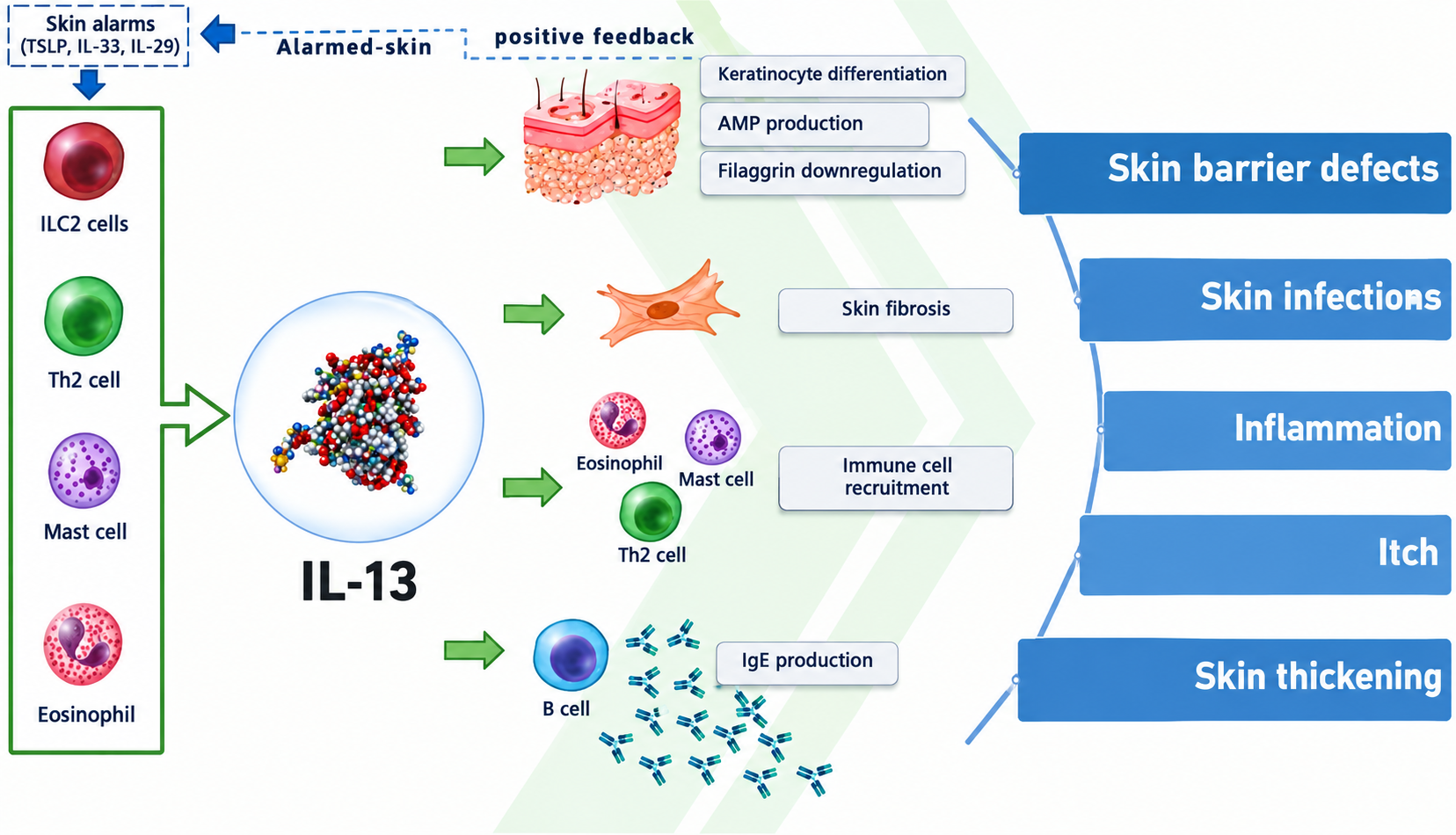
Figure 2. The effects of IL-13 on skin in atopic dermatitis¹¹
Seborrheic dermatitis, often grouped with the broader eczema spectrum on the scalp, follows a related but distinct route: sebum production, overgrowth of Malassezia yeast, and host immune factors including IL-1, IL-8, and NK1+/CD16+ cells drive chronic, relapsing scalp inflammation.
This condition is the most common cause of scalp itching and is associated with both telogen effluvium and acceleration of androgenetic alopecia in susceptible individuals. A five-year chronobiological study of men with chronic dandruff found a positive correlation between dandruff severity and the percentage of telogen hairs, with both following synchronized biorhythmic fluctuations over the year, direct evidence that ongoing scalp inflammation and hair cycling are mechanistically linked, not merely coincidental. The Malassezia overgrowth that underlies seborrheic dermatitis is a well-documented trigger of local cutaneous immune activation.
Psoriasis, Eczema, and Common Scalp Presentations
1. Psoriatic Telogen Effluvium With Scale: Diffuse shedding accompanying erythematous, silvery-scaled plaques on the scalp, most often reversible once the underlying psoriasis is controlled and rarely progressing to scarring.
2. Itch-Scratch (Excoriation) Alopecia: Patchy or diffuse hair loss in patients with atopic dermatitis, where chronic scratching in response to IL-4/IL-13/IL-31-driven pruritus mechanically damages follicles on top of the underlying cytokine effect.
3. Seborrheic Dermatitis-Associated Diffuse Thinning: Excessive shedding tracking with dandruff severity, following a biorhythmic pattern documented over years of observation and often compounding androgenetic alopecia where the two coexist.
4. Drug-Induced and Paradoxical Alopecia: New-onset or worsening hair loss following initiation of a biologic, such as TNF-α inhibitors and IL-17 inhibitors in psoriasis or dupilumab in atopic dermatitis, that should be distinguished from a simple flare of the underlying disease.
Triggers and Modifiers of Inflammatory Scalp Flares
A number of overlapping factors can intensify psoriatic or eczematous scalp inflammation and, by extension, the follicular disruption that follows. Mechanical irritation from scratching, harsh grooming, or tight hairstyles can aggravate both conditions directly. Microbial factors are particularly relevant to seborrheic dermatitis, where Malassezia overgrowth intensifies local immune activation, and to atopic dermatitis, where Staphylococcus aureus colonization plays a similar role. Seasonal and biorhythmic variation has been documented for dandruff-associated shedding specifically, suggesting an intrinsic periodicity to flares independent of any single external trigger.⁸ Psychological stress is a recognized aggravator of both psoriasis and atopic dermatitis, and changes in systemic therapy, particularly the initiation or discontinuation of a biologic, can themselves precipitate new patterns of alopecia that require careful differentiation from the underlying disease.
Therapeutic Implications
- Disease-Directed Therapy: Topical corticosteroids, vitamin D analogs, and calcineurin inhibitors remain first-line for localized scalp psoriasis and eczema; systemic or biologic therapy is reserved for more extensive or refractory disease.
- Antifungal and Anti-Inflammatory Scalp Care: Antifungal shampoos targeting Malassezia are a mainstay for the seborrheic component, often used alongside gentle, barrier-supportive cleansing routines that reduce mechanical and microbial triggers.
- Breaking the Itch-Scratch Cycle: Anti-pruritic strategies, barrier repair, and patient education on avoiding excoriation are particularly relevant in atopic dermatitis, where mechanical trauma compounds cytokine-driven shedding.
- Monitoring on Biologic Therapy: Patients starting IL-17, IL-23, TNF-α, or IL-4/IL-13-targeted therapy benefit from a baseline hair assessment and follow-up, given documented case reports of paradoxical alopecia with each of these drug classes.
Implications for Trichology Practice
Understanding the psoriasis- and eczema-hair axis equips clinicians to:
1. Distinguish psoriatic from eczematous scalp inflammation, since the two require different first-line management despite a shared downstream effect on the follicle.
2. Set accurate expectations, counseling patients that most inflammation-related shedding in these conditions is reversible once the underlying dermatosis is controlled.
3. Screen for a microbial or seborrheic component, since antifungal adjuncts can meaningfully improve outcomes when Malassezia overgrowth is contributing to shedding.
4. Recognize drug-induced and paradoxical alopecia, differentiating it from a simple disease flare or from alopecia areata, particularly in patients recently started on a biologic therapy.
Conclusion
Psoriasis and eczema reach the hair follicle by different immunologic routes: the Th17/IL-23 axis in the former, and Th2 cytokines and barrier disruption (with a microbial, Malassezia-driven component in seborrheic dermatitis) in the latter. Both are capable of shortening anagen and driving diffuse shedding. In most patients, this shedding is non-scarring and reversible with disease control, making early recognition of an inflammatory, scalp-driven component clinically valuable.
For trichology practice, incorporating an assessment of psoriatic and eczematous scalp involvement, alongside more familiar hormonal, nutritional, and structural evaluations, offers a more complete picture of why some patients experience persistent, inflammation-linked shedding, and clarifies when hair loss may instead reflect a paradoxical reaction to the very therapies used to treat the underlying skin disease.
References
1. Griffiths CE, Barker JN. Pathogenesis and clinical features of psoriasis. Lancet. 2007;370(9583):263-271. https://doi.org/10.1016/S0140-6736(07)61128-3
2. Pirov E, Ramot Y. Psoriatic alopecia: clinical features, pathogenesis, and emerging treatment strategies. Skin Appendage Disord. Published online May 28, 2025. https://doi.org/10.1159/000545835
3. Pourani MR, Khajeamiri Y, Abdollahimajd F, Zargari O. Psoriasis and alopecia: unveiling the links. Dermatol Pract Concept. 2025;15(4):e5283. https://doi.org/10.5826/dpc.1504a5283
4. Yajima M, Akeda T, Kondo M, Habe K, Yamanaka K. Alopecia diffusa while using interleukin-17 inhibitors against psoriasis vulgaris. Case Rep Dermatol. 2019;11(1):82-85. https://doi.org/10.1159/000499030
5. Pappa G, Sgouros D, Theodoropoulos K, Kanelleas A, Bozi E, Gregoriou S, Krasagakis K, Katoulis AC. The IL-4/-13 axis and its blocking in the treatment of atopic dermatitis. J Clin Med. 2022;11(19):5633. https://doi.org/10.3390/jcm11195633
6. Gallo R, Trave I, Parodi A. Massive acute alopecia of the scalp in a patient treated with dupilumab. Acta Derm Venereol. 2020;100(13):adv00143. https://doi.org/10.2340/00015555-3549
7. Leroy AK, Cortez de Almeida RF, Obadia DL, Frattini S, Melo DF. Scalp seborrheic dermatitis: what we know so far. Skin Appendage Disord. 2023;9(3):160-164. https://doi.org/10.1159/000529854
8. Pierard C, Xhauflaire-Uhoda E, Loussouarn G, Saint-Leger D, Pierard GE. Dandruff-associated smouldering alopecia: a chronobiological assessment over 5 years. Clin Exp Dermatol. 2006;31(1):23-26. https://doi.org/10.1111/j.1365-2230.2005.02026.x
9. Ashbee HR, Evans EGV. Immunology of diseases associated with Malassezia species. Clin Microbiol Rev. 2002;15(1):21-57. https://doi.org/10.1128/CMR.15.1.21-57.2002
10. Brembilla NC, Boehncke WH. Revisiting the interleukin 17 family of cytokines in psoriasis: pathogenesis and potential targets for innovative therapies. Front Immunol. 2023;14:1186455. https://doi.org/10.3389/fimmu.2023.1186455
11. Napolitano M, di Vico F, Ruggiero A, Fabbrocini G, Patruno C. The hidden sentinel of the skin: an overview on the role of interleukin-13 in atopic dermatitis. Front Med. 2023;10:1165098. https://doi.org/10.3389/fmed.2023.1165098