Compare iron supplements with the right context.
Explore iron formulations, elemental iron, tolerance and why testing comes before supplementation.
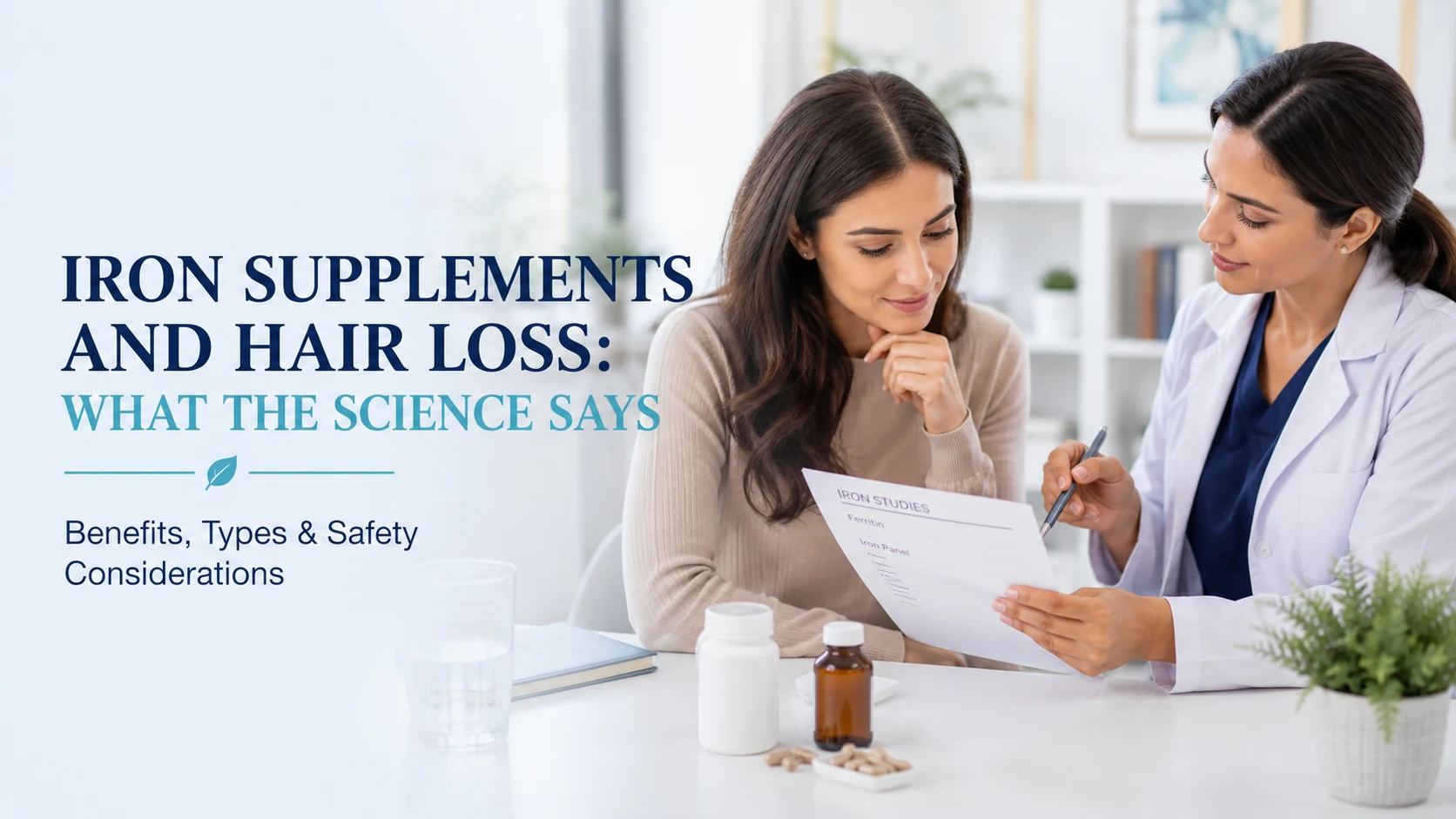
Iron supplements may help hair shedding when testing confirms iron deficiency, but there is no single best iron supplement for every person.
The right option depends on the amount of elemental iron required, digestive tolerance, medical history, medicines, pregnancy status and the reason iron stores became depleted.
Iron will not directly treat androgenetic alopecia, alopecia areata, scarring alopecia or every case of telogen effluvium. Therefore, taking iron without testing can delay the correct diagnosis and expose you to unnecessary side effects.
This guide compares five common iron-supplement formats, explains elemental iron, reviews absorption and interactions, and shows when hair shedding needs a broader assessment. If you are looking for a ferritin supplement, ferritin is the iron-storage protein measured in a blood test. Treatment for confirmed depleted stores usually involves iron, selected with clinical guidance.
For the wider clinical background, read our guide to iron deficiency and hair loss.
Medical note: Do not begin, increase or combine iron supplements solely because your hair is shedding. Iron deficiency and anaemia can have important underlying causes that require medical investigation.
Is Low Iron Really Causing Your Hair Loss?
Diffuse shedding can result from low iron, but it can also occur with thyroid disease, illness, medication changes, rapid weight loss, female-pattern hair loss and other conditions.
A professional hair and scalp assessment can document the pattern and identify signs that require medical testing or referral. The Trichology directory is currently accepting waitlist registrations.
Key Takeaways
- Iron may help only when a deficiency exists. It is not a general treatment for every form of hair loss.
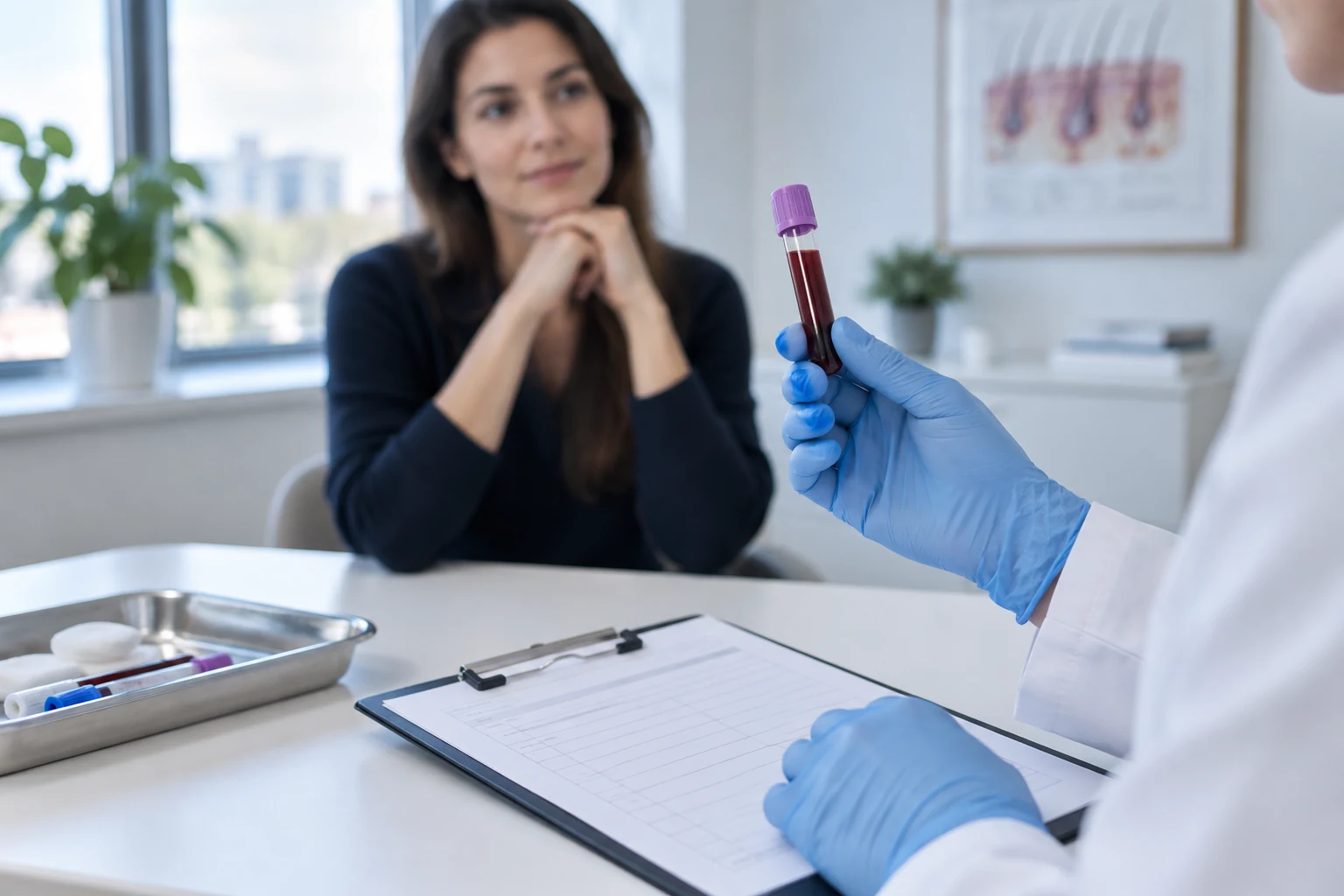
- Testing comes first. Ferritin, a complete blood count and selected iron studies can help determine whether supplementation is appropriate.
- Elemental iron is the important label number. The compound weight and the elemental iron amount are different; the elemental amount does not tell you how much will be absorbed.
- No iron form is best for everyone. Compare the prescribed elemental dose, tolerance, cost and follow-up response.
- Digestive side effects are common. Nausea, constipation, abdominal discomfort, diarrhoea and dark stools can occur.
- Iron interacts with medicines and other supplements. Levothyroxine, levodopa, certain antibiotics, calcium and antacids may require careful timing.
- More iron is not better. Excessive intake can damage health, and accidental overdose can be fatal to children.
- Hair recovery takes time. Blood results may improve before changes in shedding or density become visible.
Why Can Iron Deficiency Contribute to Hair Shedding?
Iron is required to produce haemoglobin, the protein in red blood cells that carries oxygen. It also supports many enzymes and cellular processes throughout the body.
Ferritin is a protein that stores iron. A low result can indicate depleted reserves, while inflammation can raise ferritin and complicate interpretation. The NIH iron fact sheet explains why clinicians use several measures of iron status.
A systematic review of nonscarring alopecia in women found lower average ferritin levels in women with hair loss. That association does not prove that iron will regrow hair in every person with low ferritin. An earlier controlled study did not find more iron deficiency in women with female-pattern hair loss or chronic telogen effluvium than in controls.
When low iron contributes to hair loss, the pattern is usually diffuse. More hair may be lost across the scalp rather than from one isolated patch.
However, diffuse shedding can also occur after:
- illness or fever
- surgery
- childbirth
- major emotional or physical stress
- rapid weight loss
- restrictive dieting
- thyroid dysfunction
- starting or stopping medication
- other nutritional deficiencies
Related guides:
- Iron Deficiency and Hair Loss
- Ferritin Deficiency and Hair Loss
- Nutritional Deficiencies and Hair Loss
Signs That Iron Testing May Be Appropriate
Symptoms cannot confirm iron deficiency by themselves. However, testing may be particularly relevant when diffuse shedding occurs with:
- fatigue or reduced exercise tolerance
- weakness, headaches or dizziness
- shortness of breath or a rapid heartbeat
- pale skin
- restless legs
- heavy or prolonged menstrual bleeding
- pregnancy or recent childbirth
- a restrictive or low-iron diet
- repeated blood donation
- gastrointestinal disease or previous gastrointestinal surgery
- unexplained digestive symptoms or bleeding
- craving or chewing non-food substances such as ice
Severe breathlessness, chest pain, fainting, rapid heartbeat or significant unexplained bleeding requires prompt medical attention.
What Tests May Help Confirm Iron Deficiency?
No single blood result gives a complete answer in every person. Depending on the history and symptoms, a healthcare professional may consider:
- Complete blood count: Reviews haemoglobin, haematocrit, red-cell size and other blood-cell measurements.
- Ferritin: Helps estimate stored iron but may be elevated by inflammation or illness.
- Serum iron: Measures circulating iron and can vary with timing and recent intake.
- Total iron-binding capacity or transferrin: Helps assess iron transport.
- Transferrin saturation: Shows how much of the available iron-binding capacity is carrying iron.
- Inflammatory markers: May help when inflammation could complicate ferritin interpretation.
- Vitamin B12 and folate: May be relevant when another type of anaemia is possible.
- Thyroid testing: May be appropriate when symptoms suggest thyroid dysfunction.
A normal haemoglobin result does not always mean that iron stores are adequate. Conversely, anaemia is not always caused by iron deficiency.
What Ferritin Level Is Best for Hair Growth?
There is no universally accepted ferritin threshold that guarantees hair regrowth.
Different studies and clinical settings use different ferritin cut-offs to identify iron deficiency. In addition, ferritin can be affected by inflammation, liver disease and other medical conditions.
For that reason, a ferritin result should be interpreted alongside haemoglobin, transferrin saturation, symptoms, menstrual or bleeding history and the pattern of hair loss.
The goal is to diagnose and correct iron deficiency appropriately, not to chase an arbitrary “perfect hair” ferritin number.
How to Compare Iron Supplements
When testing confirms a need for iron, compare the following:
- Elemental iron: The amount of actual iron supplied per serving.
- Iron form: Different salts and chelates provide different elemental amounts and may differ in tolerability.
- Prescribed or recommended schedule: Do not assume that taking more doses produces faster correction.
- Digestive tolerance: A product that cannot be taken consistently may not be practical.
- Other ingredients: Check for unnecessary duplication with multivitamins and hair supplements.
- Dietary requirements: Review capsule materials, allergens and vegan or vegetarian suitability.
- Medicine interactions: Ask a pharmacist about timing when you use prescription medication.
- Current label: Formulas and serving directions can change.
Five Iron-Supplement Options Compared
No single option is best for every patient. These are supplement formats rather than universal recommendations. The AGA’s 2024 guidance for iron-deficiency anaemia favours inexpensive ferrous sulfate and does not identify a universally superior oral formulation.
| Iron option | Potential advantage | Important consideration |
|---|---|---|
| Iron bisglycinate | A chelated form that some people find easier to tolerate. | The elemental dose still needs to match the treatment plan. |
| Ferrous sulfate | Widely used, well established and often inexpensive. | Constipation, nausea and abdominal discomfort may affect adherence. |
| Ferrous fumarate | Provides a relatively high proportion of elemental iron by compound weight. | Tablet weight should not be confused with elemental iron. |
| Ferrous gluconate | Often supplies less elemental iron per tablet, which may suit some dosing plans. | More tablets may be required to reach a clinician-selected elemental dose. |
| Liquid iron | May help people who cannot swallow tablets or need flexible dosing. | Taste, tooth staining, measuring accuracy and digestive effects can be concerns. |
1. Iron Bisglycinate
Iron bisglycinate is iron bound to the amino acid glycine. It is often marketed as a gentler alternative to conventional iron salts.
A systematic review of ferrous bisglycinate trials found fewer gastrointestinal adverse events in pregnant women compared with other iron supplements. Evidence in other populations needs further study. These trials assessed blood measures and tolerance, not superior hair regrowth or the effectiveness of DermaIRON.
2. Ferrous Sulfate
Ferrous sulfate is one of the most established and widely used oral iron forms. It is inexpensive and can provide a substantial elemental iron dose.
However, nausea, constipation, abdominal discomfort and other gastrointestinal effects can make it difficult for some people to continue.
3. Ferrous Fumarate
Ferrous fumarate contains a higher proportion of elemental iron by compound weight than ferrous sulfate or ferrous gluconate.
That does not automatically make it the best choice. The relevant comparison is the labelled elemental dose, tolerability and the recommended schedule.
4. Ferrous Gluconate
Ferrous gluconate provides a lower proportion of elemental iron by compound weight.
It may fit selected treatment plans, but comparing tablet weights alone can be misleading. Always check the elemental iron listed on the Supplement Facts panel.
5. Liquid Iron
Liquid iron can provide flexible dosing and may suit people who have difficulty swallowing tablets.
However, liquid products can have an unpleasant taste and may stain teeth. Use the supplied measuring device and follow the current product instructions.
Elemental Iron: The Number That Matters
The NIH explains that supplement labels report elemental iron, rather than the weight of the whole iron compound. This is the amount supplied, not a guarantee of how much your body absorbs.
For example, different iron salts contain different proportions of elemental iron. Therefore, two tablets with the same total weight may deliver very different iron doses.
Do not compare products using capsule size, phrases such as “maximum strength” or the compound weight alone.
Featured Option: Advanced Trichology DermaIRON

Iron Support When Testing Confirms a Need
DermaIRON is a commercially featured iron-bisglycinate product. The manufacturer’s current product page lists vitamin C and hydrolyzed collagen, described as marine collagen peptides. This ingredient description does not establish superiority for hair regrowth.
Tolerance varies between people and products. DermaIRON should be considered only when testing and clinical guidance support iron supplementation; it is not a general treatment for hair loss.
Important: Check the current Supplement Facts panel for the elemental iron dose and complete ingredient list. Do not combine it with another iron-containing supplement unless a qualified healthcare professional has reviewed the total dose.
View DermaIRON at Advanced Trichology
Prefer Amazon?
View DermaIRON on Amazon.
Commercial disclosure: Trichology.com may earn from qualifying purchases. Product formulas, directions, prices and availability can change. Always review the current label before use.
Dietary Iron Needs vs Deficiency-Treatment Doses
Recommended dietary allowances are designed to meet the normal nutritional needs of most healthy people. They are not treatment instructions for diagnosed iron deficiency or iron-deficiency anaemia.
| Group | Recommended dietary allowance |
|---|---|
| Children aged 1–3 | 7 mg daily |
| Children aged 4–8 | 10 mg daily |
| Teenagers aged 14–18 | 11 mg for males and 15 mg for females |
| Adults aged 19–50 | 8 mg for males and 18 mg for females |
| Adults aged 51 and older | 8 mg daily |
| Pregnancy | 27 mg daily |
| Lactation, ages 19–50 | 9 mg daily |
People following vegetarian diets may require a higher dietary iron intake because non-haem iron is less bioavailable. However, this does not mean every vegetarian or vegan needs an iron supplement.
Clinicians may use supplemental doses above the normal dietary allowance when treating confirmed deficiency. Those treatment decisions should not be copied from a general nutrition table.
How to Take Iron for Better Absorption and Tolerance
Follow the instructions supplied by your clinician, pharmacist and current product label.
General considerations include:
- Food: Iron may be absorbed better away from food, but taking it with food can reduce nausea and stomach discomfort.
- Vitamin C: Vitamin C can improve the absorption of non-haem iron, although a separate high-dose supplement is not always necessary.
- Tea and coffee: Polyphenols can reduce iron absorption when consumed close to the dose.
- Calcium: Calcium supplements may need to be taken at a different time.
- Antacids and acid-suppressing medicine: Reduced stomach acidity can affect absorption.
- Consistency: A tolerable plan followed consistently may be more useful than a stronger regimen that is repeatedly stopped.
For iron-deficiency anaemia, the AGA advises oral iron no more than once daily; alternate-day dosing may improve tolerance for some patients. This is clinical guidance for diagnosed anaemia, not a self-prescribed hair-growth schedule. Follow the plan agreed with your clinician.
Important Medicine and Supplement Interactions
Iron can bind to medicines or reduce their absorption. The correct separation interval depends on the medicine and should be confirmed with a pharmacist or prescriber.
Examples include:
- Levothyroxine: Iron can reduce absorption. Product guidance commonly requires separation.
- Levodopa: Iron may reduce the amount of medicine available to the body.
- Tetracycline and quinolone antibiotics: Iron may bind to these medicines and reduce absorption.
- Bisphosphonates: Timing may need adjustment.
- Calcium, zinc and other mineral supplements: Simultaneous high-dose use may affect absorption.
- Antacids and proton-pump inhibitors: Reduced stomach acidity may affect iron absorption.
Do not use one generic timing rule for every prescription medicine.
Possible Side Effects
Common oral iron side effects include:
- constipation
- nausea
- stomach pain
- diarrhoea
- vomiting
- metallic taste
- dark stools
Iron can darken stools. Seek medical advice promptly for black, tar-like stools, visible blood or significant abdominal pain, even if other symptoms are absent. See MedlinePlus guidance on taking iron supplements.
If side effects prevent treatment from continuing, speak with a clinician. A different dose, schedule, iron form or route may be more appropriate.
Who Should Not Take Iron Without Medical Advice?
Do not start iron independently if you have or may have:
- haemochromatosis or another iron-overload disorder
- repeated blood transfusions
- certain inherited anaemias
- complex inflammatory or chronic disease
- unexplained abnormal liver results
- gastrointestinal bleeding or unexplained abdominal symptoms
- a history of a serious reaction to an iron product
- pregnancy or breastfeeding without appropriate prenatal or medical guidance
Keep Iron Away From Children
Accidental iron overdose can be fatal. Store every iron-containing product securely out of the sight and reach of children. Suspected overdose requires urgent poison-control or emergency medical assistance.
Why Did the Iron Deficiency Develop?
Replacing iron is only part of the treatment. The reason for the deficiency also needs attention.
Possible contributors include:
- heavy or prolonged menstrual bleeding
- pregnancy and childbirth
- gastrointestinal bleeding
- coeliac disease or inflammatory bowel disease
- previous stomach or intestinal surgery
- low dietary intake
- repeated blood donation
- medicines that affect bleeding or absorption
- other chronic medical conditions
Iron deficiency in men and postmenopausal women generally deserves medical investigation rather than repeated self-treatment.
How Long Does Iron Take to Help Hair?
Blood production and hair growth operate on different timelines.
Some deficiency-related symptoms may improve before hair shedding changes. Even when iron deficiency was an important trigger, follicles need time to move through their normal cycle.
| Stage | What may happen | What matters |
|---|---|---|
| Early treatment | Energy or other deficiency symptoms may begin improving. | Continue the agreed plan and report side effects. |
| Following months | Shedding may gradually settle if iron deficiency was a major contributor. | Review follow-up tests and consistent photographs. |
| Longer-term recovery | Improved density becomes visible only as new hair gains length. | Reassess persistent thinning or continued shedding. |
No supplement can guarantee a particular hair-recovery timeline. Results depend on the severity and duration of deficiency, the underlying cause, treatment adherence and whether another hair-loss condition is present.
When Iron Is Not the Complete Answer
Correcting low iron does not directly treat:
- androgenetic alopecia
- telogen effluvium caused by another trigger
- alopecia areata
- scarring alopecia
- traction alopecia
- thyroid disease
- PCOS or another endocrine condition
- hair-shaft breakage
- infectious or inflammatory scalp disease
Low iron and another hair-loss condition can exist at the same time. Correcting the deficiency may reduce one source of shedding without reversing genetic miniaturization, autoimmune disease or permanent scarring.
When to See a Trichologist or Doctor
When a Trichologist May Help
A trichologist can:
- document the distribution and severity of shedding
- help distinguish shedding from breakage
- examine the scalp and hair shafts
- review hair-care and dietary history
- monitor progress with consistent photographs
- recognise signs that need medical referral
When Medical Evaluation Is Important
See a doctor or dermatologist for:
- confirmed or suspected anaemia
- unexplained iron deficiency
- heavy or abnormal bleeding
- gastrointestinal symptoms or possible bleeding
- severe fatigue, fainting, breathlessness, chest symptoms or rapid heartbeat
- pregnancy or breastfeeding
- failure to improve despite taking iron correctly
- sudden patchy hair loss
- scalp pain, inflammation, crusting, pustules or scar-like areas
- prescription treatment or intravenous iron
Still Shedding After Correcting Low Iron?
Hair loss may have more than one cause. A professional scalp and hair assessment can document whether shedding is improving and whether pattern hair loss, breakage, inflammation or another condition may also be present.
Frequently Asked Questions
Can iron deficiency cause hair loss?
Iron deficiency can contribute to diffuse nonscarring shedding in some people. However, hair loss has many possible causes, so test results and the visible pattern should be assessed together.
What is the best iron supplement for hair loss?
There is no universal best product. The appropriate option depends on confirmed deficiency, the required elemental dose, digestive tolerance, medical history and the underlying cause.
What does a ferritin supplement mean?
Ferritin is the body’s iron-storage protein and a blood-test marker. People searching for a ferritin supplement usually mean iron to replenish depleted stores. An iron supplement should be selected after a clinician confirms the need; a ferritin result alone does not establish the cause of hair loss.
Is ferritin the same as iron?
No. Ferritin is a protein that stores iron. Serum iron measures iron circulating in the blood. Both require clinical interpretation.
Can low ferritin cause shedding without anaemia?
Iron stores can become depleted before haemoglobin falls enough to meet criteria for anaemia. Whether low ferritin is contributing to hair loss depends on the complete clinical picture.
What ferritin level is needed for hair growth?
No single ferritin number guarantees hair growth. Ferritin should be interpreted with haemoglobin, transferrin saturation, inflammation, symptoms and other possible causes of hair loss.
Which iron form is easiest on the stomach?
Tolerance varies, and every oral iron product can cause side effects. Bisglycinate trials suggest a tolerance advantage in pregnant women, but this should not be generalized to everyone or treated as a hair-growth benefit.
Is DermaIRON appropriate for low ferritin?
DermaIRON is an iron-bisglycinate product intended for people who need iron support. It should be considered only after testing confirms that iron supplementation is appropriate. Check the current label for its elemental dose and complete ingredients.
Is ferrous sulfate better than iron bisglycinate?
Ferrous sulfate is a widely used, inexpensive option. Bisglycinate may suit some treatment plans, but no iron form has proven superior for hair regrowth. Dose, tolerance and follow-up response matter more than a general brand ranking.
Should iron be taken with vitamin C?
Vitamin C can improve non-haem iron absorption. However, a separate high-dose vitamin C supplement is not always necessary. Follow the current product and clinical instructions.
Can iron be taken with coffee or tea?
Tea and coffee can reduce absorption when consumed close to an iron dose. Ask a pharmacist or clinician about suitable timing.
Can iron be taken with thyroid medicine?
Iron can reduce levothyroxine absorption. These products generally require separation, but follow the specific instructions from the prescriber, pharmacist and medicine label.
How long does iron take to reduce hair shedding?
When deficiency is a major contributor, shedding may take several months to settle. Visible density takes longer because new hair must grow to a noticeable length.
Can too much iron cause harm?
Yes. Excessive iron can cause gastrointestinal injury, organ damage and iron overload. Accidental overdose is particularly dangerous for children.
Will iron treat female or male pattern hair loss?
Correcting a deficiency may reduce overlapping shedding. However, iron does not directly treat androgen-related follicular miniaturization.
Related Guides
Conclusion
Iron supplements may support hair recovery when testing confirms that iron deficiency is contributing to shedding.
The best option depends on the required elemental dose, digestive tolerance, medical history, medicines and reason for the deficiency. A product’s iron form alone does not establish a better hair-loss outcome.
The product choice is only one part of safe treatment. Confirm the deficiency, investigate why it developed, follow an appropriate repletion plan and complete follow-up testing.
If shedding continues after iron status improves, another hair-loss condition may also be present.
References
- National Institutes of Health Office of Dietary Supplements — Iron: Health Professional Fact Sheet
- Trost LB, Bergfeld WF, Calogeras E. The Diagnosis and Treatment of Iron Deficiency and Its Potential Relationship to Hair Loss. Journal of the American Academy of Dermatology.
- Treister-Goltzman Y, et al. Iron Deficiency and Nonscarring Alopecia in Women: Systematic Review and Meta-Analysis. Skin Appendage Disorders.
- Olsen EA, et al. Iron Deficiency in Female Pattern Hair Loss, Chronic Telogen Effluvium and Control Groups. Journal of the American Academy of Dermatology.
- Rushton DH. Nutritional Factors and Hair Loss. Clinical and Experimental Dermatology.
- Almohanna HM, et al. The Role of Vitamins and Minerals in Hair Loss: A Review. Dermatology and Therapy.
- Zhang D, et al. Serum Ferritin Levels: A Clinical Guide in Patients With Hair Loss. Cutis.
Medical disclaimer: This article is for general educational purposes only and does not replace medical advice, diagnosis, blood testing or treatment. Iron deficiency and anaemia can have serious underlying causes. Do not begin, increase, combine or continue therapeutic-dose iron without guidance from a qualified healthcare professional. Keep iron supplements securely away from children and seek urgent help for a suspected overdose.