Hair Breakage and Thinning: Causes, Care and Prevention
Learn the main causes of hair breakage, how to distinguish breakage from shedding, and how to reduce further damage while protecting fragile hair.
Hair Breakage and Thinning: Causes, Care and Prevention
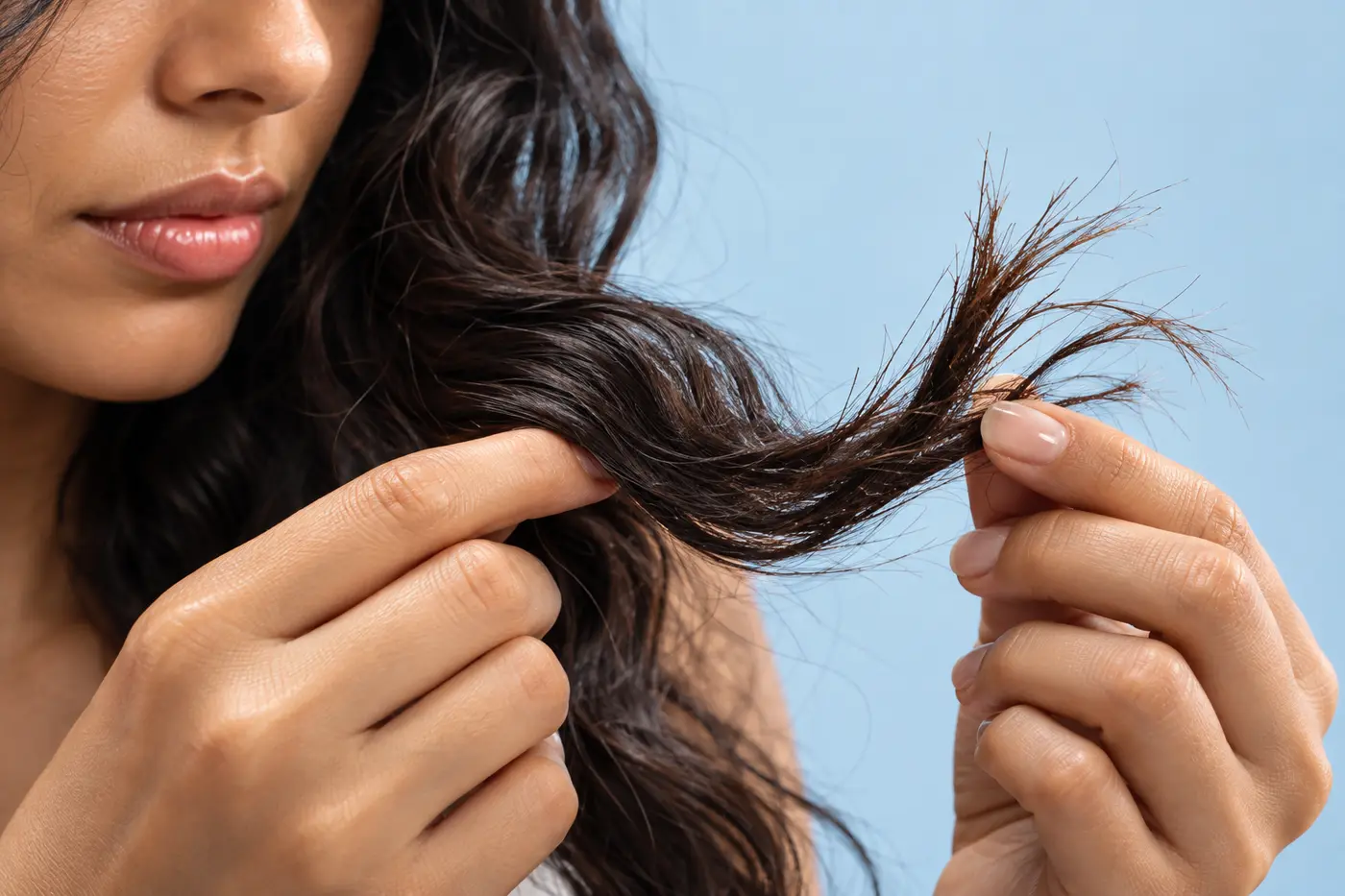
Hair that feels rough, looks frizzy, develops split ends, or snaps before reaching its usual length may be experiencing hair breakage.
Breakage happens along the visible hair shaft. By comparison, shedding occurs when a complete hair leaves the follicle.
Common causes of hair breakage include heat styling, bleach, relaxers, repeated colouring, rough detangling, tight hairstyles, friction, dryness, and unsuitable hair-care practices. However, breakage can also occur alongside genuine hair loss or thinning.
Therefore, this guide explains how to recognise hair breakage, identify common causes, protect fragile strands, reduce further damage, and understand when professional assessment may be appropriate.
Affiliate disclosure: This page contains an affiliate product link. Trichology.com may earn a commission from qualifying purchases at no additional cost to you. Product inclusion does not mean that a product can diagnose, repair, prevent, or treat every cause of hair damage.
Key Takeaways
Quick Next Steps
Is It Breakage, Shedding, or Both?
Breakage produces shorter pieces and uneven lengths. In contrast, shedding often involves a complete hair that has separated from the follicle.
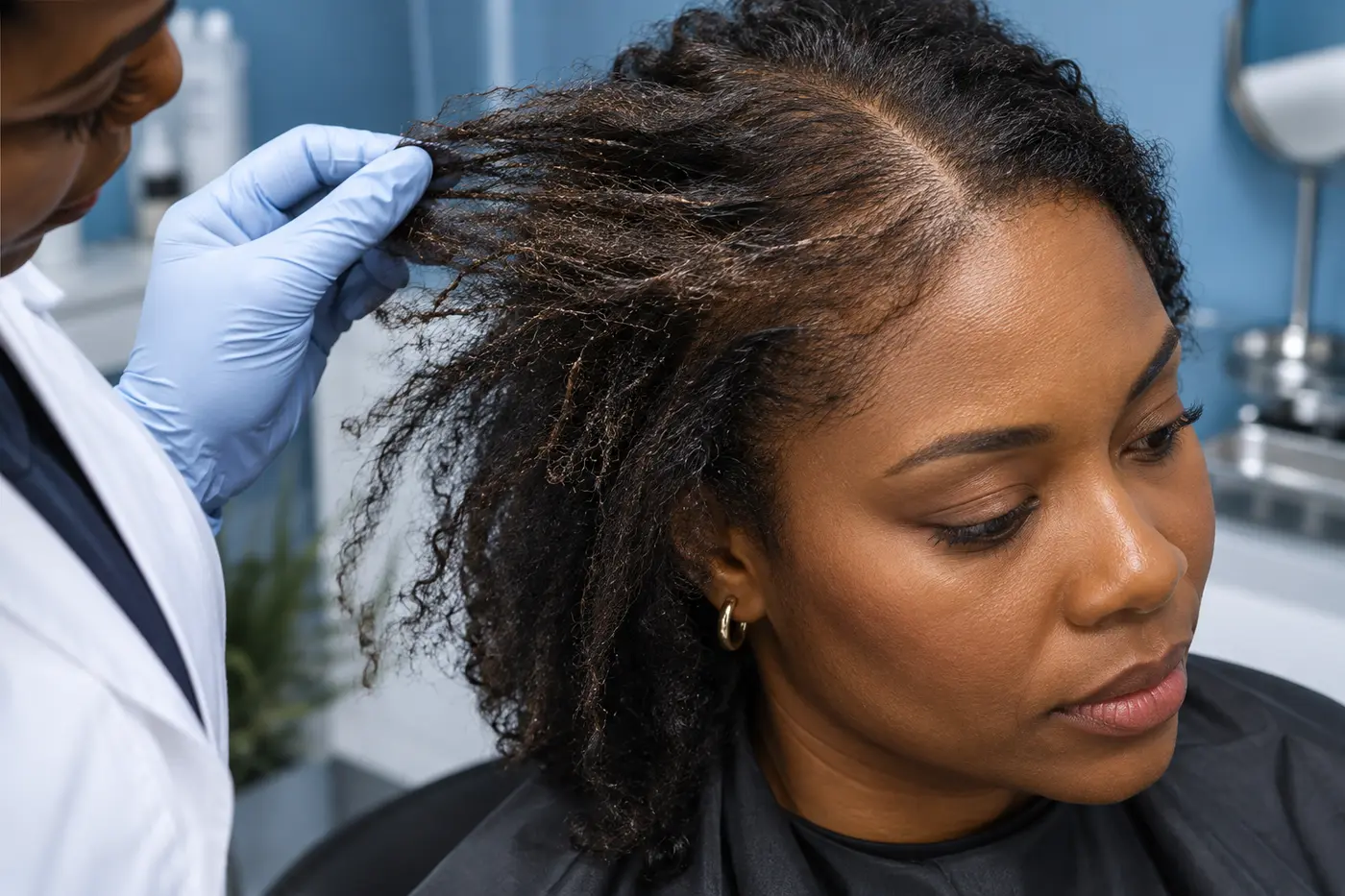
A trichologist can examine the hair shafts, scalp, density, and visible pattern. In addition, they can identify signs that may require medical testing or dermatology assessment.
What Is Hair Breakage?
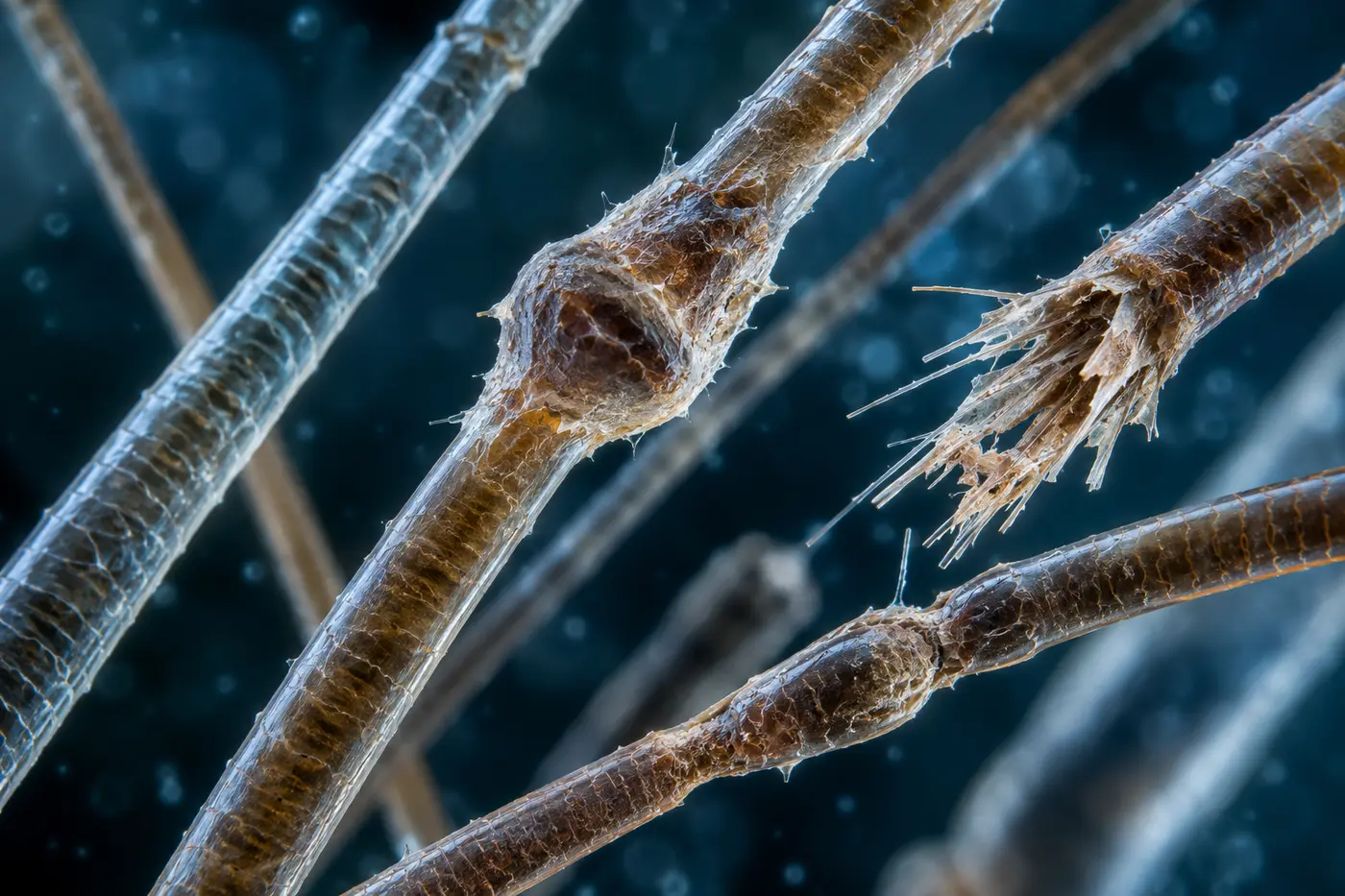
Hair breakage occurs when the visible hair fibre fractures, splits, or snaps.
The visible strand consists mainly of keratin. Unlike living skin, the exposed hair shaft cannot biologically heal itself after severe structural damage.
Conditioners, oils, silicones, proteins, and other film-forming ingredients may temporarily smooth damaged areas. In addition, they can reduce friction and improve manageability.
Nevertheless, these products cannot permanently rebuild a severely fractured strand.
For a detailed comparison, read about the difference between hair loss and hair breakage.
Hair Breakage Versus Hair Shedding
The two problems can look similar. However, they begin in different places.
Signs of Hair Breakage
- Short pieces of hair around the sink, clothing, pillow, or brush.
- Uneven lengths throughout the hairstyle.
- Split, frayed, or feathered ends.
- White dots or weak points along the strand.
- Rough, dry, or straw-like texture.
- Frequent tangling during washing or styling.
- Reduced length retention over time.
- Hair snapping during detangling or styling.
Signs of Hair Shedding
- Complete strands coming away from the scalp.
- A small club-shaped end on some shed hairs.
- More hair than usual in the shower or brush.
- Reduced density close to the scalp.
- A widening part or increased scalp visibility.
A person can experience both problems. For example, bleach may damage the lengths while telogen effluvium increases shedding from the scalp.
Common Signs of Damaged and Breaking Hair
Hair damage often develops gradually. Therefore, early signs may be easy to overlook.
Possible signs include:
Severe scalp pain, burning, redness, pustules, crusting, or scar-like areas are not ordinary signs of cosmetic hair breakage. Instead, these symptoms require professional assessment.
Main Causes of Hair Breakage
Hair breakage usually results from repeated wear rather than one isolated event. In many cases, several sources of damage overlap.
1. Excessive Heat Styling
Flat irons, curling tools, hot brushes, and high-temperature blow-drying can weaken the hair fibre.
Over time, repeated heat exposure may increase dryness and structural damage. As a result, the strand becomes more vulnerable to snapping.
For more detail, read about how heat-styling tools can damage hair.
2. Bleach, Hair Dye, Relaxers, and Perms
Chemical treatments alter the structure of the hair fibre.
For example, bleach removes pigment through oxidation. Meanwhile, relaxers and perms alter chemical bonds within the strand.
These services can produce the intended cosmetic result. However, repeated or overlapping chemical processing may severely weaken the hair.
For further guidance, see the article about hair dye and hair damage.
3. Rough Brushing and Detangling
Pulling a brush forcefully through knots creates mechanical stress.
Wet hair can also be vulnerable to excessive stretching. Therefore, detangle carefully and avoid forcing a brush through resistant knots.
Depending on hair type, fingers, a wide-tooth comb, or an appropriate detangling brush may help. In addition, conditioner or detangling products can improve slip.
4. Tight Hairstyles
Tight ponytails, buns, braids, cornrows, extensions, and repeated edge styling can increase tension on both the hair shaft and follicle.
Initially, repeated tension may contribute to breakage close to the scalp. Over time, continued pulling can also contribute to traction alopecia.
Therefore, a protective hairstyle should not cause persistent pain, headaches, bumps, or excessive tension.
5. Friction
Hair can repeatedly rub against:
- Rough towels.
- Pillowcases.
- Clothing.
- Scarves.
- Coats.
- Helmet straps.
- Headrests.
- Extensions or hair accessories.
Long hair may be particularly vulnerable around the shoulders and back. Consequently, reducing repeated friction can help limit mechanical damage.
6. Dryness and Poor Conditioning
Dry or poorly lubricated hair can become less manageable and more vulnerable to friction during brushing and styling.
Conditioners improve slip and reduce friction. Likewise, leave-in products may provide additional protection between washes.
Oil can improve lubrication and reduce roughness. However, an oil is not necessarily a replacement for a properly formulated conditioner.
7. Excessive Washing or Harsh Cleansing
Hair should be washed often enough to maintain an appropriately clean scalp. However, an unsuitable cleansing routine may leave already damaged lengths feeling dry or rough.
The right washing frequency varies according to scalp oil production, hair texture, styling products, exercise, climate, and scalp conditions.
For additional product guidance, explore the shampoo guide for hair and scalp health.
8. Sun, Wind, Chlorine, and Salt Water
Ultraviolet exposure can contribute to weathering of the hair fibre. In addition, wind may increase tangling and friction.
Swimming may also leave some hair dry and rough, particularly when chlorine, salt, sun exposure, and repeated washing occur together.
9. Hard Water and Product Buildup
Mineral deposits and product residue may leave some hair feeling coated, rough, or difficult to manage.
When buildup is a genuine problem, occasional appropriate clarification or chelation may help. However, excessive use of strong cleansing products can also worsen dryness.
10. Hair Extensions and Added Hair
Extensions may create friction, weight, tension, or adhesive stress.
Damage can occur near attachment points or along the free hair. Therefore, correct installation, maintenance, removal, and appropriate rest periods are important.
11. Nutritional or Medical Factors
Most visible hair breakage relates to external damage. Even so, internal factors can sometimes affect the quality of newly produced hair.
Possible contributors include:
- Inadequate protein intake.
- Iron deficiency.
- Severe nutritional restriction.
- Thyroid disease.
- Certain medications.
- Recent illness.
- Inherited hair-shaft disorders.
Do not assume that every damaged strand indicates a vitamin deficiency. Testing should instead reflect the person’s symptoms, diet, medical history, and clinical findings.
For more information, read about nutritional deficiencies and hair loss.
Can Stress Cause Hair Breakage?
Stress does not usually cause an otherwise healthy hair shaft to snap directly.
However, stress may affect sleep, nutrition, grooming, and styling habits. In addition, significant physiological or psychological stress can contribute to telogen effluvium, which involves increased shedding from the follicles.
Consequently, a person may experience shedding and breakage at the same time.
Learn more about chronic telogen effluvium.
Treating and Preventing Hair Breakage

The main goal is to reduce further damage while protecting healthier hair as it grows.
1. Pause the Main Cause
First, identify the most likely source of damage.
For example:
- Reduce excessive flat-ironing and curling.
- Delay additional bleach or chemical processing when hair is severely compromised.
- Loosen tight hairstyles.
- Remove poorly installed extensions.
- Change rough detangling habits.
- Avoid overlapping strong chemical services.
Adding more repair products will have limited value when the primary source of damage continues.
2. Use a Suitable Shampoo
Choose shampoo primarily according to scalp condition, hair type, and product buildup.
A very rich cleanser may not adequately cleanse an oily scalp. In contrast, frequent strong clarification may feel too harsh on already damaged lengths.
Concentrating shampoo mainly on the scalp can help limit unnecessary manipulation of fragile lengths.
3. Condition After Washing
Conditioner can reduce friction and improve manageability.
Apply an appropriate amount to the lengths according to the product directions and individual hair type.
Useful conditioning ingredients may include:
- Fatty alcohols.
- Cationic conditioning agents.
- Silicones.
- Plant oils.
- Hydrolysed proteins.
- Humectants.
Protein-containing products may temporarily improve the feel of some damaged hair. However, they do not permanently reconstruct a severely fractured strand.
4. Add a Leave-In Conditioner
A suitable leave-in conditioner can improve slip and may reduce damage caused by brushing, clothing, weather, and styling.
Fine hair may respond better to a lighter formulation. Meanwhile, coarse, curly, or coily hair may tolerate a richer product.
5. Use a Dedicated Heat Protectant
Apply a product formulated for heat protection before using hot styling tools.
Also, use the lowest effective temperature and avoid repeatedly passing a hot tool over the same section.
6. Detangle Gently
Work carefully in manageable sections.
Rather than forcing a brush through a knot, use appropriate conditioner or detangler and loosen the knot gently.
7. Dry Hair With Less Friction
Avoid aggressively rubbing wet hair with a rough towel.
Instead:
- Blot the hair gently.
- Consider a soft cotton T-shirt or microfibre towel.
- Avoid tight towel twisting.
- Allow partial air-drying when practical.
8. Trim Split and Severely Damaged Ends
Split ends cannot permanently reseal.
A serum may temporarily make them appear smoother. Nevertheless, trimming remains the reliable way to remove a severely split section.
The timing of trims depends on hairstyle, damage, and personal goals. Therefore, one fixed trimming schedule is not necessary for everyone.
9. Protect Hair Overnight
Reducing night-time friction and tangling may help fragile hair.
Options include:
- A loose braid or twist when suitable for the hair type.
- A smooth satin or silk-style pillowcase.
- A smooth bonnet or scarf.
- Removing tight accessories before sleep.
10. Space Out Chemical Services
Avoid unnecessarily overlapping bleach, relaxer, permanent colour, or other strong chemical treatments on already processed hair.
Before another service, an experienced professional can assess the condition and elasticity of the hair.
Can Hair Breakage Be Repaired?
The answer depends on what is meant by “repair.”
Hair-care products may:
However, the visible hair shaft is not living tissue. Therefore, a severe fracture or split end cannot biologically heal itself.
The practical goal is to improve appearance and manageability, prevent additional damage, retain healthier length, and allow new hair to grow under better conditions.
Conditioning Ingredients That May Help
Silicones
Silicones can reduce friction, add shine, and improve manageability. Therefore, they are not inherently harmful to hair.
Some formulations may contribute to buildup for certain users. When buildup becomes noticeable, an appropriate cleansing routine may help.
Plant Oils
Coconut oil, argan oil, and other plant oils may improve lubrication and reduce roughness.
Coconut oil has been studied for its effect on protein loss from hair. Meanwhile, argan oil may help with softness, shine, and friction control.
Use an amount appropriate for the hair type because heavy oiling can weigh down fine hair or contribute to buildup.
Hydrolysed Proteins
Hydrolysed proteins can temporarily coat damaged areas and improve the feel of some fragile hair.
However, more protein is not automatically better. Some hair may feel stiff or rough when protein-heavy products are used too frequently.
Fatty Alcohols and Conditioning Agents
Ingredients such as cetyl alcohol, stearyl alcohol, behentrimonium chloride, and cetrimonium chloride are commonly used to improve conditioning and slip.
Despite the word “alcohol,” fatty alcohols differ from the short-chain alcohols sometimes associated with a drying feel.
Protective Hairstyles: Helpful or Harmful?
A protective style should reduce unnecessary handling without creating excessive tension.
Potential options include:
Loosen or remove a style if it causes:
Protective styling should not require persistent pain or excessive tension.
Hair Breakage in Curly and Coily Hair
Curly and coily strands have multiple curves along their structure and may experience considerable friction during manipulation.
Natural scalp oils may also distribute differently along tightly curled strands. Therefore, the lengths can feel dry even when the scalp produces adequate oil.
Helpful practices may include:
For more guidance, read the curly-hair care guide.
Hair Breakage After Bleaching or Colouring
Bleach can leave the hair more porous, rough, weak, and vulnerable to snapping, particularly after repeated or overlapping processing.
If significant breakage develops:
Avoid another strong chemical treatment when hair stretches excessively, feels unusually gummy, or snaps under very light manipulation.
Hair Breakage Around the Hairline and Crown
Breakage around the hairline can result from:
However, thinning around the hairline can also indicate traction alopecia, frontal fibrosing alopecia, androgenetic alopecia, or another hair-loss condition.
Therefore, do not assume that every short hair represents regrowth. Some short strands are broken hairs, while others may reflect miniaturisation or new growth.
Hair Breakage and Nutrition
A balanced diet supports the production of new hair. However, supplements cannot repair a strand that has already fractured.
Important nutritional factors for normal hair production include:
Testing may be appropriate when breakage occurs alongside heavy shedding, fatigue, restrictive eating, rapid weight loss, heavy menstrual bleeding, or other health symptoms.
For additional guidance, review:
Best Practices for Maintaining Stronger Hair
Lifestyle Factors That May Worsen Breakage and Thinning

Frequent Heat Use
Daily flat-ironing or curling can contribute to progressive hair weathering. Therefore, reducing frequency and temperature may help fragile hair.
Repeated Tight Styling
Excessive tension affects both the strands and follicles. As a result, repeated tight styling may contribute to breakage and traction alopecia.
Overlapping Chemical Treatments
Bleach, relaxers, permanent colour, and perms may become particularly damaging when repeatedly applied to already processed sections.
Poor Sleep and High Stress
Poor sleep and chronic stress can affect daily routines, diet, and shedding. However, they should not automatically be assumed to explain persistent hair breakage or thinning.
Smoking
Smoking is associated with numerous adverse health effects and has also been studied in relation to hair and skin health.
Read more about smoking, hair loss, and premature greying.
Restrictive Dieting
Rapid weight loss or inadequate nutritional intake may contribute to increased shedding. In addition, significant nutritional deficiencies may affect the quality of new hair growth.
Unsuitable Headwear
Tight helmets, caps, scarves, or straps can create repeated friction and pressure. Adjusting the fit and protecting areas that repeatedly rub may help.
HairStem DHT-Blocking Shampoo and Hair Breakage
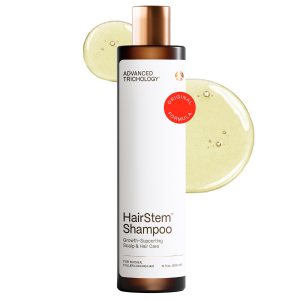
View HairStem DHT-Blocking Shampoo on Amazon
HairStem DHT-Blocking Shampoo is marketed primarily for scalp support and DHT-related thinning. Therefore, it should not be confused with a treatment that permanently repairs fractured hair shafts.
Its suitability depends on factors such as the complete formulation, scalp condition, cleansing requirements, and individual tolerance.
For damaged lengths, reducing the source of damage and using appropriate conditioning may be more relevant than DHT-focused ingredients.
Product formulas, prices, sellers, and availability may change. Check the current product listing and ingredient information before purchase.
When Hair Breakage May Be a Medical Concern
Most breakage results from physical or chemical damage. However, professional assessment becomes important when the pattern is unusual or unexplained.
Possible warning signs include:
When to See a Trichologist or Dermatologist

When to See a Trichologist
- The difference between breakage, shedding, and thinning is unclear.
- Damage continues despite changes to the hair-care routine.
- Poor length retention remains a concern.
- A review of styling and hair-care practices would be helpful.
- Structured photographs and progress monitoring are needed.
- External damage may overlap with scalp-level thinning.
When to See a Dermatologist or Doctor
- Sudden, rapid, or patchy hair loss develops.
- Pain, inflammation, crusting, or drainage affects the scalp.
- Smooth, shiny, or scar-like areas become visible.
- Eyebrow or eyelash hair is also affected.
- An infection or autoimmune condition may be present.
- Broader health symptoms occur alongside the hair changes.
- Medical testing, biopsy, diagnosis, or prescription treatment may be needed.
Still Breaking After Changing Your Routine?
Persistent breakage may involve overlapping chemical damage, friction, traction, nutritional problems, scalp disease, or an underlying hair-shaft disorder.
A trichologist can examine the strands and scalp. In addition, they can identify signs that require assessment by a dermatologist or doctor.
Frequently Asked Questions About Hair Breakage
Signs and Causes
- Why is my hair breaking off?
- Common causes include excessive heat, bleach, relaxers, permanent colour, rough detangling, friction, dryness, tight hairstyles, extensions, and overlapping chemical treatments.
- How can I tell whether my hair is breaking?
- Look for short snapped pieces, uneven lengths, split ends, weak points, rough texture, frequent knots, and difficulty retaining length.
- What is the difference between breakage and shedding?
- Breakage happens along the visible hair shaft. By comparison, shedding occurs when a complete hair leaves the follicle. Both problems can occur at the same time.
- Can stress cause hair breakage?
- Stress does not usually fracture healthy hair directly. However, it can affect sleep, diet, grooming habits, and styling. Significant stress may also contribute to telogen effluvium and increased shedding.
- Can a vitamin deficiency cause hair breakage?
- Significant nutritional problems may affect the quality of newly produced hair. However, much visible breakage results from physical or chemical damage. Testing should therefore reflect symptoms and medical history.
Treatment and Repair
- Can damaged hair be repaired permanently?
- No cosmetic product can biologically heal a severely fractured hair shaft. However, conditioning products may temporarily smooth, protect, lubricate, and improve the manageability of damaged hair.
- Can split ends be repaired?
- Products may temporarily make split ends appear smoother. However, trimming is the reliable way to remove a severely split section.
- How long does hair breakage take to improve?
- Further breakage may decrease after the main source of damage is removed. However, replacing damaged length takes much longer because new hair grows gradually.
- Should I cut all my damaged hair off?
- Not necessarily. The amount that needs trimming depends on the severity of the damage, hairstyle, and personal goals. Severely compromised sections can sometimes be removed gradually.
- Do protein treatments stop breakage?
- Protein-containing products may temporarily improve the strength or feel of some damaged hair. However, they cannot permanently repair severe fractures, and excessive use may make some hair feel stiff.
Products and Styling
- Which oil is best for hair breakage?
- Coconut oil, argan oil, and other suitable oils may help reduce roughness and friction. However, the best choice depends on hair type, formulation, and individual tolerance.
- Are braids good for damaged hair?
- Loose braids may reduce daily manipulation for some hair types. In contrast, tight or heavy braids can increase breakage and traction-related hair loss.
- Can I use heat while trying to reduce hair breakage?
- Reducing unnecessary heat can help protect fragile hair. When heat is needed, use an appropriate protectant and the lowest effective temperature.
- Should I brush damaged hair when wet?
- Wet hair can be vulnerable to excessive stretching. Therefore, use an appropriate conditioner or detangler and handle the hair carefully.
- Does biotin repair broken hair?
- Biotin cannot repair an already fractured hair shaft. In addition, supplementation is unlikely to correct breakage unless an actual deficiency or nutritional need exists.
Professional Assessment
- When should I see a trichologist for hair breakage?
- Consider an assessment when breakage continues after routine changes, thinning is also present, the cause remains unclear, or professional evaluation of the hair and scalp would be useful.
- When should I see a dermatologist?
- Seek medical assessment for sudden hair loss, bald patches, significant inflammation, pain, pustules, crusting, infection, scar-like areas, eyebrow loss, or other concerning symptoms.
Find a Trichologist Near You
Hair breakage may result from styling, chemical damage, friction, or an unsuitable routine. Shedding and follicular thinning can occur at the same time, so persistent or unexplained changes may benefit from professional assessment.
The public practitioner directory is being reopened in stages. Check the current directory availability rather than relying on the retired state listings.
Conclusion: How to Reduce Hair Breakage
Hair breakage usually develops when the hair shaft experiences more physical or chemical stress than it can tolerate.
Heat, bleach, chemical processing, friction, dryness, rough handling, and tight hairstyles are common causes. Therefore, identifying and reducing the main source of damage is the most important first step.
Conditioners, leave-in products, suitable oils, proteins, and heat protectants may improve manageability and reduce further wear. However, they cannot permanently heal a severely split or fractured strand.
When necessary, trim severely damaged ends. In addition, use gentle handling, lower heat, appropriate conditioning, and low-tension styling while healthier hair grows.
Most importantly, do not assume that all thinning is breakage. Persistent shedding, a widening part, bald patches, scalp pain, inflammation, or scar-like areas require professional assessment.
Next step: Read about the difference between hair breakage and hair loss, explore the argan oil guide, or find a trichologist near you.
References and Further Reading
Medical disclaimer: This article is for general informational and educational purposes only. It is not medical advice and does not replace diagnosis or treatment from a qualified healthcare professional. Seek professional assessment for sudden shedding, bald patches, scalp pain, inflammation, infection, eyebrow loss, scar-like areas, or persistent unexplained breakage.