
Promising research needs careful interpretation.
Explore regenerative approaches, their evidence gaps, regulatory status and questions to ask a clinic.
Regulatory context: Stem-cell and exosome hair treatments should not be presented as established FDA-approved hair-loss care. The FDA warns about unapproved regenerative products, and no exosome products are FDA-approved. Ask a licensed medical specialist about evidence, regulatory authorization and clinical-trial oversight before considering an invasive procedure. Read the FDA consumer alert.
Stem Cell Therapy for Hair Loss: Benefits, Process, Risks, Cost and Results
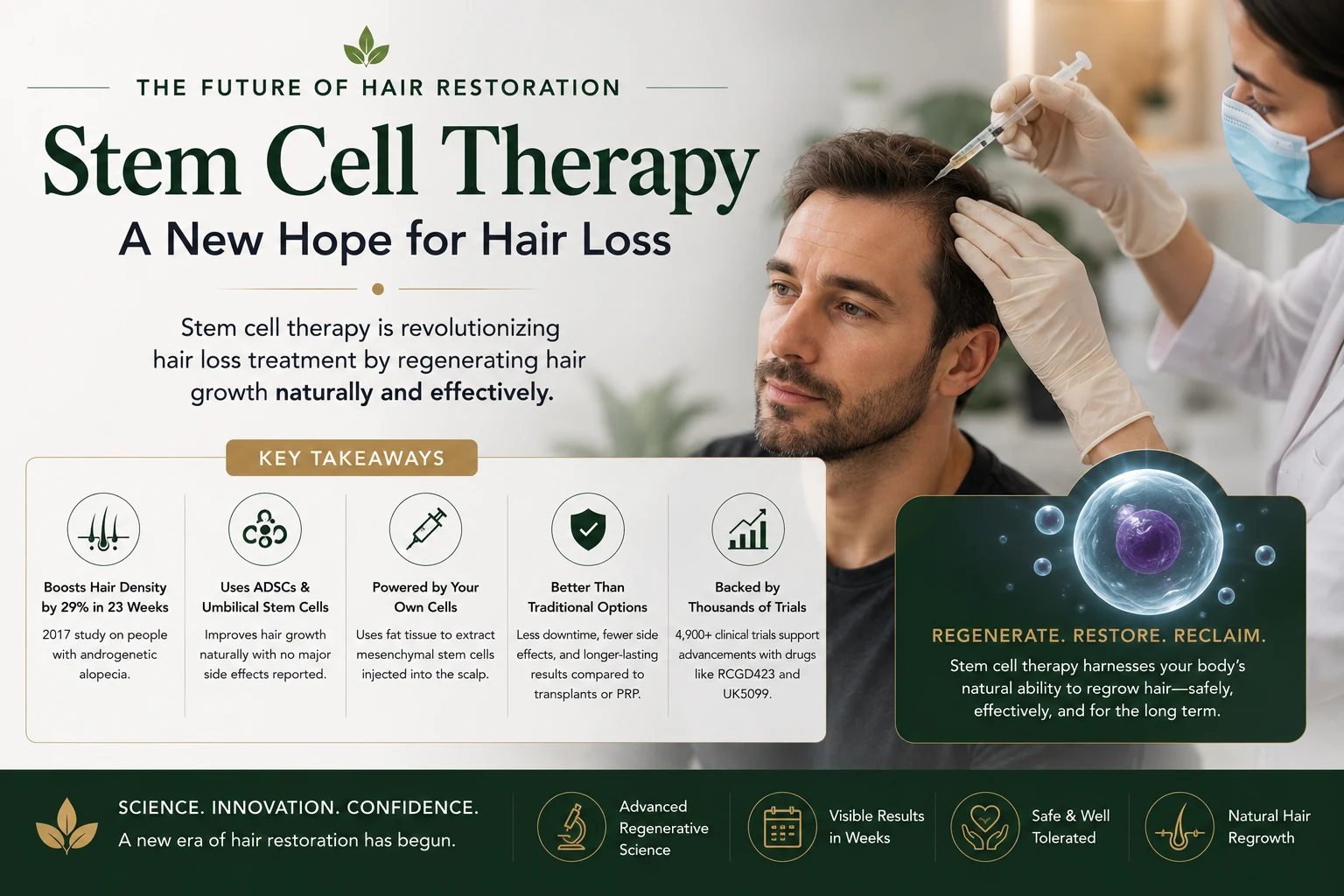
Hair loss is a common struggle for many people. Stem cell therapy for hair loss is an emerging regenerative treatment being studied for its potential to support follicle repair, improve scalp health, and help regenerate hair growth in selected cases.
This guide explains how stem cells work, what the treatment process may involve, how it compares with PRP and hair transplants, what the current evidence suggests, and what to consider before trying stem cell hair restoration.
Discover how stem cell therapy is changing the conversation around hair loss treatment.
Considering stem cell therapy for hair loss?
Stem cell hair treatments are still developing, and they are not right for every type of hair loss. A certified trichologist can assess your hair loss pattern, scalp health, medical history, and treatment options before you spend money on advanced regenerative care.
Looking for someone local?
Start with one of these local trichologist guides:
Key Takeaways
- Stem cell therapy is an emerging regenerative approach being studied for hair follicle repair and hair density support.
- Adipose-derived stem cells, hair follicle stem cells, conditioned media, exosomes, and umbilical cord-derived cells are all being explored in hair restoration research.
- Some studies report improvement in hair density, but the evidence is still developing and results vary by patient, method, and hair loss type.
- Stem cell therapy is not a guaranteed cure for androgenetic alopecia, alopecia areata, scarring alopecia, or advanced baldness.
- Before trying regenerative hair treatment, it is important to confirm the cause of hair loss and rule out issues such as low ferritin, thyroid imbalance, scalp inflammation, medication-related shedding, and stress-related hair loss.
Quick Next Steps
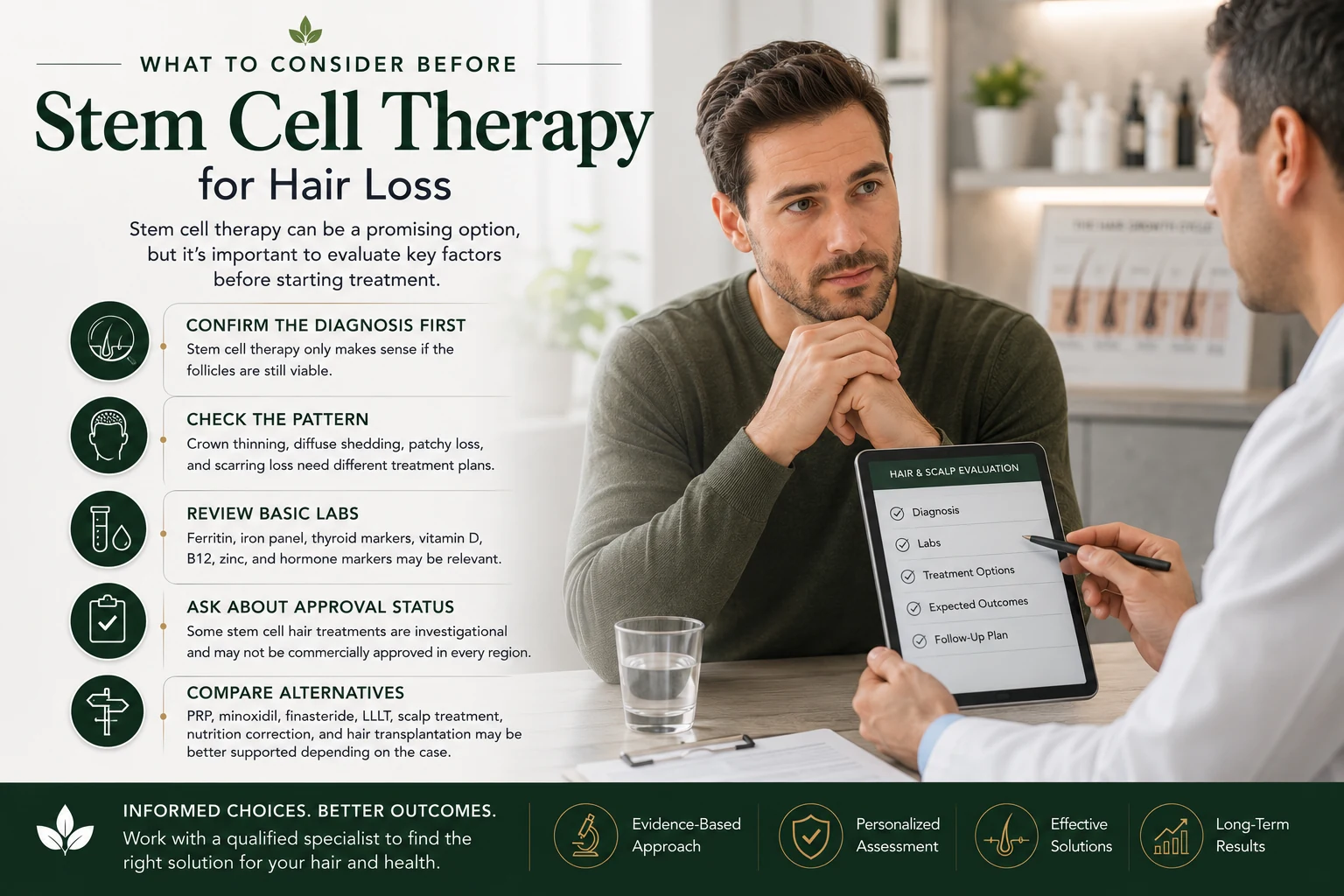
- Confirm the diagnosis first: Stem cell therapy only makes sense if the follicles are still viable.
- Check the pattern: Crown thinning, diffuse shedding, patchy loss, and scarring loss need different treatment plans.
- Review basic labs: Ferritin, iron panel, thyroid markers, vitamin D, B12, zinc, and hormone markers may be relevant.
- Ask about approval status: Some stem cell hair treatments are investigational and may not be commercially approved in every region.
- Compare alternatives: PRP, minoxidil, finasteride, LLLT, scalp treatment, nutrition correction, and hair transplantation may be better supported depending on the case.
Understanding Hair Loss and Its Causes
Hair loss happens for many reasons. Understanding these causes can help find better treatments.
Androgenetic Alopecia
Androgenetic alopecia, also called male or female pattern hair loss, is genetic. It causes hair follicles to shrink due to dihydrotestosterone (DHT). This leads to thinning on the scalp and eventually stops new hair growth.
In men, it often begins as a receding hairline or bald spot on top. Women usually notice overall thinning without complete baldness.
This condition affects millions of people worldwide and can impact self-esteem. FDA-approved treatments include minoxidil and finasteride. Both help slow down or stop hair loss but have limitations.
Stem cell therapy offers hope, with some studies reporting increased hair density in patients with androgenetic alopecia. However, results are not guaranteed, and more long-term human research is needed.
Genetics play a big role in how your scalp reacts to DHT.
Stress-Induced Hair Loss
Stress causes hair thinning by affecting follicle stem cells. High cortisol levels, the stress hormone, may interfere with normal follicle activity and push follicles toward a resting state instead of promoting new hair growth.
This can contribute to stress-related hair loss or slower hair regeneration over time.
Research into stress pathways, including cortisol and Gas6 signaling, has helped explain how chronic stress may affect scalp health and follicle activity. These findings are promising, but they do not mean every case of stress shedding needs stem cell treatment.
Other Contributing Factors
Inflammation weakens scalp health. It can shrink hair follicles and contribute to thinning hair over time.
Environmental factors like pollution and UV damage can also affect the scalp. Anxiety, pressure, poor sleep, poor nutrition, and vitamin deficiencies may make hair more brittle, weaker, and more prone to shedding.
What Is Stem Cell Therapy for Hair Loss?
Stem cell therapy for hair loss uses specialized regenerative cells or cell-derived signaling factors to support follicle repair, scalp rejuvenation, and healthy hair follicle activity.
The goal is not simply to “create hair from nothing.” In most current clinical contexts, the goal is to improve the environment around weakened follicles, support growth signaling, and encourage follicles that are still alive to perform better.
The Role of Stem Cells in Hair Follicles
Follicle stem cells are key to hair regeneration. These cells help repair aging or damaged hair follicles. Hair loss may occur when progenitor-cell activity declines, even when some follicle stem cells remain present.
This creates a potential opportunity for hair regrowth support.
Researchers are studying ways to activate dormant stem cells and improve follicle signaling. Compounds such as RCGD423 and UK5099 have been discussed in research settings for their potential effects on hair growth pathways. Stem-cell-derived conditioned medium is also being explored for its possible impact on hair density and shaft thickness.
How Stem Cells Stimulate Hair Growth
Stem cells help repair and renew tissues in the body. For hair growth, they may influence nearby dormant follicles by releasing signals that encourage follicle activity.
A blend of mesenchymal stem cells and skin epithelial stem cells may help support follicle regeneration in research settings. Studies suggest that adipose-derived stem cells (ADSCs) may be especially relevant for improving scalp conditions and supporting hair growth.
Their natural healing properties make them interesting tools in hair-loss research, although long-term safety, consistency, regulation, and ideal protocols still need more study.
The Stem Cell Hair Treatment Process
Stem cell hair treatment uses your own cells to help regrow hair in some protocols. Other approaches may use cell-derived products, conditioned media, or exosome-related technologies depending on the clinic, region, and regulatory environment.
Extraction of Stem Cells
Doctors may extract stem cells from adipose tissue, or body fat. A liposuction procedure removes fat using small cannulas under the skin. This method is common in regenerative medicine but should still be performed only by qualified medical professionals.
The extracted fat may undergo centrifugation to separate and concentrate the mesenchymal stem cells or related regenerative fractions. These cells or cell-derived components are then prepared for use in hair restoration procedures.
Culturing and Preparing the Stem Cells
In some research settings, extracted hair follicle cells are processed in a lab. These stem cells may be placed in a special culture to expand or prepare them for regenerative use. This process is still complex and not the same as routine cosmetic hair treatment.
Scientists focus on follicle stem cell activation during this stage.
Cultivated hair follicles can regenerate and boost growth in experimental models. Stem cells may use natural abilities to improve thinning or balding areas, but outcomes in real patients can vary widely.
Injection into the Scalp
Stem cell regrowth treatment may involve injecting stem cells or regenerative cell-derived material directly into the scalp. Doctors typically target areas with thinning hair or reduced density.
These injections are intended to help repair and rejuvenate damaged hair follicles and support new hair growth over time.
PRP therapy may sometimes be combined with these injections to support results. PRP uses the patient’s own platelets to support cellular hair regeneration. Together, stem cell and PRP treatments may offer an advanced alopecia treatment option for people seeking hair restoration and scalp rejuvenation.
Types of Stem Cell Therapies for Hair Loss
There are different types of stem cell therapies being studied for hair regrowth. The right approach depends on the type of hair loss, follicle activity, patient health, regulatory status, and professional assessment.
Adipose Tissue-Derived Stem Cells
Adipose tissue-derived stem cells come from fat tissue in the body. These cells may help with hair restoration by promoting new hair growth and improving scalp health.
A treatment known as adipose-derived stem cell-conditioned medium (AAPE®) has been studied in patients with alopecia. In one protocol, patients received intradermal injections every 3 to 5 weeks for six sessions. Reported results included increased hair counts in both men and women.
Injections are often performed under local anesthesia to reduce discomfort. The procedure uses natural healing properties from fat-derived cells, making it less invasive than traditional surgery such as hair transplants.
This therapy may be a promising option for selected people with progressive or severe hair loss concerns such as androgenetic alopecia or stress-related thinning. Common side effects may include mild injection pain, swelling, tenderness, or temporary irritation.
Hair Follicle Stem Cells
Fat-derived stem cells show promise, but hair follicle stem cells focus directly on the scalp. These cells sit in the follicle and help with regeneration. They are among the most researched targets for boosting hair growth.
Studies suggest these cells may be relevant to conditions like alopecia areata and androgenetic alopecia. Follicular stem cells paired with bone marrow-derived mononuclear cells have also been explored in trials.
Researchers are also studying exosomes from dermal papillae to support damaged follicles.
Stem cell-conditioned media (CM) offers another possible approach for improving density and thickness. This method delivers signals that may promote healthier growth cycles. The results suggest exciting possibilities, but more independent human trials are needed.
Umbilical Cord Blood Stem Cells
Umbilical cord blood stem cells (hUCB-MSCs) are being studied for their possible role in hair growth. They may help shift follicles from the telogen resting phase into the anagen growth phase, helping hair follicles move toward active growth.
These cells release key proteins such as insulin-like growth factor binding protein-1 (IGFBP-1) and vascular endothelial growth factor (VEGF). VEGF supports blood flow in the scalp, while IGFBP-1 may support cell repair and follicle strength.
These properties make hUCB-MSCs a promising area of research for alopecia treatment and severe hair loss, but clinical availability and regulatory approval vary.
Comparing Stem Cell Therapy to Traditional Hair Treatments
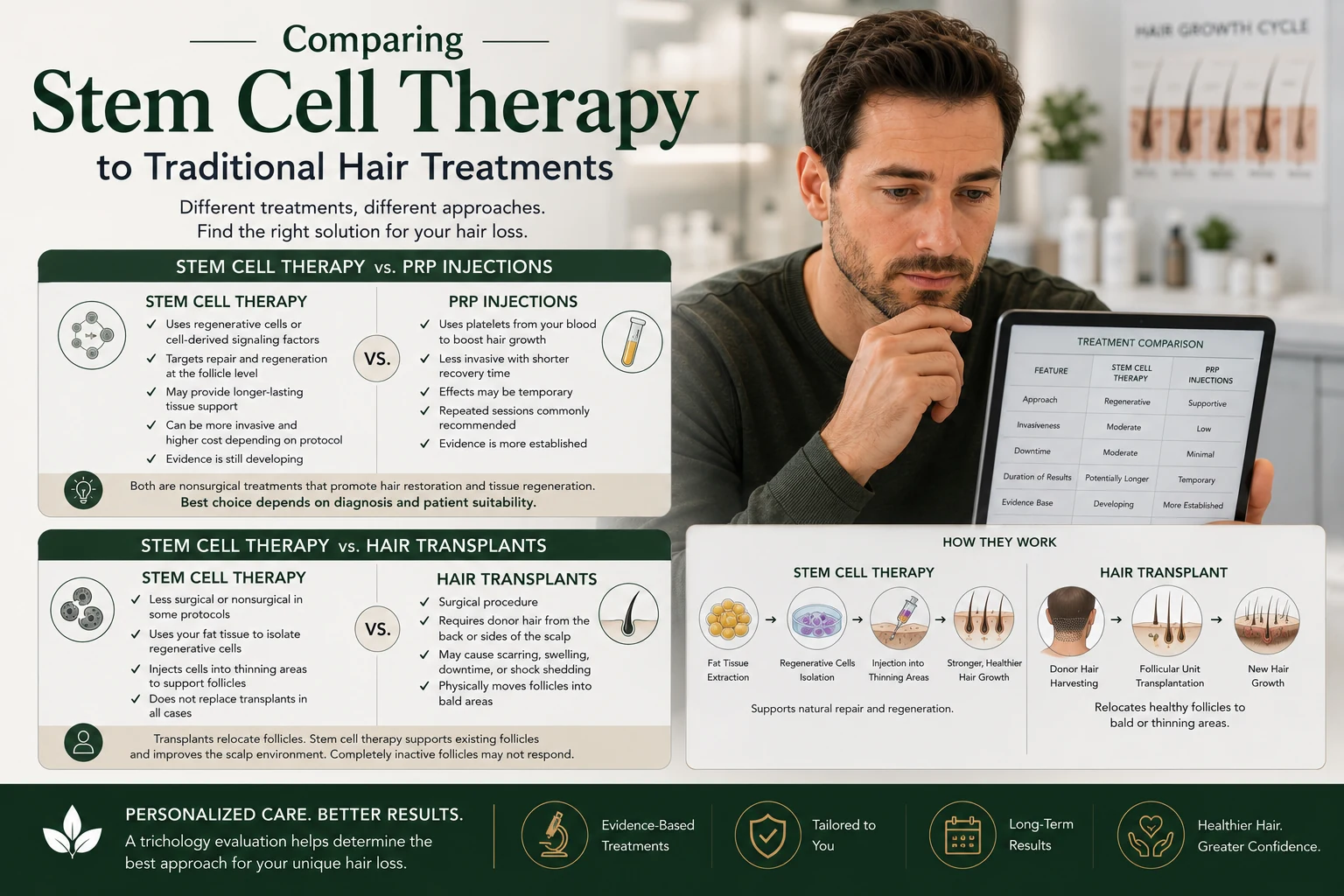
Stem cell therapy offers a regenerative approach to treating hair loss. It focuses on repairing, signaling, and stimulating natural hair growth at the follicle level.
Stem Cell Therapy vs. PRP Injections
PRP injections use platelets from your blood to boost hair growth. This process is less invasive and often has shorter recovery time. Its effects may be temporary, so repeated sessions are commonly recommended.
Stem cell therapy uses regenerative cells or cell-derived signaling factors. It may go deeper than PRP, but depending on the protocol, it can involve a more invasive procedure and higher cost. While it aims for longer-lasting tissue support, the evidence is still developing.
Both methods are nonsurgical treatments for promoting hair restoration and tissue regeneration, but they should be selected based on diagnosis and patient suitability.
Stem Cell Therapy vs. Hair Transplants
Hair transplants involve surgery. The process can take several hours and requires donor hair, usually from the back or sides of the scalp. Some patients may experience scarring, swelling, downtime, or temporary shock shedding after the procedure.
Stem cell therapy offers a less surgical or nonsurgical option in some protocols. Doctors may extract fat tissue, isolate regenerative cells, and inject them into thinning areas of the scalp.
However, stem cell therapy does not replace hair transplantation in all cases. A transplant physically moves follicles into bald areas. Stem cell therapy mainly aims to support existing follicles and improve the scalp environment. People with completely inactive follicles may not respond well.
Success Rates of Stem Cell Therapy for Hair Loss
Stem cell therapy shows promising results for hair regrowth in selected studies. Many patients report visible improvements, but success rates vary by treatment method, diagnosis, age, follicle activity, and follow-up time.
Clinical Trial Results
Some studies report improved density after stem cell-related therapy in patients with androgenetic alopecia. Initial results from regenerative products and conditioned-media approaches have also reported better hair texture and reduced shedding in some users.
There are thousands of clinical trials exploring regenerative medicine, including stem cell approaches. However, not all of these are specific to hair restoration, and not all results translate into approved clinical treatments.
Patient Outcomes
Some patients notice less hair shedding and new growth after regenerative hair protocols. Hair density improvements have been reported in studies on androgenetic alopecia, but not every patient responds the same way.
Replicel’s autologous cell therapy (RCH-01) has been studied in clinical trials for androgenetic alopecia. Early findings suggest potential, but these therapies are still part of a developing field rather than a universal standard of care.
Cost and Accessibility of Stem Cell Hair Treatments
Stem cell hair treatments can be expensive and vary by location. Access may depend on where you live, local regulations, clinic expertise, and the exact therapy being offered.
Average Treatment Costs
Treatment costs for hair loss vary by method. PRP treatments in the UK may range from £250 to £850 per session. Red light therapy sessions may cost about £45 each, while laser caps for home use can cost between £1,000 and £1,500.
Hair transplants are usually more expensive but may offer long-lasting cosmetic coverage. A transplant with 1,600 grafts may cost around £4,820 on average, depending on clinic, surgeon, country, technique, and graft count.
Stem cell therapies may have higher upfront costs because they involve advanced processing, specialized procedures, and limited availability. In some clinics, costs may range from several thousand dollars upward.
Availability by Region
Stem cell hair treatments are still limited in many places. Some therapies are not approved commercially in the US or UK, depending on the exact procedure and product. Clinics offering regenerative procedures may charge between $5,000 and $50,000 based on treatment type and complexity.
Some countries may adopt these treatments faster as research grows. Patients may need specialized centers for follicle regeneration or hair-growth therapy. Local options can be limited, so it is important to check credentials, regulatory status, and clinical evidence before proceeding.
Potential Side Effects and Risks
Stem cell therapy for hair loss may cause side effects such as swelling, pain, tenderness, bruising, or discomfort. There are also broader safety and regulatory concerns that should be reviewed before treatment.
Common Side Effects
Fatigue, headache, chills, nausea, or low-grade fever may occur with some stem cell or regenerative procedures. These symptoms are usually temporary but should still be discussed with the treating clinician.
Injection-based treatments can cause dizziness or discomfort at the injection site. Some approaches may carry risks of infection, inflammation, poor response, or unexpected reactions.
While many adverse reactions are mild, knowing them helps set proper expectations before starting therapy.
Long-Term Considerations
The long-term safety of stem cell hair therapy is still uncertain. Studies remain limited, and experts agree that more research is needed. The effects of the treatment may not last in every patient.
Stem cell hair treatments are not yet permanent solutions for hair loss. Scientists have not fully established their long-term impact, ideal protocol, durability, or effectiveness across all hair-loss types.
Because some therapies are not commercially approved in the UK or US, patients should be careful about safety, claims, clinic credentials, and regulatory compliance.
Ideal Candidates for Stem Cell Hair Therapy
Stem cell hair therapy works best for people with thinning hair or early-stage hair loss where follicles are still active. It is less likely to help completely bald areas where follicles are no longer viable.
Who Benefits the Most?
Men and women with existing hair often benefit the most. This therapy may work better for thinning hair than for fully bald, shiny, or scarred areas. It may help increase hair density and fullness in sparse regions.
Those experiencing early to moderate hair loss may be better candidates for stem cell treatments. People with active follicles are more likely to see improvement in thickness and growth.
Age and Hair Loss Severity
Age can affect follicle activity and treatment response. People with age-related thinning may notice slower hair growth or visible scalp patches. Stem cell therapy tends to make more sense in early or moderate alopecia than in advanced baldness.
Patients usually need some remaining hair for treatment to have a realistic chance of helping. Younger patients or those with less advanced thinning may respond better because their follicles may still be more active.
Future of Stem Cell Therapy in Hair Restoration
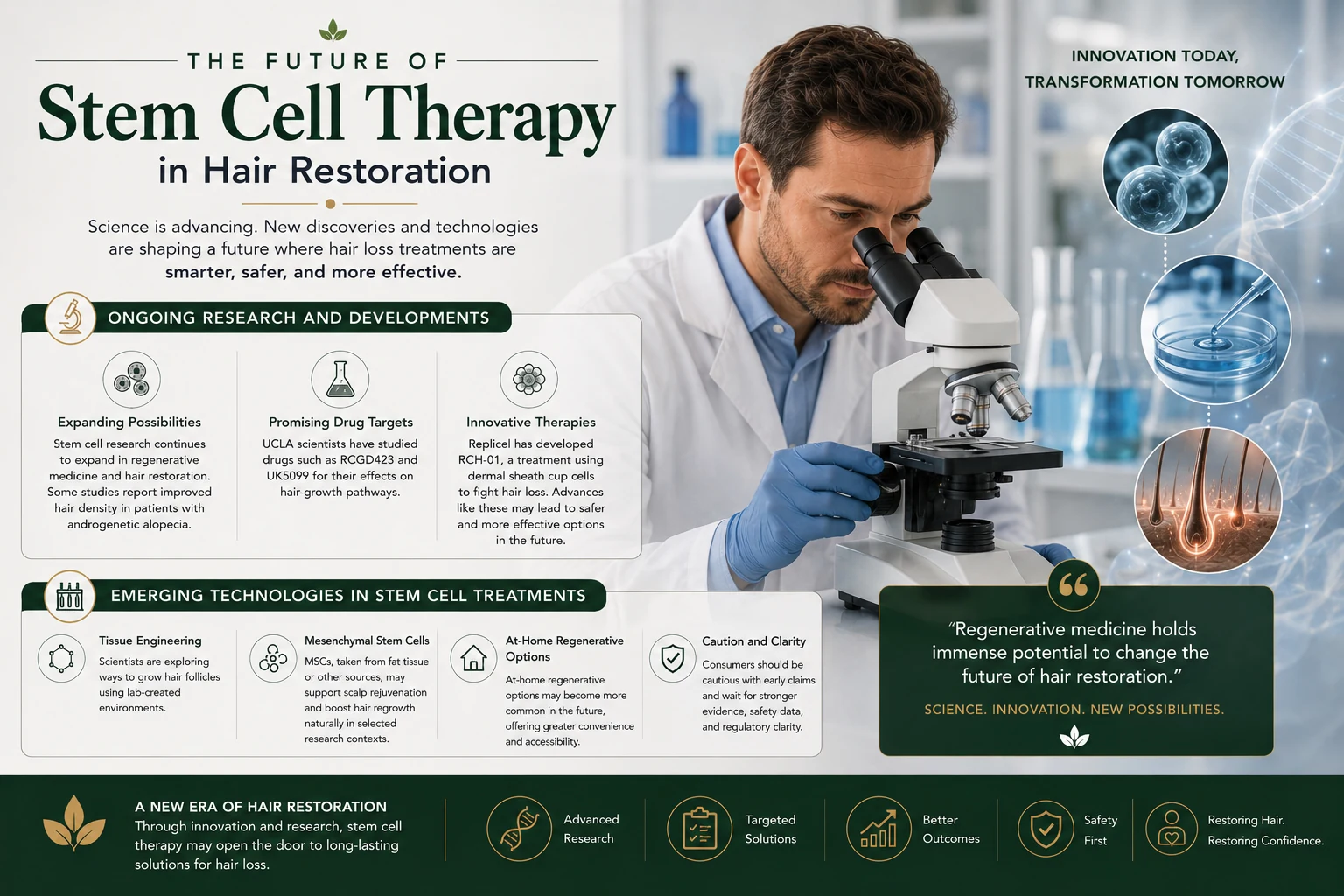
Scientists are exploring new ways to use stem cells for better hair regrowth. Advanced techniques may make treatments safer, more targeted, and more effective in the future.
Ongoing Research and Developments
Stem cell research continues to expand in regenerative medicine and hair restoration. Some studies report improved hair density in patients with androgenetic alopecia. UCLA scientists have also studied drugs such as RCGD423 and UK5099 for their effects on hair-growth pathways.
Replicel has worked on RCH-01, a treatment using dermal sheath cup cells to fight hair loss. Advances like these may lead to safer and more effective options in the future.
Emerging Technologies in Stem Cell Treatments
Ongoing research shows promising advances in hair loss treatments. New technologies like tissue engineering and regenerative medicine may improve results for patients over time.
Scientists are exploring ways to grow hair follicles using lab-created environments. Mesenchymal stem cells (MSCs), taken from fat tissue or other sources, may support scalp rejuvenation and boost hair regrowth naturally in selected research contexts.
At-home regenerative options may become more common in the future, but consumers should be cautious with early claims and wait for stronger evidence, safety data, and regulatory clarity.
Before choosing stem cell hair restoration, get the diagnosis right.
Regenerative treatments can be expensive, and not every type of hair loss responds. A trichologist can help determine whether your follicles are still active, whether inflammation or nutrition is involved, and whether PRP, minoxidil, LLLT, medical therapy, or transplant planning may be more appropriate.
Frequently Asked Questions About Stem Cell Therapy for Hair Loss
- What is stem cell therapy for hair loss?
- Stem cell therapy for hair loss uses regenerative cells, stem-cell-derived signaling factors, or conditioned media to support weakened hair follicles and improve the scalp environment. It is being studied as an advanced hair restoration option.
- How does stem cell therapy work for hair growth?
- Stem cell therapy may help by releasing growth signals, supporting tissue repair, improving follicle activity, and encouraging dormant or weakened follicles to re-enter a healthier growth cycle.
- Is stem cell treatment safe for hair thinning?
- Stem cell hair treatment may be safe when performed by qualified professionals using appropriate protocols, but long-term safety data are still limited. Patients should ask about approval status, risks, side effects, and evidence before treatment.
- Can everyone benefit from stem cell hair restoration?
- No. People with early or moderate thinning and active follicles may be better candidates. Stem cell therapy is less likely to help completely bald, scarred, or inactive follicle areas.
- Is stem cell therapy better than PRP for hair loss?
- Not always. PRP is more widely used and usually less invasive. Stem cell therapy may offer regenerative potential, but it is often more expensive, less standardized, and less widely approved.
- Can stem cell therapy replace a hair transplant?
- No. Hair transplants physically move follicles into bald areas. Stem cell therapy mainly aims to support existing follicles and scalp repair. In advanced baldness, transplantation may still be the more direct restoration option.
- How much does stem cell therapy for hair loss cost?
- Costs vary widely by country, clinic, procedure type, and technology used. Some regenerative hair treatments may cost several thousand dollars or more. Always confirm what is included and whether the treatment is approved in your region.
- How long do stem cell hair treatment results last?
- Durability is still unclear. Some patients may need repeated treatments, and results may fade over time. Long-term studies are still needed to understand how lasting the results are.
- What are the side effects of stem cell therapy for hair loss?
- Possible side effects include injection-site pain, swelling, bruising, headache, fatigue, chills, nausea, infection risk, and poor response. Risks depend on the method used and the clinic’s safety standards.
- When should I see a trichologist before stem cell therapy?
- See a trichologist before treatment if your hair loss is sudden, patchy, painful, inflamed, rapidly worsening, or unexplained. A professional evaluation can help confirm whether stem cell therapy is suitable or whether another treatment should come first.
Find a Trichologist Near You
If you are considering stem cell therapy, PRP, hair transplant surgery, or advanced regenerative treatments, a certified trichologist can help you understand your hair loss type and avoid the wrong treatment path.
Find a trichologist in your state:
- Alabama
- Alaska
- Arizona
- Arkansas
- California
- Colorado
- Connecticut
- Delaware
- Florida
- Georgia
- Hawaii
- Idaho
- Illinois
- Indiana
- Iowa
- Kansas
- Kentucky
- Louisiana
- Maine
- Maryland
- Massachusetts
- Michigan
- Minnesota
- Mississippi
- Missouri
- Montana
- Nebraska
- Nevada
- New Hampshire
- New Jersey
- New Mexico
- New York
- North Carolina
- North Dakota
- Ohio
- Oklahoma
- Oregon
- Pennsylvania
- Rhode Island
- South Carolina
- South Dakota
- Tennessee
- Texas
- Utah
- Vermont
- Virginia
- Washington
- West Virginia
- Wisconsin
- Wyoming
Conclusion
Stem cell therapy is one of the most interesting areas in modern hair restoration. It may help activate weakened follicles, support scalp repair, and improve hair density in selected cases.
However, it should not be presented as a guaranteed cure. Stem cell hair treatment is still developing, and patients need clear expectations about evidence, safety, cost, regulation, and suitability.
The strongest approach is to start with diagnosis. If the follicles are still active, regenerative therapy may be part of a broader plan that includes scalp care, nutrition, PRP, minoxidil, DHT-targeted treatment, LLLT, or hair transplant planning when appropriate.
Disclaimer: This content is for general informational and educational purposes only. It is not medical advice and should not replace consultation with a qualified healthcare professional. Stem cell treatments for hair loss may be investigational, may not be approved in every region, and may carry risks. Always consult a qualified medical professional before pursuing regenerative hair restoration.
References
- Source: www.frontiersin.org
- https://news.harvard.edu/gazette/story/2021/03/researchers-discover-how-chronic-stress-leads-to-hair-loss/ (2021-03-31)
- https://pmc.ncbi.nlm.nih.gov/articles/PMC10390634/
- https://bioinformant.com/stem-cell-treatment-for-hair-loss/
- https://www.tampahairmd.com/hair-restoration-tampa/stem-cell-hair-restoration-tampa.htm
- https://www.forhair.com/exploring-the-possibilities-of-stem-cell-for-hair-treatment/
- https://pmc.ncbi.nlm.nih.gov/articles/PMC7508456/
- https://stemcellinstitute2.com/stem-cell-therapy-for-hair-treatments/
- https://pmc.ncbi.nlm.nih.gov/articles/PMC4379938/
- https://pmc.ncbi.nlm.nih.gov/articles/PMC6115345/
- https://whitecoataesthetics.com/difference-between-prp-and-other-regenerative-therapies/
- https://goldenbergdermatology.com/hair-loss/stem-cell-hair-restoration-vs-hair-transplants/ (2019-02-27)
- Source: pmc.ncbi.nlm.nih.gov
- https://www.dvcstem.com/post/stem-cell-therapy-safe
- Source: www.frontiersin.org