Make sense of shedding after pregnancy.
Understand the timing of postpartum hair loss, supportive care and when another cause needs investigation.
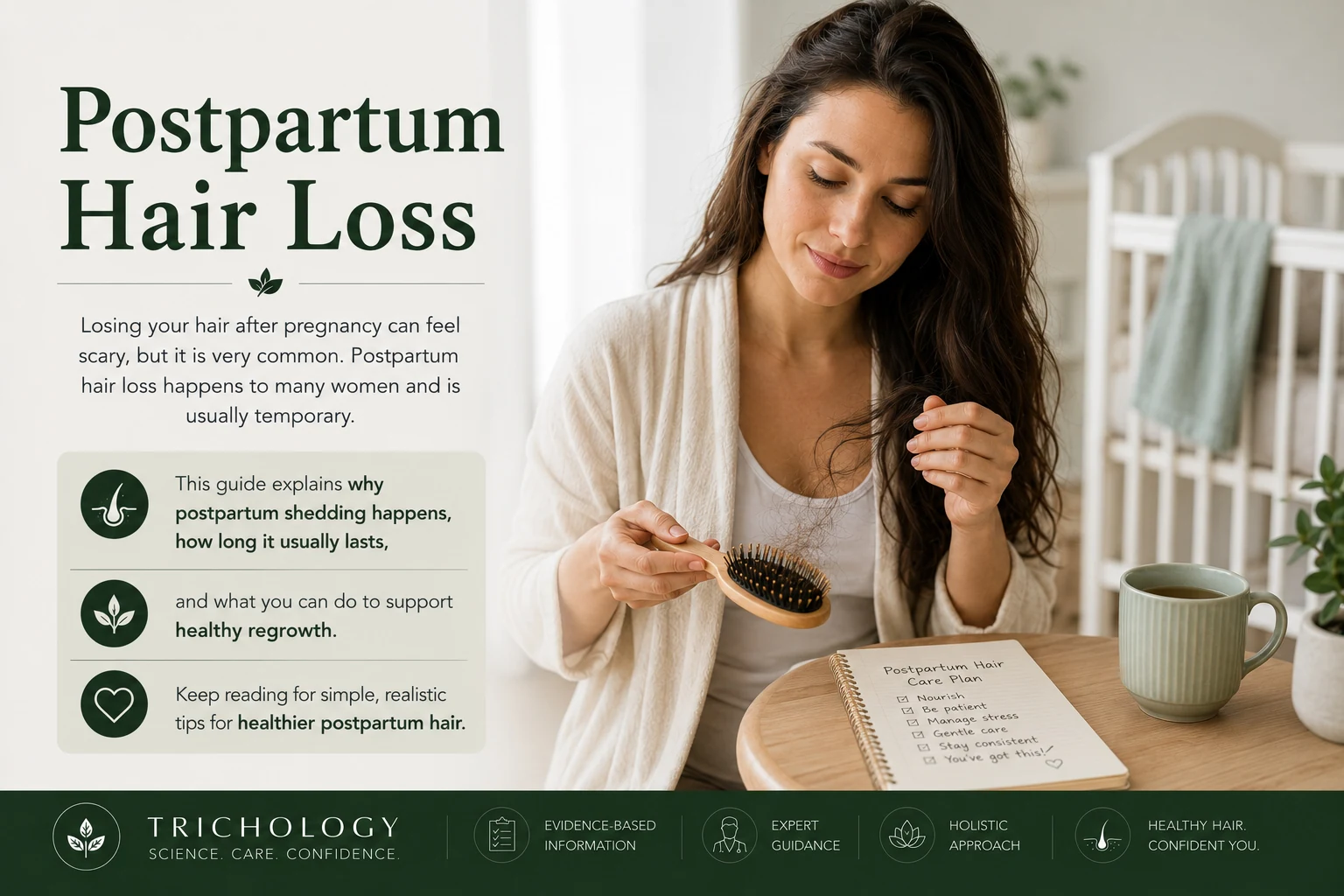
Losing your hair after pregnancy can feel scary, but it is very common. Postpartum hair loss happens to many women and is usually temporary. This guide explains why postpartum shedding happens, how long it usually lasts, and what you can do to support healthy regrowth.
Keep reading for simple, realistic tips for healthier postpartum hair.
Most postpartum hair loss is temporary, but heavy shedding, bald patches, scalp symptoms, or hair loss lasting beyond the expected window should be checked.
Find a trichologist near you .
Key Takeaways
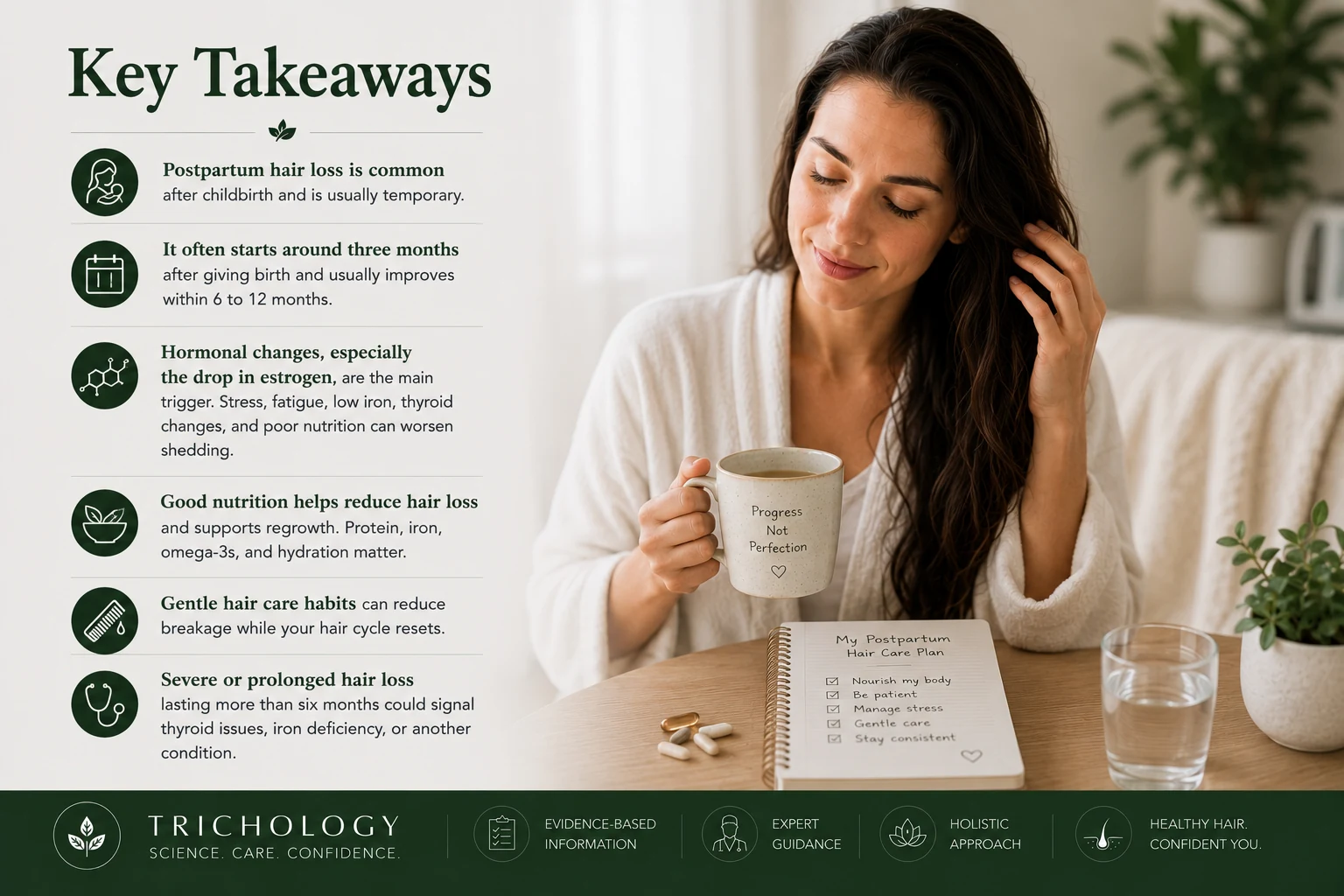
- Postpartum hair loss is common after childbirth and is usually temporary.
- It often starts around three months after giving birth and usually improves within 6 to 12 months.
- Hormonal changes, especially the drop in estrogen, are the main trigger. Stress, fatigue, low iron, thyroid changes, and poor nutrition can worsen shedding.
- Good nutrition helps reduce hair loss and supports regrowth. Protein, iron, omega-3s, and hydration matter.
- Gentle hair care habits can reduce breakage while your hair cycle resets.
- Severe or prolonged hair loss lasting more than six months could signal thyroid issues, iron deficiency, or another condition.
Quick next steps
- Track the timing: postpartum shedding commonly starts around 2 to 4 months after birth.
- Support nutrition: focus on protein, iron-rich foods, omega-3s, fruits, vegetables, and hydration.
- Be gentle: avoid tight hairstyles, heavy heat styling, harsh brushing, and aggressive chemical treatments.
- Check red flags: bald patches, scalp pain, scaling, burning, or shedding beyond 6 to 12 months needs evaluation.
- Need help locally? Browse verified trichologists.
What Is Postpartum Hair Loss?

Postpartum hair loss is a common condition many women face after giving birth. It happens because of hormonal changes during the postpartum period. During pregnancy, increased estrogen levels cause hair to stay in the growth phase longer, making it look thicker and fuller.
After childbirth, estrogen levels drop quickly. This can push more hairs into the shedding phase at the same time, causing noticeable hair fall, thinning, or clumps of hair in the shower, brush, or pillow.
This type of hair loss is commonly called postpartum telogen effluvium. Many women notice it around three months postpartum. The good news is that this process is usually temporary, and normal hair growth often returns within 6 to 12 months.
Postpartum hair loss is usually a hair-cycle reset after pregnancy, not permanent baldness.
Causes of Postpartum Hair Loss
Postpartum hair loss happens because the body changes quickly after giving birth. These changes can affect how your hair grows, rests, and sheds.
Hormonal Changes
Hormones play a major role in postpartum hair loss. During pregnancy, estrogen levels rise. This helps keep more hair in the hair growth cycle for longer. Hair appears thicker and fuller because less hair falls out.
After giving birth, estrogen drops sharply. Hair follicles can then shift into the shedding phase together. Women experience excessive hair shedding for this reason. Breastfeeding may also influence hormone patterns, and for some women it may make the shedding period feel longer.
Stress and Fatigue
After pregnancy, the body is recovering from childbirth while adjusting to sleep disruption, physical recovery, and the stress of caring for a newborn. Stress and fatigue can increase postpartum hair loss or make it feel more intense.
Lack of rest can disrupt the normal cycle of hair growth. Stress may cause more strands of hair to shed than usual. As a result, fine hair may feel thinner, leaving many women searching for ways to promote healthy regrowth.
When Does Postpartum Hair Loss Start and Stop?
Postpartum hair loss usually begins about three months after giving birth. Many women notice significant hair shedding during this time. This happens because hormone levels, especially estrogen, drop after pregnancy.
Shedding often continues for several months. The amount of hair you lose may feel alarming, but in most cases it is temporary. Many women see their hair return closer to its usual thickness by their baby’s first birthday.
Hormones often stabilize within 6 to 12 months, allowing the body to stop losing excess strands and start regrowing new ones naturally.
How to Treat Postpartum Hair Loss
Learn simple ways to care for your hair and improve its health during the postpartum period. The goal is not to panic or over-treat. The goal is to support the body while the hair cycle resets.
Nutritional Adjustments
Postpartum hair loss is common after giving birth. Eating the right foods can help reduce hair shedding and support regrowth.
- Eat more green vegetables like spinach and kale. These are rich in iron, which supports hair and overall recovery.
- Add eggs to your meals for protein that strengthens strands of hair. Eggs also contain biotin, which supports healthy hair growth.
- Include fatty fish like salmon in your diet to boost omega-3 intake. This supports scalp health and makes the hair look fuller.
- Snack on berries that are full of antioxidants and vitamins to support the condition of your hair.
- Enjoy avocados for their healthy fats to keep your scalp nourished and your strands shiny.
- Include red meat if you are not vegetarian or vegan. It is a source of iron, a key nutrient for many new mothers experiencing postpartum hair loss.
- Drink enough water each day to keep your body and hair hydrated.
- Limit junk food because it lacks the nutrients needed for strong, healthy strands.
These steps can help improve overall hair health after pregnancy while supporting regrowth over time.
Hair Care Tips
Nutritional changes are important, but hair care matters too. Simple habits can protect your hair while it is more fragile after pregnancy.
- Use gentle, sulfate-free shampoos to clean your scalp without drying out the hair.
- Apply a lightweight conditioner for fine hair to avoid weighing down your strands.
- Wash your hair less often if frequent washing makes it feel more fragile or dry.
- Avoid tight hairstyles like ponytails, braids, and buns, which pull on the scalp and cause loose hair to fall more easily.
- Limit heat styling or use cooler settings to avoid causing your hair further damage.
- Gently massage your scalp with natural oils like coconut oil or argan oil every week to encourage blood flow and make the hair appear fuller over time.
- Brush slowly using a wide-tooth comb to remove loose strands without breaking healthy hair.
These tips keep your hair healthier and may combat increased postpartum shedding effectively.
Over-the-Counter Products
Over-the-counter products can help with postpartum hair loss, especially when the goal is to reduce breakage, support scalp comfort, or make the hair appear fuller while shedding settles.
Shampoos like Head & Shoulders and conditioners like John Frieda may help depending on your scalp and hair needs. Supplements such as Viviscal and Nutrafol are sometimes used for thicker and fuller-looking strands, although they should be reviewed carefully if you are breastfeeding, pregnant again, taking medication, or already using other supplements.
OGX Anti-Breakage Serum prevents breakage, making hair appear stronger.
Women’s Rogaine Unscented Foam contains 5% minoxidil. It is FDA-approved for female pattern hair loss and may help boost your hair density in appropriate cases. However, postpartum shedding is often temporary, so it is best to speak with a healthcare professional before starting minoxidil while breastfeeding or if you are unsure whether your hair loss is normal postpartum shedding or another condition.
A professional can help check whether it is normal postpartum telogen effluvium or something else, such as low ferritin, thyroid changes, alopecia areata, or scalp inflammation.
Talk to a trichology professional .
When to Seek Professional Help
Severe hair loss lasting more than six months after pregnancy may signal deeper health issues. Conditions like postpartum thyroiditis or iron deficiency can cause increased hair loss.
Many women experience postpartum hair loss, but consulting a doctor is important if shedding persists beyond the expected window, becomes severe, or causes visible bald spots.
If normal hair regrowth does not occur within a year, visit a dermatologist, trichologist, or healthcare provider. Excessive shedding that results in bald spots requires medical attention. Treatments for underlying problems can help your hair return to normal.
Find a Trichologist Near You for Postpartum Hair Loss
If postpartum shedding is lasting longer than expected, becoming patchy, or happening with scalp symptoms, a certified trichologist can help assess your hair and scalp and guide your next step.
- Trichologist in Chicago, IL
- Trichologist in Illinois
- Trichologist in Georgia
- Trichologist in Florida
- Trichologist in Los Angeles, CA
- Trichologist in California
- Trichologist in New York, NY
- Trichologist in Brooklyn, NY
- Trichologist in North Carolina
- Trichologist in Texas
FAQs About Postpartum Hair Loss
- Why does postpartum hair loss happen?
- Postpartum hair loss occurs because hormone levels change after pregnancy. During pregnancy, higher estrogen keeps more hair than usual from falling out. After giving birth, estrogen drops and more hair enters the shedding phase.
- When does postpartum hair loss usually start?
- Hair loss usually starts around two to four months after pregnancy and can last for several months before it improves.
- Is postpartum hair loss permanent?
- No. Postpartum hair loss is usually temporary. Most women find that their hair returns to its normal growth cycle within 6 to 12 months.
- How can I treat or reduce postpartum hair loss?
- Use gentle hair products, avoid tight styles and heat damage, eat enough protein, support iron and vitamin intake, stay hydrated, and manage stress where possible. If shedding is severe or prolonged, get checked.
- Can I prevent postpartum hair loss?
- You may not be able to fully prevent it because it is mainly hormone-related. However, gentle styling, good nutrition, and scalp care can reduce breakage and support healthier regrowth.
- Can breastfeeding cause hair loss?
- Breastfeeding does not directly cause baldness, but postpartum hormones, sleep disruption, stress, and nutrient demands may affect shedding patterns. If hair loss is severe, check with a healthcare professional.
- What vitamins help postpartum hair loss?
- Hair-supportive nutrients include protein, iron, ferritin, vitamin D, zinc, B vitamins, and omega-3 fatty acids. Supplements should be chosen carefully, especially while breastfeeding.
- When should I see a doctor or trichologist?
- Seek help if hair loss is severe, patchy, painful, associated with scalp symptoms, continues beyond 6 to 12 months, or comes with fatigue, thyroid symptoms, heavy bleeding, or other health changes.
Conclusion
Postpartum hair loss is common and usually temporary. Hormonal shifts after birth are the main cause, and in most cases, hair will grow back as the cycle resets.
Care for your body with good nutrition and gentle hair care. Use products that help your hair look fuller while avoiding aggressive styling, heat, and unnecessary product stacking.
If shedding seems extreme, lasts too long, or comes with bald spots or scalp symptoms, ask a doctor, dermatologist, or trichologist for help.
References
- https://www.lancastergeneralhealth.org/health-hub-home/motherhood/fourth-trimester/the-truth-about-postpartum-hair-loss
- Source: jdcronline.org
- https://pmc.ncbi.nlm.nih.gov/articles/PMC5315033/
- https://www.whattoexpect.com/first-year/postpartum-health-and-care/postpartum-hair-loss/ (2022-02-22)
- Source: pmc.ncbi.nlm.nih.gov
Disclaimer: This content is for general informational and educational purposes only. It is not medical advice and should not replace consultation with a qualified healthcare professional. Seek professional evaluation for sudden, patchy, painful, inflamed, severe, or persistent hair loss after pregnancy.