
The right treatment starts with the right diagnosis.
Compare the roles, evidence and limitations of today’s hair-loss treatments—then build a sequence around the condition and the person, not a product promise.
Trichology.com Editorial Team · Updated September 2026
No treatment is universally “most effective.”
Androgenetic alopecia, telogen effluvium, alopecia areata, traction alopecia, nutritional shedding and scarring alopecia can all reduce density, but they do not respond to the same intervention.
An effective plan confirms the condition, identifies contributing drivers, selects treatments with a clear role and measures progress under consistent conditions.
Address confirmed biological drivers before stacking stimulants.
DHT sensitivity, nutritional limitations and inflammatory disease can act independently or overlap. Here, “root cause” means a confirmed treatment target—not an assumption that every person has one single cause.
DHT-focused treatment
Protect follicles vulnerable to androgen-driven miniaturization
Pattern hair loss requires a plan for DHT sensitivity. Natural and prescription approaches differ substantially in evidence, potency, risk and suitability.
Explore this treatment categorySupport growth without confusing stimulation with cause control.
Minoxidil, LLLT, PRP and microneedling use different mechanisms and carry different responsibilities. They may complement driver-directed care, but none substitutes for diagnosis.
Compare all four options by evidence, candidacy, safety, burden and maintenance.
Minoxidil
- Common role
- Growth support in selected diagnoses
- Important context
- Minoxidil can support follicle activity but does not block DHT, correct deficiency or control inflammatory disease. Oral use is off-label and medically supervised.
Low-level light therapy
- Common role
- Selected non-scarring pattern loss
- Important context
- Outcomes depend on diagnosis, device specifications, dose and consistency. Device clearance does not guarantee an individual response.
Restore coverage or appearance after candidacy is clear.
Hair transplantation moves living follicles; scalp micropigmentation changes visual contrast. They solve different problems and neither replaces control of active hair loss.
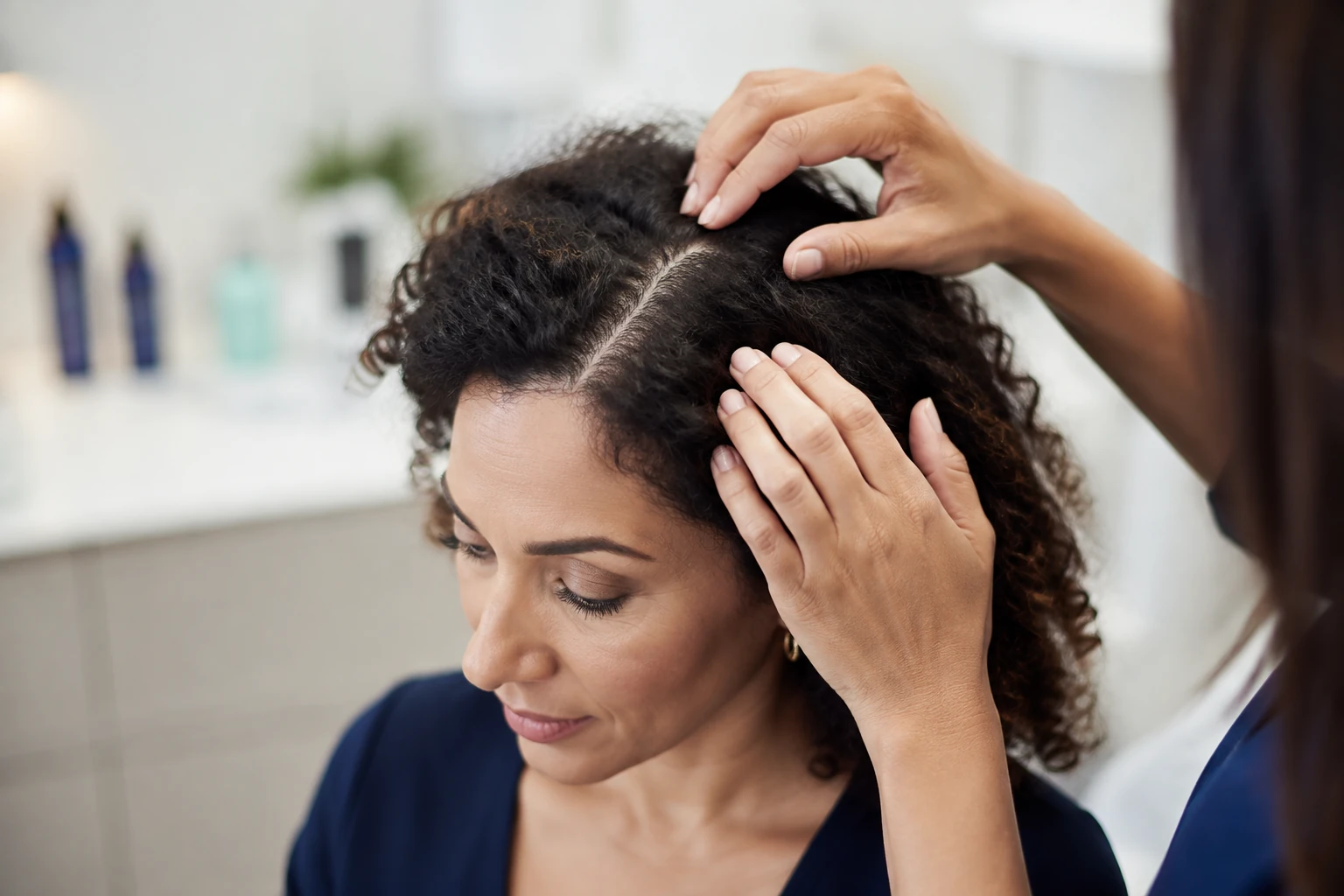
Build an objective baseline.
A verified or clinical trichologist can document distribution, shedding, breakage, scalp findings and change over time. A dermatologist or appropriately licensed clinician is needed for medical diagnosis, prescriptions, injections, biopsy and management of inflammatory or scarring disease.
- Standardized hairline, part, top and crown photographs
- Trichoscopic review for caliber variation and follicular openings
- Health, medication, nutrition and trigger timeline
- Targeted laboratory testing when the history supports it
A useful protocol has a sequence—not a pile of products.
- 01
Classify the condition
Separate pattern loss, shedding, patches, breakage and inflammatory or scarring signs.
- 02
Address the active drivers
Target DHT sensitivity, correct documented nutritional limitations and coordinate medical care for inflammatory disease.
- 03
Add growth support where appropriate
Consider minoxidil, LLLT, PRP or microneedling only when the likely benefit, burden and safety fit the individual.
- 04
Measure and adjust
Review standardized photographs, tolerance and adherence over months before changing the plan.
Pain, burning, pustules, rapid patches or smooth scar-like areas can require prompt diagnosis.
What to know before committing to treatment.
What is the most effective hair-loss treatment?
There is no single best treatment for every person. The most effective plan matches the diagnosis, active biological drivers, follicle condition, medical history and ability to maintain treatment.
Can hair-loss treatments be combined?
Yes. A DHT-focused treatment, nutritional correction and growth-support options may be combined when each addresses an identified need and the complete plan is medically appropriate.
How long should treatment take to work?
Early stabilization may become visible within three to six months, while a meaningful density comparison often requires six to twelve months. Timing varies by diagnosis and severity.
Do supplements treat every type of hair loss?
No. Supplements are most relevant when they correct a deficiency or nutritional gap. They do not automatically treat androgenetic, autoimmune, traction-related or scarring hair loss.
When should a dermatologist evaluate hair loss?
Seek medical assessment for sudden or patchy loss, pain, burning, pustules, significant inflammation, eyebrow loss, systemic symptoms or smooth scar-like areas.
Start with the pattern you are seeing.
Use the condition library to narrow the possibilities, or work with a verified trichologist to organize the findings and determine when medical referral is needed.