
The Scalp Microenvironment
The review connects follicular survival with local oxygen delivery, blood flow and tissue integrity.

 William Gaunitz, WTSClinical Trichologist · Expert Reviewer
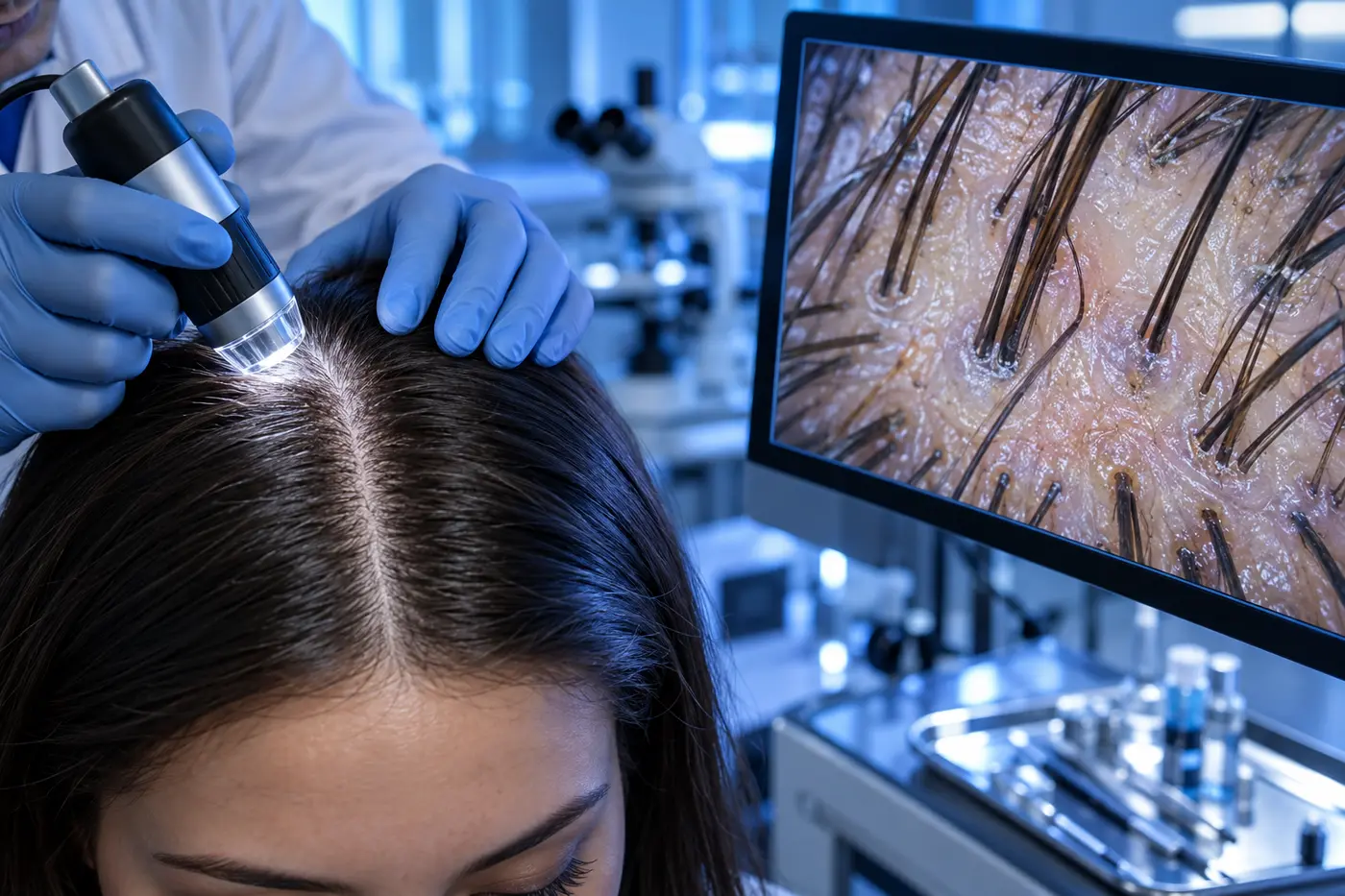
Inside this review
Use these questions to navigate the complete physician-authored review below.
The review connects active hair growth with the local delivery of oxygen and nutrients.
Read this section →Explore the author’s discussion of scalp inflammation, vascular function and oxidative stress.
Read this section →Complete production article and literature cited.
The Scalp Microenvironment
How Oxygenation, Blood Flow, and Tissue Health Determine Hair Follicle Survival
Key Takeaways:
- The hair follicle depends on a stable scalp microenvironment. Adequate oxygen delivery, vascular supply, and tissue integrity are essential for maintaining active hair growth.
- Hair growth is limited by oxygen and nutrient availability. Even when systemic health is normal, local scalp conditions can restrict follicular function.
- Microvascular dysfunction can impair follicle activity. Reduced blood flow limits oxygen and nutrient delivery, leading to weakened hair production and early follicular regression.
- Scalp inflammation alters the microenvironment. Chronic low-grade inflammation disrupts vascular function and increases oxidative stress within the follicular niche.
- Hair loss may originate from local tissue conditions. Not all hair loss is hormonal or nutritional; scalp-level dysfunction can independently impair growth.
Introduction
The hair follicle is one of the most metabolically active structures in the human body, requiring continuous delivery of oxygen, glucose, amino acids, and micronutrients to sustain growth. While systemic physiology plays a significant role in supporting these demands, the immediate environment surrounding the follicle, the scalp microenvironment, is equally critical.
This microenvironment consists of blood vessels, connective tissue, extracellular matrix, and signaling molecules that collectively regulate follicular activity. Even when systemic nutrient levels are adequate, disruptions at the scalp level can limit follicular access to these resources.
Understanding the role of the scalp microenvironment helps explain why hair loss can occur despite normal blood tests and why localized scalp conditions often precede visible thinning.
The Role of Oxygen and Blood Flow in Hair Growth
Hair matrix cells divide rapidly during the anagen phase, requiring high levels of oxygen to support cellular respiration and ATP production². This energy is essential for keratin synthesis and hair shaft formation.
Oxygen is delivered to the follicle through a dense network of capillaries surrounding the dermal papilla. Efficient blood flow ensures a continuous supply of oxygen and nutrients while removing metabolic waste products.

Figure 1. Figure 1. Dermal circulation supplying the follicle⁸
When blood flow is compromised, oxygen availability decreases. This condition, known as localized hypoxia, forces follicular cells to reduce metabolic activity. As a result, hair production slows, and follicles may prematurely transition into the regression phase.
Microvascular Dysfunction and Hair Loss
Microvascular dysfunction refers to impaired circulation within the small blood vessels that supply the hair follicle. This can occur due to inflammation, fibrosis, or structural changes in the scalp tissue.
Reduced capillary density or constricted blood vessels limit nutrient delivery to the follicle. Over time, this leads to weaker hair shafts, reduced growth rate, and increased shedding.
Unlike systemic deficiencies, microvascular issues are localized and may not be detected through routine laboratory testing. However, their impact on follicular health can be significant, particularly in chronic hair thinning conditions.
The Impact of Inflammation on the Scalp Environment
Inflammation within the scalp alters the microenvironment in multiple ways. Pro-inflammatory cytokines disrupt normal vascular function, increase oxidative stress, and interfere with cellular signaling within the follicle.
Chronic low-grade inflammation can lead to gradual remodeling of scalp tissue, including fibrosis and reduced elasticity. These structural changes further restrict blood flow and impair follicular support.
Inflammation does not always present with visible symptoms such as redness or irritation. Subclinical inflammation can persist undetected while progressively affecting follicular performance.
Tissue Integrity and Extracellular Matrix Support
The extracellular matrix (ECM) provides structural support to the hair follicle and plays a key role in regulating cell behavior⁵. It facilitates communication between cells and maintains the mechanical stability of the follicular unit.
Damage to the ECM, whether through oxidative stress, inflammation, or aging, alters the signaling environment of the follicle. This can disrupt normal growth cycles and reduce the follicle’s ability to sustain anagen².

Figure 2. Schematic of the hair follicle and connective tissue sheath⁹.
Healthy tissue architecture is therefore essential not only for structural support but also for maintaining the biochemical signals required for continuous hair growth.
Why Hair Loss Can Be Gradual and Diffuse
When the scalp microenvironment is compromised, the effects are typically widespread rather than localized. Multiple follicles experience reduced oxygenation and nutrient supply simultaneously, leading to diffuse thinning¹.
Because these changes occur gradually, hair loss may progress slowly over time rather than presenting as sudden shedding. This pattern reflects systemic impairment at the scalp level rather than isolated follicular damage.
The diffuse nature of this process often leads to misclassification as age-related or genetic hair loss, despite underlying microenvironmental dysfunction.
Clinical Implications for Trichology Practice
Hair loss driven by scalp microenvironment dysfunction requires a different approach than purely hormonal or nutritional conditions. Treatments focused solely on supplementation or hormonal modulation may not address the root cause.
Improving scalp circulation, reducing inflammation, and restoring tissue health are critical for re-establishing optimal follicular conditions. Without addressing these local factors, hair growth interventions may produce limited or temporary results.
Accurate assessment of scalp health allows for more targeted treatment strategies and helps avoid ineffective interventions.
Conclusion
The scalp microenvironment plays a central role in determining whether hair follicles can sustain active growth. Adequate blood flow, oxygen delivery, and tissue integrity are essential for maintaining follicular function.
Disruptions in this environment, whether through microvascular dysfunction, inflammation, or structural changes, can impair hair growth independently of systemic health. These factors contribute to gradual, diffuse hair loss that is often overlooked in conventional evaluation.
Effective hair restoration requires not only supporting the follicle internally but also optimizing the local conditions in which it operates. Addressing the scalp microenvironment is therefore fundamental to achieving sustained hair growth.
References
¹ Yano K, Brown LF, Detmar M. Control of hair growth and follicle size by VEGF-mediated angiogenesis. J Clin Invest. 2001;107(4):409–417. https://doi.org/10.1172/JCI11317
² Stenn KS, Paus R. Controls of hair follicle cycling. Physiol Rev. 2001;81(1):449–494. https://doi.org/10.1152/physrev.2001.81.1.449
³ Tobin DJ. Biochemistry of human skin—our brain on the outside. Chem Soc Rev. 2006;35(1):52–67. https://doi.org/10.1039/B505793K
⁴ Paus R, Cotsarelis G. The biology of hair follicles. N Engl J Med. 1999;341(7):491–497. https://doi.org/10.1056/NEJM199908123410706
⁵ Rendl M, Lewis L, Fuchs E. Molecular dissection of mesenchymal–epithelial interactions in the hair follicle. PLoS Biol. 2005;3(11):e331. https://doi.org/10.1371/journal.pbio.0030331
⁶ Randall VA. Androgens and hair growth. Dermatol Ther. 2008;21(5):314–328. https://doi.org/10.1111/j.1529-8019.2008.00214.x
⁷ Plikus MV, Chuong CM. Complex hair cycle domain patterns and regenerative hair waves in living rodents. J Invest Dermatol. 2008;128(5):1071–1080. https://doi.org/10.1038/sj.jid.5701180
⁸ Blausen.com staff. Dermal circulation. In: Medical gallery of Blausen Medical 2014. WikiJournal of Medicine. 2014;1(2). Available at: https://commons.wikimedia.org/wiki/File:Blausen_0802_Skin_DermalCirculation.png

⁹ Zhang L, He X, Cai Y, et al. Schematic representation of the human hair follicle and connective tissue sheath. In: World Journal of Stem Cells. 2020;12(6):462. Available at: https://www.wjgnet.com/1948-0210/full/v12/i6/WJSC-12-462-g001.htm
¹⁰ Chen S, Li L, et al. Androgenetic Alopecia: An Update on Pathogenesis and Pharmacological Treatment. Drug Des Devel Ther. 2025;19:7349–7363. https://doi.org/10.2147/DDDT.S542000