Biotin for Hair Growth: Benefits, Deficiency, Dosage and Risks

Biotin for hair growth, deficiency, supplements and hair-loss evidence

Biotin is one of the most heavily marketed supplements for hair growth. However, taking more does not automatically produce thicker or longer hair.

Also called vitamin B7, biotin is an essential nutrient. It helps the body process carbohydrates, fats, proteins, and amino acids. A true deficiency may cause thinning hair, loss of body hair, skin changes, brittle nails, and nerve-related symptoms.

However, biotin deficiency is uncommon in people who eat a varied diet. In addition, research showing that high-dose biotin improves hair growth in otherwise healthy people remains limited.

Therefore, biotin may be useful when a deficiency or another clear medical need exists. By contrast, it is much less likely to correct pattern hair loss, thyroid-related shedding, low ferritin, alopecia areata, scarring alopecia, or stress-related shedding by itself.

This guide explains what biotin does and when a supplement may help. It also covers normal daily intake, food sources, blood-test risks, product choices, and realistic results.

Medical note: This article provides general educational information only. It does not diagnose hair loss or replace advice from a doctor, dermatologist, pharmacist, registered dietitian, or another qualified healthcare professional.

FoliGROWTH Hair Growth Supplement by Advanced Trichology is a combined formula. It contains biotin with vitamins, minerals, amino acids, and plant-based ingredients.

Therefore, it may suit adults who prefer one hair-nutrition product instead of several separate supplements. However, the formula does not prove that biotin alone regrows hair.

Before use, compare the full Supplement Facts panel with any multivitamins, iron, zinc, vitamin D, or other hair products you already take.

View FoliGROWTH on Amazon

Affiliate disclosure: Trichology.com may earn a commission from qualifying Amazon purchases at no additional cost to you.

Important: Biotin Can Interfere With Blood Tests

High-dose biotin can cause falsely high or falsely low results in some laboratory tests.

For example, affected tests may include thyroid hormones, reproductive hormones, vitamin D, and cardiac troponin. Troponin tests may be used when a heart attack is suspected.

The risk depends on several factors. These include the biotin dose, timing, test method, kidney function, and laboratory system.

Therefore, tell your doctor, pharmacist, emergency clinician, and laboratory staff that you take biotin. Also, do not assume that every multivitamin or hair supplement contains only a small amount.

Do not stop a medically prescribed product based only on this article. Instead, ask the clinician ordering the test when the supplement should be paused and restarted.

Key Takeaways

  • Biotin is vitamin B7. It helps the body process carbohydrates, fats, proteins, and some amino acids.
  • A true deficiency can cause hair loss. Therefore, correcting that deficiency may improve related hair and skin symptoms.
  • Deficiency is uncommon. Most people obtain enough biotin through a varied diet.
  • Evidence for high-dose biotin is weak in healthy people. More biotin does not automatically create faster or thicker growth.
  • Biotin does not treat every type of hair loss. For example, it does not directly block DHT or correct iron deficiency.
  • Topical biotin has limited regrowth evidence. Shampoos and serums may improve how hair looks or feels without changing follicle growth.
  • Most adults need about 30 mcg daily. However, many beauty supplements contain thousands of micrograms.
  • High doses may distort blood-test results. Therefore, always disclose biotin use before testing.
  • Combined supplements need careful review. Check for repeated iron, zinc, selenium, vitamin A, and other nutrients.

Not Sure Why Your Hair Is Thinning?

Biotin deficiency is only one possible cause. Pattern hair loss, low ferritin, thyroid disease, illness, medicine, weight loss, scalp inflammation, traction, and breakage may cause similar changes.

A trichologist can review the pattern, scalp, hair shafts, nutrition history, and progress. However, medical diagnosis, blood tests, biopsy, and prescription treatment require an appropriately licensed healthcare professional.

Find a Trichologist Near You

Quick Next Steps

  • First, identify the pattern: Diffuse shedding, recession, a widening part, bald patches, and breakage can have different causes.
  • Next, check your current products: Biotin may already be present in a multivitamin, B-complex, hair supplement, gummy, or energy product.
  • Do not assume deficiency: Hair loss alone does not prove that your biotin level is low.
  • Tell the laboratory: Disclose every biotin-containing product before blood testing.
  • Track progress: Use photographs taken under the same conditions every three months.
  • Finally, watch for warning signs: Sudden loss, patches, pain, swelling, pustules, eyebrow loss, or scar-like areas need assessment.

Affiliate disclosure: Some links on this page are affiliate links. Trichology.com may earn a commission from qualifying purchases at no additional cost to you. Product inclusion does not mean that a supplement can diagnose, prevent, treat, or cure hair loss.

What Is Biotin?

Biotin is a water-soluble B vitamin. It is also known as vitamin B7 or, historically, vitamin H.

It supports enzymes that help with:

  • Fatty-acid production.
  • Glucose production.
  • Breakdown of certain amino acids.
  • Energy use.
  • Normal cell function.

Biotin is essential. However, the body needs only a small amount.

For adults aged 19 and older, the Adequate Intake is generally 30 micrograms per day. Meanwhile, breastfeeding adults have a slightly higher target of 35 micrograms.

How Is Biotin Connected to Hair?

Hair fibres mainly contain keratin proteins.

Biotin supports the normal use of nutrients and amino acids involved in healthy tissue growth. Therefore, a severe deficiency can affect hair, skin, and nails.

However, biotin does not attach itself to a follicle and force new hair to grow.

In addition, the idea that biotin directly “builds keratin” in every person is too simple. Hair growth depends on many factors, including:

  • Genetics.
  • Hormone sensitivity.
  • Iron and ferritin levels.
  • Thyroid function.
  • Protein and calorie intake.
  • Vitamin and mineral levels.
  • Scalp inflammation.
  • Medicine and illness.
  • The normal hair-growth cycle.

Learn more about the hair-growth cycle and how keratin affects hair structure.

Does Biotin Promote Hair Growth According to Science?

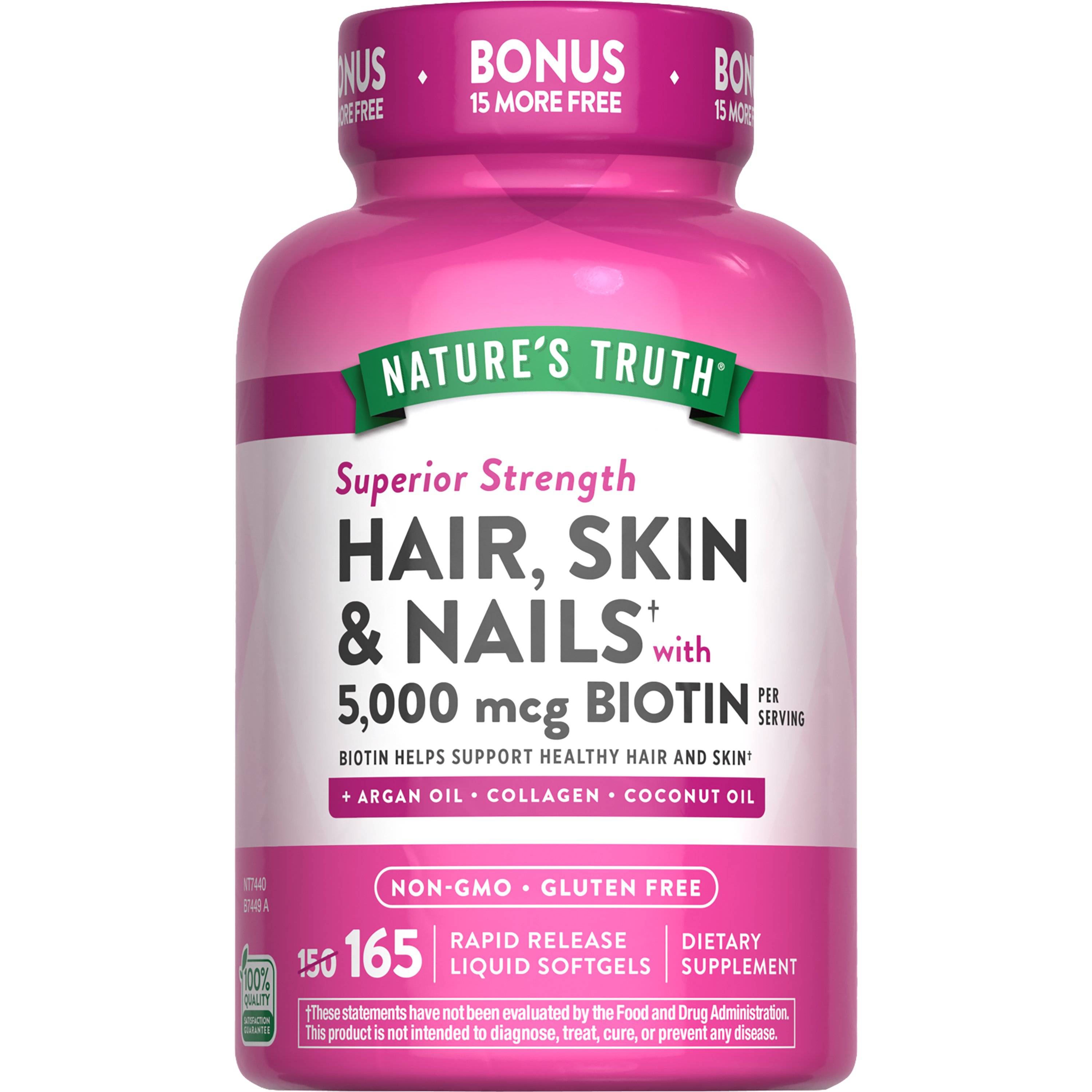
Example of a high-dose biotin hair, skin and nail supplement

Clinical evidence for biotin supplements and hair growth remains limited.

For example, a frequently cited review found improvement mainly in people who had a deficiency, inherited disorder, medicine-related problem, or another condition affecting hair or nails.

However, the review did not show that high-dose biotin improves hair density in healthy people who already obtain enough.

Therefore, the evidence can be summarised as follows:

  • Documented deficiency: A supplement may correct deficiency-related hair loss.
  • Inherited biotin disorders: Medical biotin treatment may be essential.
  • Healthy adults without deficiency: Evidence for extra hair growth remains weak.
  • Pattern hair loss: Biotin does not directly treat DHT-related follicle shrinkage.
  • Telogen effluvium: It may help only when low intake or deficiency is part of the cause.
  • Alopecia areata or scarring alopecia: It does not treat the main immune or inflammatory disease.

Can Biotin Stop Hair Loss?

Biotin may improve hair loss caused by a true deficiency.

However, it is unlikely to stop loss when the main cause is:

  • Male or female pattern hair loss.
  • Low iron or ferritin.
  • Thyroid disease.
  • Alopecia areata.
  • Scarring alopecia.
  • Medicine-related shedding.
  • Postpartum shedding.
  • Rapid weight loss.
  • Severe illness or surgery.
  • Traction alopecia.
  • Inflammatory scalp disease.
  • Hair-shaft damage and breakage.

For a wider overview, read the guide to hair-loss causes, diagnosis, and treatment.

What Causes Biotin Deficiency?

Biotin deficiency is uncommon. Nevertheless, it can occur in certain situations.

Possible causes and risk factors include:

  • Biotinidase deficiency and other rare inherited disorders.
  • Long-term intravenous nutrition without enough biotin.
  • Severe or prolonged poor nutrition.
  • Long-term heavy alcohol use.
  • Some anticonvulsant medicines.
  • Eating large amounts of raw egg white over a long period.
  • Pregnancy-related changes in biotin use.
  • Some digestive or absorption problems.

Why Raw Egg Whites Matter

Raw egg white contains avidin. This protein binds to biotin and may reduce its absorption.

However, cooking changes avidin. Therefore, normal use of cooked eggs does not create the same concern.

Symptoms of Biotin Deficiency

Possible symptoms include:

  • Thinning hair or loss of body hair.
  • A red or scaly rash near the eyes, nose, or mouth.
  • Brittle nails.
  • Eye inflammation.
  • Fatigue.
  • Low mood.
  • Numbness or tingling.
  • Nerve-related symptoms in severe cases.

However, these signs are not unique to biotin deficiency. A clinician should review the full medical and nutrition history.

Can Biotin Deficiency Be Tested?

Biotin levels are not routinely tested in every person with hair loss.

In some cases, direct testing may not be available or needed. Instead, a clinician may review:

  • Diet.
  • Medicine use.
  • Pregnancy status.
  • Digestive or absorption problems.
  • Skin and nerve-related symptoms.
  • Other causes of diffuse shedding.

Therefore, hair loss alone should not be used as proof of a biotin deficiency.

How Much Biotin Do Adults Need?

The Adequate Intake for most adults is generally 30 mcg per day.

However, many beauty supplements contain much larger amounts.

For example:

  • 30 mcg equals the adult Daily Value.
  • 1,000 mcg equals 1 mg.
  • 3,000 mcg equals 3 mg.
  • 5,000 mcg equals 5 mg.
  • 10,000 mcg equals 10 mg.

Therefore, a 5,000 mcg product provides more than 160 times the adult Daily Value.

No formal upper limit has been set. However, that does not mean that unlimited dosing is useful or free from risk. In particular, blood-test errors may occur even when clear toxicity does not.

What Biotin Dosage Is Best for Hair Growth?

There is no universal high-dose biotin recommendation for hair growth in healthy adults.

Instead, the right approach depends on the reason for use.

Confirmed Deficiency or Inherited Disorder

A healthcare professional should choose the dose according to the diagnosis and its severity.

General Nutrition

Most adults can obtain enough biotin from food. Alternatively, a standard multivitamin may provide close to the Daily Value.

High-Dose Hair Supplements

Products containing 5,000 or 10,000 mcg are common. However, these doses greatly exceed normal nutrition needs.

Therefore, do not assume that a higher number means better hair growth.

Before Laboratory Testing

Ask the clinician or laboratory when biotin should be stopped. The answer may depend on the dose, kidney function, test, and laboratory method.

As a result, one universal “stop for 48 hours” rule does not fit every person or every test.

Biotin and Laboratory-Test Interference

Many laboratory systems use biotin-based technology.

When a large amount of biotin remains in the blood, it may interfere with the test. As a result, the reading may be inaccurate.

Depending on the test design, the result may appear falsely high or falsely low.

Potentially affected tests include some measurements of:

  • Cardiac troponin.
  • Thyroid-stimulating hormone and thyroid hormones.
  • Parathyroid hormone.
  • Vitamin D.
  • Reproductive hormones.
  • Cortisol.
  • Other hormones and markers.

This issue is especially important in emergency care. For example, an incorrect troponin result could affect the assessment of a possible heart attack.

Therefore, carry the supplement bottle or photograph its label. This helps healthcare staff see the exact dose.

Does Biotin Strengthen or Repair Hair?

Biotin is needed for normal health. However, it does not physically repair a damaged hair shaft like an adhesive.

Hair outside the scalp is nonliving keratin fibre.

Conditioners, proteins, silicones, oils, and coating ingredients may temporarily improve:

  • Softness.
  • Shine.
  • Lubrication.
  • Manageability.
  • The appearance of split or weathered hair.

However, these cosmetic effects are different from new follicle growth.

A supplement may improve weak hair when a deficiency is present. By contrast, evidence that high doses strengthen normal hair in people without deficiency remains limited.

Biotin Shampoos, Conditioners and Serums

Many topical products promote biotin as a strengthening or volumising ingredient.

These products may make hair look fuller because the complete formula may include:

  • Conditioning agents.
  • Proteins.
  • Polymers.
  • Silicones.
  • Moisture-binding ingredients.
  • Oils.
  • Thickening ingredients.

However, there is little proof that topical biotin enters the scalp and regrows hair.

Therefore, a biotin shampoo is best viewed as a cleansing or cosmetic product. It should not be treated as a proven treatment for pattern hair loss.


FoliGROWTH multi-ingredient hair supplement containing biotin and supporting nutrients

FoliGROWTH is a broad hair supplement rather than a stand-alone biotin capsule.

Its main advantage is convenience. For example, one formula may reduce the need to buy separate vitamins, minerals, amino acids, and plant-based products.

However, several limits still apply:

  • Any result cannot automatically be linked to biotin alone.
  • The supplement cannot identify the cause of hair loss.
  • It does not replace treatment for thyroid disease, iron deficiency, pattern loss, immune disease, or scarring alopecia.
  • It may overlap with other multivitamins or hair products.
  • Its biotin content may affect some blood tests.
  • Other ingredients may cause side effects or interactions.

Therefore, review the current label before purchase. Formulas and serving directions may change.

Check Current Price on Amazon


Advanced Trichology lightweight post-shower product for fuller-looking hair

This Advanced Trichology post-shower product aims to improve the appearance and feel of existing hair.

For example, a cosmetic product may make hair look fuller, smoother, or easier to style. However, an instant increase in visible volume is not the same as new follicle growth.

Therefore, it may provide cosmetic support while the cause of thinning is assessed and treated.

View on Amazon

Another Biotin-Containing Hair Supplement


Hair Labs multi-ingredient hair supplement containing biotin and botanical ingredients

This Hair Labs product combines biotin with other nutrients and plant-based ingredients.

Before choosing any combined supplement, review:

  • The exact biotin dose.
  • All vitamins and minerals.
  • Plant-based ingredients.
  • Possible medicine interactions.
  • Pregnancy and breastfeeding warnings.
  • Overlap with other supplements.
  • Possible blood-test interference.

In addition, do not assume that a longer ingredient list guarantees stronger hair growth.

View on Amazon

When DHT, Not Biotin, May Be the Main Issue

A receding hairline, thinning crown, widening part, and gradual follicle shrinkage often suggest pattern hair loss.

Biotin does not directly lower DHT.

Therefore, when pattern loss is the main condition, a clinician may discuss treatments such as minoxidil or finasteride for suitable men. Other choices depend on sex, age, health history, and pregnancy potential.

Natural DHT-support products have weaker evidence than prescription treatment. However, some adults still prefer a plant-based option.

Related Option: DHT Blocker Maximum Strength

Advanced Trichology DHT Blocker Maximum Strength is designed for plant-based support when hormone-related or genetic thinning may be relevant.

However, it should not automatically replace FoliGROWTH. The two products have different aims:

  • FoliGROWTH: Broad nutrition and botanical hair support.
  • DHT Blocker Maximum Strength: More focused botanical support for DHT-related thinning.

Neither product can diagnose pattern hair loss or guarantee regrowth.

View DHT Blocker Maximum Strength

For more detail, read about DHT and hair loss and DHT-blocking ingredients.

Biotin, Skin and Nails

Biotin, skin, nails and hair health

A biotin deficiency can affect the skin and nails as well as hair.

However, evidence that high-dose supplements improve normal skin and nails in people without deficiency remains limited.

Brittle Nails

Some small, older studies suggest that biotin may improve nail thickness in certain people with brittle nails.

However, these findings do not prove that everyone with weak nails needs high-dose biotin.

For example, nail changes may also result from:

  • Repeated wetting and drying.
  • Chemical exposure.
  • Fungal infection.
  • Iron deficiency.
  • Thyroid disease.
  • Psoriasis.
  • Age-related changes.

Skin Symptoms

A rash around the eyes, nose, or mouth may occur with severe biotin deficiency.

However, acne, eczema, rosacea, and other common skin conditions should not automatically be blamed on low biotin.

Foods Rich in Biotin

Biotin occurs naturally in many foods.

Useful sources include:

  • Cooked eggs.
  • Liver and other organ meats.
  • Salmon and some other fish.
  • Pork.
  • Sunflower seeds.
  • Almonds and other nuts.
  • Sweet potatoes.
  • Legumes.
  • Some whole grains and fortified foods.
  • Mushrooms.
  • Spinach and other vegetables.

Exact amounts vary by food, portion, processing, and testing method.

Therefore, a varied diet is usually more useful than focusing on one “superfood.”

Do Raw Eggs Cause Biotin Deficiency?

Raw egg white contains avidin, which can bind biotin in the digestive system.

As a result, eating unusually large amounts over a long period may reduce biotin absorption.

However, cooking the egg white greatly reduces this effect.

Therefore, cooked eggs do not need to be avoided. In fact, they can provide both biotin and protein as part of a balanced diet.

Biotin and Other Hair Nutrients

Biotin is only one nutrient involved in normal hair growth.

Other relevant factors may include:

  • Protein.
  • Iron and ferritin.
  • Vitamin D.
  • Zinc.
  • Vitamin B12.
  • Folate.
  • Essential fats.
  • Overall calorie intake.

However, more is not always better.

For example, too much vitamin A or selenium may contribute to hair loss. Iron and zinc may also cause problems when taken without a clear need.

Read the guides to ferritin and hair loss, vitamin D deficiency and hair loss, and nutritional deficiencies linked to shedding.

Should Everyone With Hair Loss Take Biotin?

No. A biotin supplement is most likely to help when:

  • A deficiency is documented or strongly suspected.
  • An inherited biotin disorder is diagnosed.
  • A clinician finds a clear nutrition or medical need.
  • Dietary intake is inadequate and cannot easily be corrected.

By contrast, biotin is less likely to solve hair loss when:

  • The hairline is gradually receding.
  • The crown or part is becoming thinner.
  • Low ferritin or thyroid disease is the main issue.
  • Alopecia areata causes smooth patches.
  • A scarring condition is damaging follicles.
  • Traction, heat, or chemicals are breaking the hair.

Who Should Be Particularly Careful With Biotin?

Obtain professional advice when you:

  • Have blood tests scheduled.
  • Are being assessed for thyroid, heart, reproductive, or hormone-related symptoms.
  • Are pregnant or breastfeeding.
  • Take anticonvulsants or other long-term medicines.
  • Have kidney disease.
  • Have a metabolic or inherited disorder.
  • Take several overlapping supplements.
  • Are preparing for surgery.
  • Are undergoing cancer monitoring or other specialist tests.

How to Choose a Biotin or Hair Supplement

Check the Exact Biotin Amount

First, compare micrograms and milligrams carefully.

For example, a product containing 5 mg provides 5,000 mcg, not 5 mcg.

Check the Entire Formula

Next, look for possible overlap involving:

  • Iron.
  • Zinc.
  • Selenium.
  • Vitamin A.
  • Vitamin D.
  • Folate.
  • Vitamin B6.
  • Saw palmetto.
  • Ashwagandha.
  • Green tea extract.
  • Other plant-based ingredients.

Avoid Guaranteed Claims

No biotin supplement can guarantee thicker hair, stop every type of shedding, or regrow follicles that have been inactive for years.

Check Quality Information

Also, look for:

  • A clear Supplement Facts panel.
  • Manufacturer contact details.
  • Lot and expiry information.
  • Tamper-evident packaging.
  • Allergy warnings.
  • Storage directions.
  • Independent quality testing where available.

Choose the Product for the Actual Problem

A general nutrition formula may make sense when dietary gaps are the concern.

Meanwhile, a DHT-focused formula may be more relevant to gradual pattern thinning.

However, neither option replaces medical assessment when the cause is unclear or the loss continues.

How Long Should Biotin Be Tried?

Correcting a true deficiency and seeing a hair-cycle response takes time.

Therefore, a few days or weeks are usually not enough to judge a change in density.

However, this does not mean that everyone should take high-dose biotin for six months without confirming why it is needed.

A useful review should include:

  1. The original reason for taking biotin.
  2. The exact dose and full formula.
  3. Diet changes.
  4. Upcoming blood tests.
  5. Possible side effects.
  6. Consistent photographs.
  7. Whether shedding or density is improving.

How to Track Hair Changes

  1. First, take baseline photographs: Capture the hairline, temples, part, top, and crown.
  2. Next, keep the conditions the same: Use similar lighting, angle, distance, hairstyle, and hair wetness.
  3. Record every supplement: Include the brand, dose, ingredients, and start date.
  4. Track shedding and breakage separately: They are not always the same problem.
  5. Review every three months: Daily mirror checks can be misleading.
  6. Finally, do not ignore progression: Seek an assessment when density continues to decline.

Bottom Line on Biotin

Biotin is essential, and a deficiency can cause hair loss. However, deficiency is uncommon, and current evidence does not support treating every case of thinning with high-dose biotin.

Therefore, identify the likely cause before adding another supplement. The real issue may involve nutrition, DHT-related pattern loss, thyroid disease, iron deficiency, inflammation, stress shedding, or breakage.

Talk to a trichologist.

Ready to Compare the Relevant Options?

FoliGROWTH provides broad hair-nutrition and botanical support. Meanwhile, DHT Blocker Maximum Strength is more focused on plant-based support for genetic or hormone-related thinning.

Therefore, choose according to the suspected cause rather than taking both automatically. Also, review overlapping ingredients and disclose all biotin-containing products before laboratory testing.

View FoliGROWTH on Amazon
View DHT Blocker Maximum Strength

Review current labels, warnings, serving directions, sellers, prices, and availability before purchase.

Frequently Asked Questions About Biotin and Hair

Biotin and Hair Growth

Does biotin help hair grow?
Biotin may correct hair changes caused by a deficiency. However, evidence that high-dose supplements improve growth in healthy people remains limited.
Can biotin stop hair loss?
It may improve deficiency-related loss. However, it will not reliably stop pattern hair loss, thyroid-related shedding, iron deficiency, alopecia areata, scarring alopecia, or severe breakage.
How long does biotin take to work?
When deficiency is present, visible changes may take several months. However, taking a high dose without a deficiency does not guarantee a result.
Does biotin make hair grow faster?
There is not enough evidence that extra biotin speeds normal hair growth in people who already obtain enough.
Does biotin thicken hair?
Correcting a deficiency may improve affected hair. Meanwhile, cosmetic products may make strands look fuller without increasing follicle number.

Deficiency and Testing

Is biotin deficiency common?
No. True deficiency is uncommon. However, some inherited disorders, medicines, nutrition problems, and medical conditions can raise the risk.
What are the signs of biotin deficiency?
Possible signs include thinning hair, body-hair loss, brittle nails, skin rash, eye inflammation, and nerve-related symptoms.
Can a blood test diagnose biotin deficiency?
Special tests may be used in selected cases. However, routine hair-loss reviews do not always include a direct biotin measurement.
Can biotin affect thyroid tests?
Yes. High biotin levels may interfere with some thyroid tests and produce misleading results.
Can biotin affect heart tests?
Yes. Biotin may interfere with certain troponin tests used during the assessment of a possible heart attack.

Dosage and Safety

How much biotin do adults need?
Most adults have an Adequate Intake of 30 mcg daily. Meanwhile, breastfeeding adults generally need 35 mcg.
Is 5,000 mcg of biotin too much?
It greatly exceeds normal nutrition needs. Although no toxicity limit has been set, it may interfere with blood tests and may not improve hair without deficiency.
Is 10,000 mcg better than 5,000 mcg?
No evidence shows that doubling a high dose produces better growth in someone who already obtains enough biotin.
Should biotin be stopped before a blood test?
Tell the clinician and laboratory your exact product and dose. They should advise when to stop and restart it.
Can biotin cause side effects?
Biotin has low known toxicity. However, high doses may affect blood tests, while combined products may cause digestive, allergy, or medicine-related effects.

Products and Alternatives

Do biotin shampoos regrow hair?
There is little evidence that topical biotin shampoos regrow hair. However, they may improve cleansing, conditioning, or the look of existing strands.
What is FoliGROWTH?
FoliGROWTH is a combined hair supplement containing biotin with other nutrients and plant-based ingredients. It is not a guaranteed treatment.
Should I take FoliGROWTH and another biotin supplement together?
Usually, unnecessary overlap should be avoided. Therefore, compare the total biotin and other nutrients across both labels.
What if my hair loss is caused by DHT?
Biotin does not directly block DHT. Therefore, pattern thinning may require a different plan.
Can biotin replace minoxidil?
No. Biotin corrects a nutrition need when one exists. By contrast, minoxidil acts directly on follicle activity.

Food and Special Situations

Which foods contain biotin?
Sources include cooked eggs, liver, salmon, pork, sunflower seeds, almonds, sweet potatoes, legumes, mushrooms, spinach, and some grains.
Do raw eggs reduce biotin absorption?
Large and prolonged intake of raw egg white may reduce absorption because avidin binds biotin. However, cooking changes avidin.
Can pregnant women take biotin?
Pregnancy affects biotin use. However, concentrated supplements should be reviewed with the prenatal-care clinician.
Can children take hair-growth biotin supplements?
Children should not use high-dose beauty supplements without advice from a paediatric clinician.
When should I seek professional help for hair loss?
Seek an assessment for sudden loss, rapid progression, smooth bald patches, pain, swelling, pustules, scarring, eyebrow loss, or ongoing thinning.

Find a Trichologist Near You

Not sure whether biotin is relevant to your hair loss?

A professional assessment can help separate nutrition-related shedding from pattern loss, scalp inflammation, breakage, immune-related disease, or another condition.

Search the Trichologist Directory

Conclusion: Is Biotin Good for Hair Growth?

Biotin is an essential nutrient. In addition, a true deficiency can cause thinning hair, body-hair loss, skin changes, and brittle nails.

However, deficiency is uncommon. Current evidence does not show that routine high-dose biotin reliably improves hair growth in healthy adults who already obtain enough.

Biotin also does not directly treat DHT-related pattern loss, thyroid disease, low ferritin, alopecia areata, scarring alopecia, or stress-related shedding.

FoliGROWTH offers broad hair-nutrition support and may be more practical than several separate supplements. However, it cannot diagnose the cause of thinning. Also, any result cannot be linked to biotin alone.

For gradual pattern loss, DHT Blocker Maximum Strength may be the more relevant botanical category. Nevertheless, it is not equal to prescription treatment.

Most importantly, high-dose biotin can interfere with important blood tests. Therefore, tell every healthcare professional and laboratory about all biotin-containing products you use.

Finally, begin with the likely cause. Choose one focused strategy, avoid overlapping supplements, track progress, and seek help when thinning continues.

Next step: view FoliGROWTH, compare DHT Blocker Maximum Strength, read about nutritional hair-loss causes, or find a trichologist near you.

References and Further Reading

  1. NIH Office of Dietary Supplements: Biotin Fact Sheet for Health Professionals
  2. NIH Office of Dietary Supplements: Biotin Fact Sheet for Consumers
  3. U.S. FDA: Biotin Interference With Troponin Laboratory Tests
  4. U.S. FDA: Testing for Biotin Interference in Diagnostic Devices
  5. Patel DP, et al. A Review of the Use of Biotin for Hair Loss
  6. Almohanna HM, et al. The Role of Vitamins and Minerals in Hair Loss
  7. Guo EL, Katta R. Diet and Hair Loss: Effects of Nutrient Deficiency and Supplement Use
  8. Clinical Review of Biotin Deficiency
  9. The Role of Biotin in Hair Growth
  10. Nutritional Deficiencies That Can Cause Hair Loss
  11. Ferritin Deficiency and Hair Loss
  12. Vitamin D3 Deficiency and Hair Loss
  13. What Is DHT and How Does It Affect Hair Loss?
  14. Hair-Loss Causes, Diagnosis and Treatment

Medical disclaimer: This article is for general information and education only. It does not provide medical advice, a diagnosis, or a personal recommendation to use biotin, a dietary supplement, medicine, serum, shampoo, or procedure. Biotin may interfere with important laboratory tests. In addition, combined supplements may cause allergy, digestive, nutrition, botanical, or medicine-related effects. Seek professional assessment for sudden shedding, rapid progression, bald patches, scalp pain, inflammation, infection, eyebrow loss, or smooth scar-like areas.